 Librería Samer Atenea
 Kálamo Books
 Librería Elías (Asturias)
 Librería Kolima (Madrid)
 Librería Proteo (Málaga)
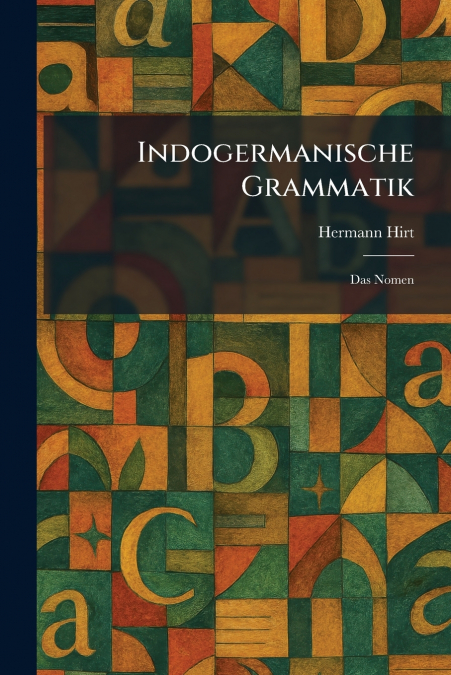
'Indogermanische Grammatik. Teil III. Das Nomen' ist ein wegweisendes Fachwerk der vergleichenden Sprachwissenschaft aus der Feder des renommierten Linguisten Hermann Hirt. In diesem zentralen Band seiner umfassenden Untersuchung zur indogermanischen Ursprache konzentriert sich der Autor auf die komplexe Struktur und Entwicklung des Nomens. Das Werk bietet eine tiefgehende Analyse der Nominalbildung, der verschiedenen Deklinationssysteme und der Kasusfunktionen innerhalb der indogermanischen Sprachfamilie.Hirt verknüpft philologische Präzision mit einer systematischen Darstellung der morphologischen Zusammenhänge. Er untersucht die Entstehung von Stämmen und Endungen und liefert damit wertvolle Erkenntnisse über die grammatikalische Architektur, die den modernen europäischen und indoiranischen Sprachen zugrunde liegt. Als bedeutender Beitrag zur historischen Linguistik ist dieser Band unverzichtbar für die wissenschaftliche Auseinandersetzung mit der Rekonstruktion der Ursprache.Dieses Werk zeichnet sich durch seine methodische Strenge und seinen Detailreichtum aus und bleibt ein klassischer Referenzpunkt für Philologen und Sprachhistoriker weltweit. Es illustriert eindrucksvoll die Entwicklung der sprachlichen Kategorien, die bis heute unsere Kommunikation prägen.This work has been selected by scholars as being culturally important, and is part of the knowledge base of civilization as we know it. This work was reproduced from the original artifact, and remains as true to the original work as possible. Therefore, you may see the original copyright references, library stamps (as most of these works have been housed in our most important libraries around the world), and other notations in the work.This work is in the public domain in the United States of America, and possibly other nations. Within the United States, you may freely copy and distribute this work, as no entity (individual or corporate) has a copyright on the body of the work.As a reproduction of a historical artifact, this work may contain missing or blurred pages, poor pictures, errant marks, etc. Scholars believe, and we concur, that this work is important enough to be preserved, reproduced, and made generally available to the public. We appreciate your support of the preservation process, and thank you for being an important part of keeping this knowledge alive and relevant.