Adelaide R. Hasse / Adelaide RHasse
 Librería Samer Atenea
 Kálamo Books
 Librería Elías (Asturias)
 Librería Kolima (Madrid)
 Librería Proteo (Málaga)
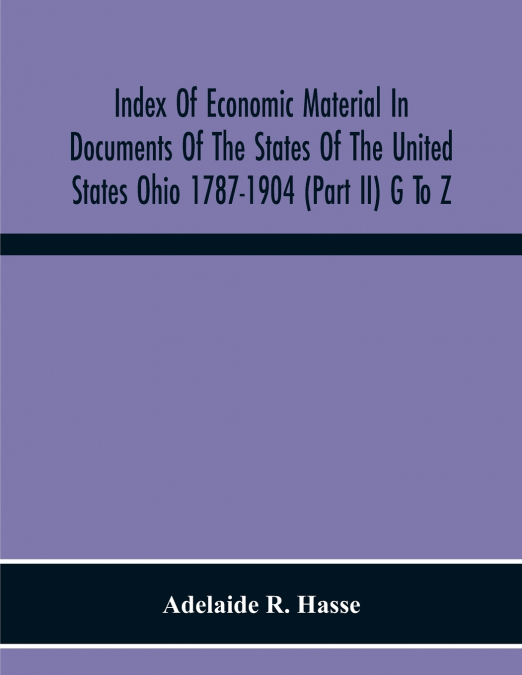
A vital map of nineteenth-century economic life in Ohio, drawn from the state’s own records. Essential reference for serious readers.Adelaide R. Hasse’s Index of Economic Material in Documents of the States of the United States: Ohio, 1787-1904 (Part II, G to Z), prepared for the Department of Economics and Sociology of the Carnegie Institution of Washington, organises a vast state documents collection into a single, searchable economic material index. An indispensable economic history reference and a historical data anthology in form, it brings clarity to ohio economic development and the study of nineteenth century economics across the united states 1787-1904 by steering researchers straight to relevant reports, tables and legislative material. Designed as a pragmatic public policy research tool and as an academic researchers resource, the index knits together the ohio government archives so scholars can trace patterns of taxation, infrastructure and labour over time. Its provenance in carnegie institution studies gives it extra weight for citation. Historically significant, it provides a rare bibliographic window onto how economic issues were recorded and debated, while the careful alphabetical arrangement of entries makes even casual consultation quick and revealing. The value is practical and scholarly: a cross-referenced guide that reduces archival friction and opens new angles on regional economic change.Republished by Alpha Editions in a careful modern edition, this volume preserves the spirit of the original while making it effortless to enjoy today - a heritage title prepared for readers and collectors alike.Accessible yet exacting, the index rewards casual readers tracing local history and classic-literature collectors curating authoritative reference holdings. For students and genealogists it is a straightforward route into primary sources; for historians and policy analysts it functions as both a working tool for public policy research and a complement to a university library collection. Collected by bibliophiles and relied on by academic departments, this economic material index occupies a unique place between careful scholarship and tangible collectibility - a resource that keeps the state’s economic past in reach.