
Inicio > Humanidades > Historia > Historia militar > In War’s Shadow | At the Edge of the Cold War
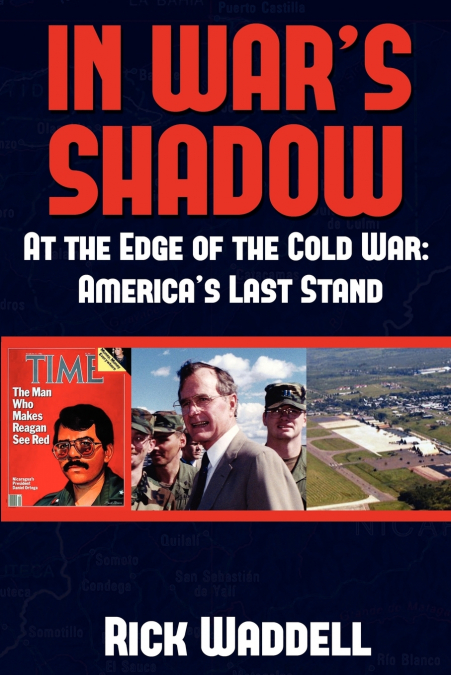
In War’s Shadow | At the Edge of the Cold War

In War’s Shadow | At the Edge of the Cold War

In War's Shadow | At the Edge of the Cold War

Rick Waddell

14,10 €
IVA incluido
Disponible
Editorial:
Adducent, Inc.
Año de edición:
2011
Materia
Historia militar
ISBN:
9780984637126
14,10 €
IVA incluido
Disponible

Selecciona una librería:

  • Librería Samer Atenea
  • Librería Aciertas (Toledo)
  • Kálamo Books
  • Librería Perelló (Valencia)
  • Librería Elías (Asturias)
  • Donde los libros
  • Librería Kolima (Madrid)
  • Librería Proteo (Málaga)

About the BookWe are now two decades removed from the U.S. and allied victory in the Cold War, caused by the collapse of the Berlin Wall and the Iron Curtain. In Korea, Vietnam, and Afghanistan (for the Soviets) the Cold War became hot and bloody, rising to mid-intensity levels. For the most part, the Cold War was waged via standing forces and through the readiness of air defense and nuclear missile systems to defend or retaliate against any sudden attack. We tend to forget, though, that in the more than four decades of that conflict, the actions generally happened on the periphery away from the main front along the 'inter-German border' in Europe, or the secondary front along the Demilitarized Zone in Korea. These actions often happened 'in the shadows' along this periphery through intelligence and counterintelligence operations, and through U.S. and Soviet support for proxies in conflicts that might have begun over local or internal disputes. This support from both sides was generally both economic and military. The locations were in those areas of the world described variously as the Third World, the Lesser Developed Countries, or Developing Countries in Latin America, Africa, and Asia. This book explores one of those 'shadow' battlefronts. It was the edge of the Cold War and America’s last stand against communism right at our very doorstep. On March 22, 1986, initial reports filtered in about the Nicaraguan incursion. The Sandinista forces, over two thousand strong, had crossed into Honduras in hot pursuit of a force of contra rebels. The new Honduran president, Jose Azcona Hoyo, wanted American support to move his troops and artillery to the battlefield. Palmerola Air Base was in good shape to support him. The Honduran plan was essentially to isolate the area of the incursion and allow the Sandinistas and the contras to slug it out. Using American airlift, they moved several hundred of their infantry and a few pieces of artillery into a cordon around the penetration. The Sandinistas were smart enough not to force the situation. Unfortunately, for the communists, the contras slipped a force in behind them, cutting them off from Nicaragua. The battle lasted several days. Far from being the ineffective force portrayed in the media, the contras were kicking butt.About the AuthorRick Waddell is a businessman currently living in Sao Paulo, Brazil. A native of Arkansas, he graduated from West Point in 1982, and holds advanced degrees from Oxford, Webster, and Columbia. He continues to serve in the U.S. Army Reserve.

Artículos relacionados

  • Waterloo Betrayed
    Stephen M. Beckett / Stephen MBeckett
    THIS BOOK HAS BEEN SUPERCEDEDSee Operations of the Armée du Nord : 1815, The Analysis for the definitive guide of French operations in 1815.   Discover why Napoleon really lost the Waterloo Campaign Napoleon was betrayed during 1815 There is no doubt of this. The Traitors admitted as much, and the Allied powers documented their acts. In the immediate aftermath of Napoleon's...
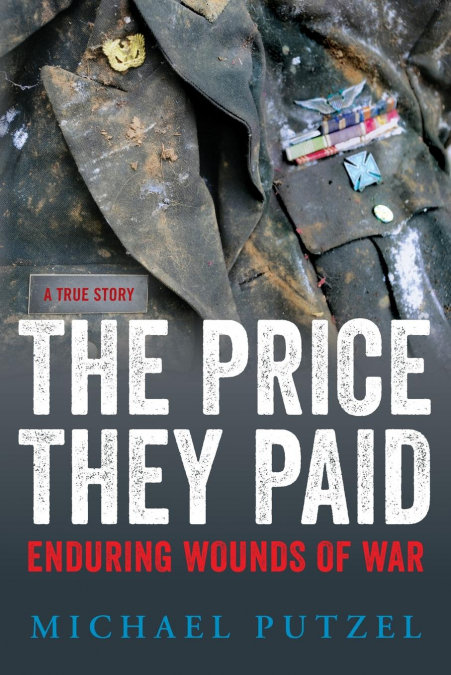
  • The Price They Paid
    Michael Putzel
    The Price They Paid is the stunning and dramatic true story of a legendary helicopter commander in Vietnam and the flight crews that followed him into the most intensive helicopter warfare ever-and how that brutal experience has changed their lives in the forty years since the war ended. ...
    Disponible

    11,07 €

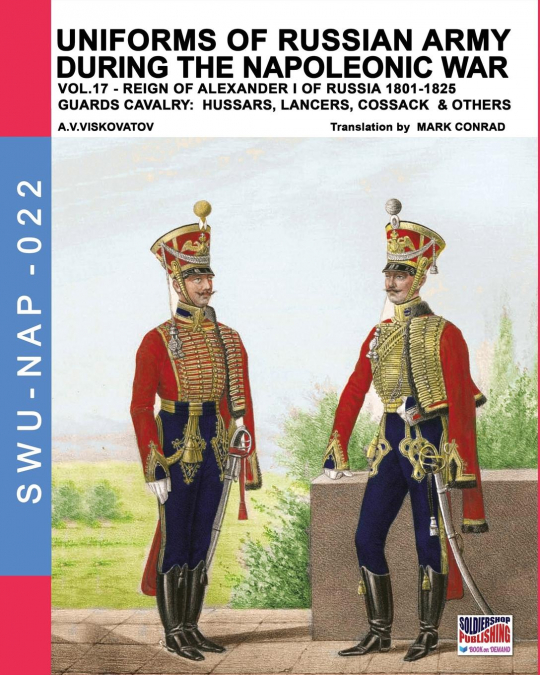
  • Uniforms of Russian army during the Napoleonic war vol.17
    Aleksandr Vasilevich Viskovatov / Mark Conrad
    This volume is related to the Russian Army during the zar Alexander I era, and are about the Guard cavalry regiments (part 1). Compiled at Saint Petersburg during the year from 1837 and 1851, the Historical Description of the Clothing and Arms of the Russian Army has had an enormous impact and great importance for the study on the history of Russian costume and uniformology dev...
    Disponible

    40,78 €

  • Cyber Warfare and Cyber Terrorism
    ...
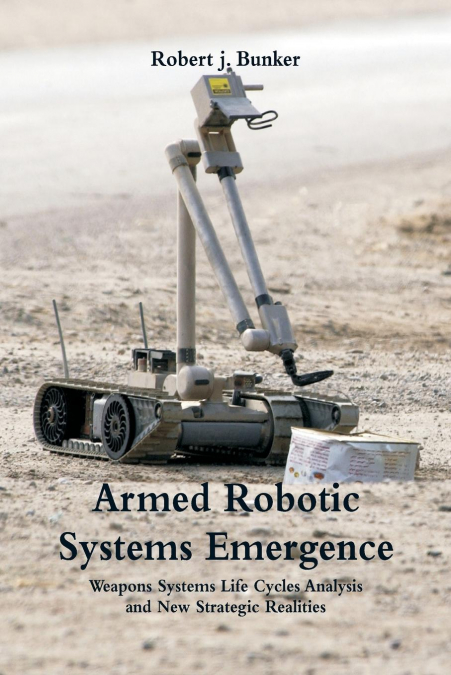
  • Armed Robotic Systems Emergence
    Robert j. Bunker / Robert jBunker
    The fielding of armed robotic systems--droids and drones that are teleoperated, semi-autonomous, and even autonomous--has been slowly but surely transitioning from pure science fiction into military reality on the battlefields of the early 21st century. These systems currently have no artificial intelligence (AI) whatsoever and, in most cases, are simply operated by soldiers (a...
    Disponible

    8,64 €

  • SNIPER ONE
    DAN MILLS
    ...
    Disponible

    18,71 €

Otros libros del autor

  • The Army and Low Intensity Conflict
    Rick Waddell
    During the Cold War, given the threat of the Soviet military poised in Eastern Europe, the Army had to be able to wage armored warfare. The fear of low intensity conflict throughout the Cold War was the fear of bleeding to death from small bites. In this vein low intensity conflict was equivalent to an economy-of-force operation where our adversaries struck at us in our most vu...
    Disponible

    18,27 €

  • Wars Then & Now
    Rick Waddell
    Wars are much different today than they were in years past, but much remains the same.On Monday, 8 December 1941, the cows got milked, the eggs got collected, steel was milled, and cars rolled off the assembly lines. The ships still smoked in Pearl Harbor, and the dead and missing were being counted, but the US economy and population, still heavily agricultural, did not stop. T...
    Disponible

    16,13 €