

 Librería Samer Atenea
 Kálamo Books
 Librería Elías (Asturias)
 Librería Kolima (Madrid)
 Librería Proteo (Málaga)
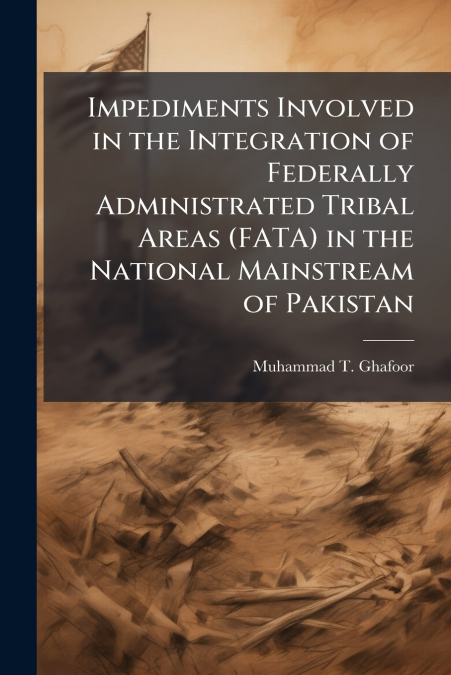
This paper aims to analyze the impediments involved in integration of the FATA in the national mainstream of Pakistan with a view to make suitable recommendations. This paper briefly discusses the historical background and provides a short overview of the administrative, judicial, political and socio-economic aspects of the FATA. In assessing the underlying causes of the FATA problem, this paper suggests a significant change to the FATA’s status quo as an essential and effective measure. To understand the FATA conundrum, case studies of handling Pashtuns residing in the region of the NWF by British, Soviets and later by Pakistan have been done. It has provided a better understanding and apt analysis of the current situation. The paper also addresses the concerns of Pakistan on the involvement of foreign hand in destabilizing the situation inside the FATA and other parts of Pakistan. As the credibility of such like information is always difficult to ascertain; therefore, occasional release of related news in the media and comments of senior Pakistani officials and journalist have been used as base facts for drawing relevant conclusion. The world at large and Pakistanis in particular have to unveil forces working behind the scenes in the FATA. In addition, an effective reform package with a potent media campaign is required to go in to the FATA, thereby not only making the locals aware of the sensitivity of the problem of extremism coupled with terrorism in their society but to make the reminder of Pakistanis also realize that the FATA requires a national effort of integration which cannot be left to only one component of government i.e. Army and other LEAs.This work has been selected by scholars as being culturally important, and is part of the knowledge base of civilization as we know it. This work was reproduced from the original artifact, and remains as true to the original work as possible. Therefore, you will see the original copyright references, library stamps (as most of these works have been housed in our most important libraries around the world), and other notations in the work.This work is in the public domain in the United States of America, and possibly other nations. Within the United States, you may freely copy and distribute this work, as no entity (individual or corporate) has a copyright on the body of the work.As a reproduction of a historical artifact, this work may contain missing or blurred pages, poor pictures, errant marks, etc. Scholars believe, and we concur, that this work is important enough to be preserved, reproduced, and made generally available to the public. We appreciate your support of the preservation process, and thank you for being an important part of keeping this knowledge alive and relevant.





