 Librería Samer Atenea
 Kálamo Books
 Librería Elías (Asturias)
 Librería Kolima (Madrid)
 Librería Proteo (Málaga)
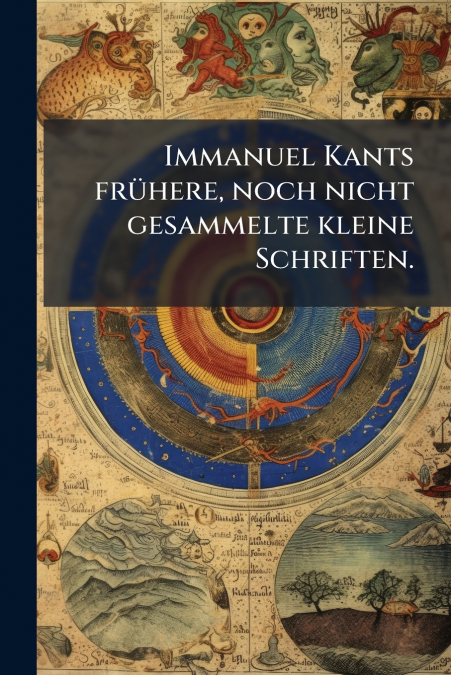
Discover the formative writings of one of history’s greatest thinkers with 'Immanuel Kants frühere, noch nicht gesammelte kleine Schriften.' This collection offers a rare glimpse into the early works of Immanuel Kant, shedding light on the development of his groundbreaking philosophical ideas. Explore Kant’s initial forays into metaphysics, epistemology, and ethics, as he grapples with the fundamental questions that would define his later masterpieces.These previously uncollected shorter works provide invaluable context for understanding Kant’s intellectual journey. Scholars and enthusiasts alike will appreciate the opportunity to trace the evolution of his thought and gain fresh insights into his enduring legacy. 'Immanuel Kants frühere, noch nicht gesammelte kleine Schriften' is an essential addition to any philosophy collection, offering a unique perspective on the genesis of Kantian thought.This work has been selected by scholars as being culturally important, and is part of the knowledge base of civilization as we know it. This work was reproduced from the original artifact, and remains as true to the original work as possible. Therefore, you will see the original copyright references, library stamps (as most of these works have been housed in our most important libraries around the world), and other notations in the work.This work is in the public domain in the United States of America, and possibly other nations. Within the United States, you may freely copy and distribute this work, as no entity (individual or corporate) has a copyright on the body of the work.As a reproduction of a historical artifact, this work may contain missing or blurred pages, poor pictures, errant marks, etc. Scholars believe, and we concur, that this work is important enough to be preserved, reproduced, and made generally available to the public. We appreciate your support of the preservation process, and thank you for being an important part of keeping this knowledge alive and relevant.