
Inicio > Humanidades > Arqueología > Il piombo dell’imperatore
Il piombo dell’imperatore

Il piombo dell’imperatore

Il piombo dell'imperatore

Stefano Genovesi

117,67 €
IVA incluido
Disponible
Editorial:
British Archaeological Reports (Oxford) Ltd
Año de edición:
2018
Materia
Arqueología
ISBN:
9781407314594
117,67 €
IVA incluido
Disponible

Selecciona una librería:

  • Librería Samer Atenea
  • Librería Aciertas (Toledo)
  • Kálamo Books
  • Librería Perelló (Valencia)
  • Librería Elías (Asturias)
  • Donde los libros
  • Librería Kolima (Madrid)
  • Librería Proteo (Málaga)

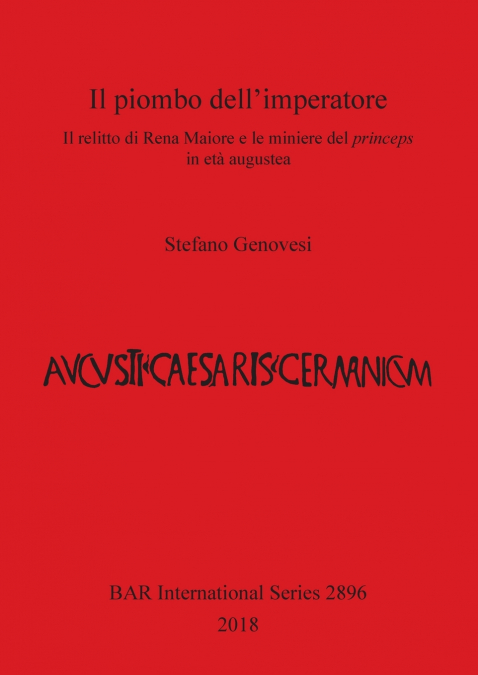
Il libro prende spunto dallo studio dei reperti del relitto di Rena Maiore, scoperto nel 1997 lungo le coste nord-occidentali della Sardegna. La parte del carico, costituita da 72 lingotti di piombo e 4 serbatoi di piombo (cistae), ne mette in luce il ruolo svolto dal lancio sia per uso privato che come metallo strettamente legato alla politica di consenso promossa da Augusto. Le 4 cistae possono essere messe in relazione con l'attività di almeno due plumbarii, che si trovano nella città di Arelate/Arles, nella parte meridionale della Francia. Un gruppo di lingotti, recanti il bollo Augusti Caesaris Germanicum plumbum, identifica la Germania come la provincia dove si trovavano le miniere. Anche se la maggior parte del territorio provinciale si è persa dopo la sconfitta teutoburgica, il governo romano è riuscito a pianificare e avviare, subito dopo l'invasione, lo sfruttamento delle fonti naturali situate nel paese.This book stems from the study of the finds from the Rena Maiore wreck, discovered in 1997 along the north-western coast of Sardinia. The surviving part of the cargo, consisting of 72 lead ingots and 4 lead tanks (cistae), sheds light on the role played by lead both in private use and as a metal strictly connected to the Augustan 'consensus' policy. The cistae can be related to certain plumbarii workshops located in the town of Arelate/Arles, in the southern part of France. A group of ingots, bearing the stamp Augusti Caesaris Germanicum plumbum, identifies Germany as the province where the mines were located. Even if most of the province's territory was lost after the Teutoburg defeat, the Roman government was able to plan, soon after the invasion, the exploitation of the natural sources located in the region.
Artículos relacionados

  • PHAROS
    Branko Kirigin
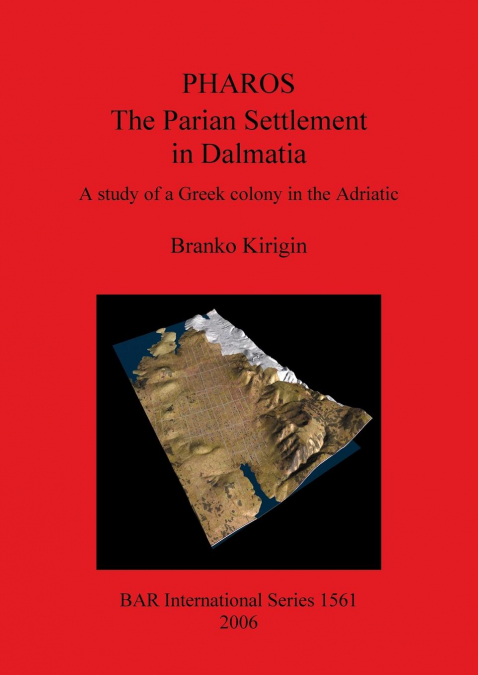
    This is the first detailed study in English of the Greek settlement of Pharos (Stari Grad) on the Croatian island of Hvar. This book presents life in Stari Grad (a Parian colony of the 4th c BC) and its nearby vicinity in the period occurring more than two millennia ago. The author employs methods used in prehistoric and classical archaeology, as well as data known from written...
    Disponible

    90,79 €

  • Paleolithic Zooarchaeology in Practice
    Understanding Paleolithic animal exploitation requires a multifaceted approach. Inferences may derive from research on paleoenvironments and taphonomy, the development of new methods for interpreting seasonality patterns, and ethnoarchaeological observations. A full understanding of Paleolithic economies also requires a multiregional perspective. This volume brings together a g...
    Disponible

    55,20 €

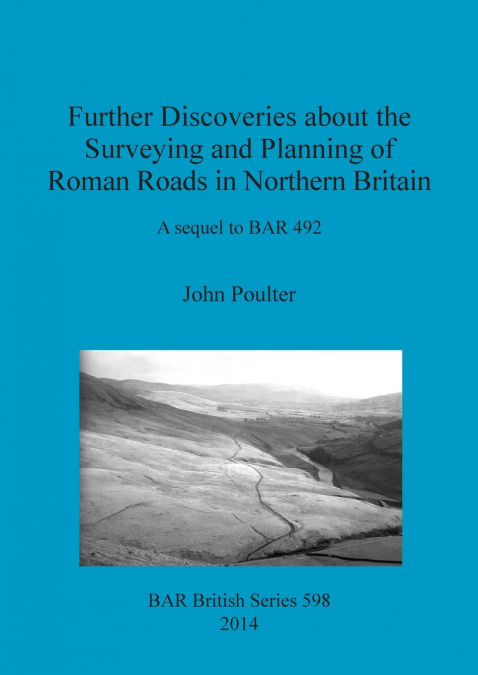
  • Further Discoveries about the Surveying and Planning of Roman Roads in Northern Britain
    John Poulter
    The research reported in this monograph follows on directly from the findings that were reported in BAR 492, in which, among many other discoveries, the author recognised that the courses of both Roman Dere Street and Hadrian’s Wall had been underpinned by frameworks of long-distance alignments. Stimulated by the detection of several more of these alignments across northern Eng...
    Disponible

    65,21 €

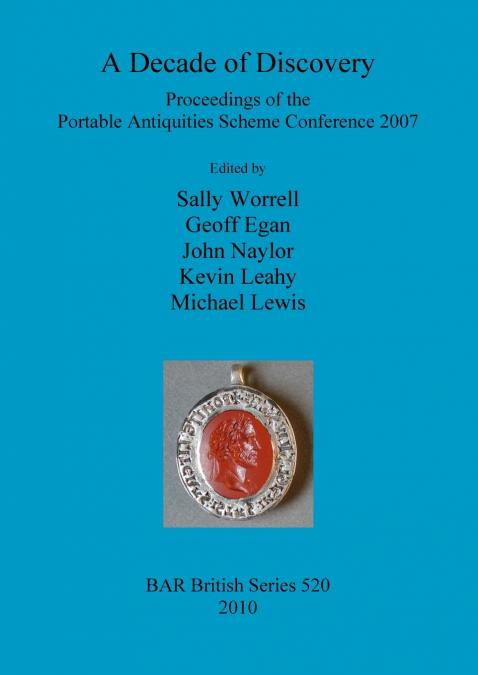
  • A Decade of Discovery
    Edited by Sally Worrell, Geoff Egan, John Naylor, Kevin Leahy and Michael Lewis.In 2007 the Portable Antiquities Scheme (PAS) marked its tenth anniversary by holding a conference at which speakers, both from within the Scheme and outside gave a series of papers that demonstrated the research potential of recording finds of archaeological objects made by members of the public. T...
    Disponible

    117,84 €

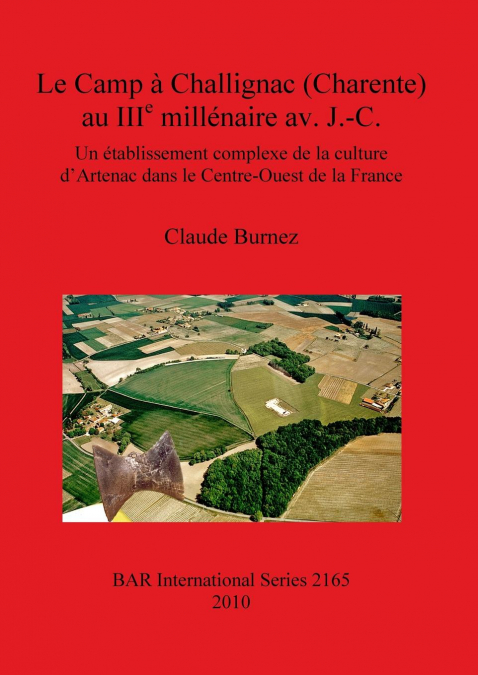
  • Le Camp à Challignac (Charente) au IIIe millénaire av. J.-C.
    Claude Burnez
    Un établissement complexe de la culture d’Artenac dans le Centre-Ouest de la FranceThis fortified enclosure has been known since the middle of the 19th century, but the size and the state of preservation (with the height of the rampart estimated optimistically at 10 metres!) suggested an attribution to the Gallo-Romans or a 'Camp des Anglais'. Extensive woodland covered...
    Disponible

    238,69 €

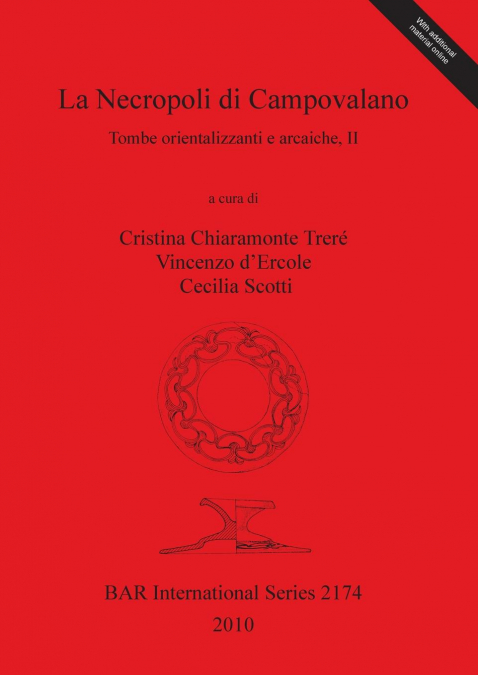
  • La Necropoli di Campovalano
    This volume, investigating the necropolis and sequences of 607 tombs, completes the publication of the site of Campovalano (predominately Late BA to 5th BC) in the region of Teramo, the northernmost province of Abruzzo, Italy (see BAR 1177, 2003). The finds include important oriental style archaic material.Contributions from: Giorgio Baratti, Carla Buoite, Cristina Chiaramonte ...
    Disponible

    220,16 €