Idolatry and Infinity

Idolatry and Infinity

Idolatry and Infinity

David R. Topper / David RTopper

35,45 €
IVA incluido
Disponible
Editorial:
Universal-Publishers.com
Año de edición:
2014
Materia
Filosofía de la religión
ISBN:
9781627345064
35,45 €
IVA incluido
Disponible

Selecciona una librería:

  • Librería Samer Atenea
  • Librería Aciertas (Toledo)
  • Kálamo Books
  • Librería Perelló (Valencia)
  • Librería Elías (Asturias)
  • Donde los libros
  • Librería Kolima (Madrid)
  • Librería Proteo (Málaga)

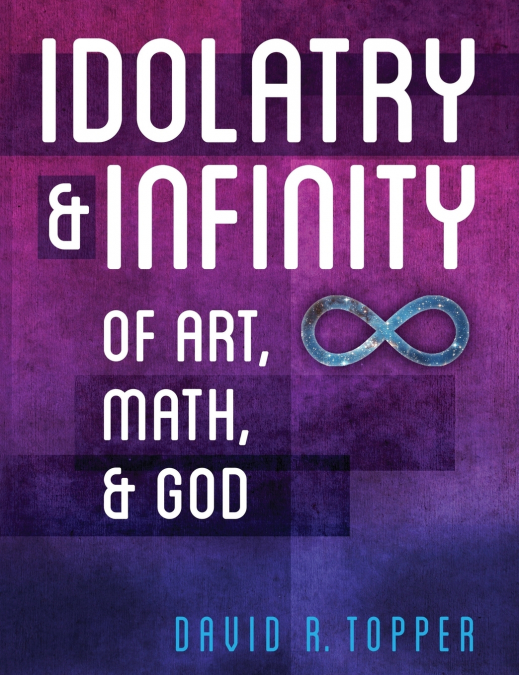
Some unwritten stories only exist in fragments. In this book, for the first time, the histories of the injunction against idolatry and the dread of infinity are uniquely woven into one.The spectre of idolatry has haunted the three Western religions since the biblical prohibition. The story of iconoclasm runs from ancient times, where Jews largely ignored the ban on images, through the iconoclastic episodes in Islam and Christianity, and into modern times during the French Revolution. A perhaps surprising thesis of this book is that a conceptual and secular form of iconoclasm continued as the revulsion of illusionism in Modern Art. More recently it flared-up in the dynamiting of two large statues of the Buddha by the Taliban in Afghanistan in 2001.The phobia of infinity arose from Pythagoras’s discovery of irrational numbers and it runs through Zeno’s paradoxes and Aristotle’s philosophy, with only rare cases of defiance, such as Archimedes searching for pi. The angst over infinity continued through the Middle Ages with the theological encounter of an infinite God, as in the writings of Thomas Aquinas, only to be confronted in the Renaissance philosophy of Cusa. At the same time, infinity arose unexpectedly in visual art with the discovery of linear perspective where God was identified with the vanishing point. In the 17th and 18th centuries infinity further emerged not only in the very, very large (the cosmos itself), but in the very, very small (within calculus). This paved the way in the 19th and 20th centuries for the idea of different orders of infinity codified by Georg Cantor, where the concept mingled again with theology.Math and science buffs familiar with some aspects of infinity may first learn of its link with art, as well as a long association with theology - right up to the present. With lucid visual aids for the uninitiated, this book may likewise grant the Art lover access into a previously uncharted territory - a math venture to stretch the mind.
Artículos relacionados

  • The Writings of Charles De Koninck
    Charles De Koninck
    The Writings of Charles De Koninck, volumes 1 and 2, present the first English editions of collected works of the Catholic Thomist philosopher Charles De Koninck (1906-1965). Ralph McInerny (1929-2010) was the project editor and prepared the excellent translations. Volume 1 contains writings ranging from De Koninck’s 1934 dissertation at the University of Louvain on the philoso...
  • The Constitution of Shambhala (Vol. 7B of a Treatise on Mind)
    Bodo Balsys
    The theme of the first of the two parts of this volume concerns the feminine deva hierarchy, their relation to Hierarchy and Shambhala. Many concepts are introduced that most seekers have little cognisance (e.g., the nature of the deva Lord Varuna). The Mother of the World’s role is revealed, and the feminine function in cosmos, (e.g., the Pleiades). Advanced teaching concernin...
    Disponible

    44,89 €

  • A Labyrinth Walk Of Life
    Lewis Tagliaferre
    Here is a collection of journaled essays leading to the inevitable belief in theological fatalism, aka Theofatalism. They include arguments from theology, psychology, politics, geology, technology, sociology, economics, history, cosmology and more. With this belief system, you can feel good inside no matter what happens outside. It may take several readings to get it, but anyth...
    Disponible

    13,41 €

  • Religion
    Arthur Schopenhauer
    Collected here are five short essays, A Dialogue, A Few Words on Pantheism, On Books and Reading, Physiognomy, and, Psychological Observations, by the world renowned philosopher Arthur Schopenhauer. ...
  • The Handbook
    Epictetus Epictetus
    No writings of Epictetus himself are really known. His discourses were transcribed and compiled by his pupil Arrian (author of the Anabasis Alexandri). The main work is The Discourses, four books of which have been preserved (out of an original eight). Arrian also compiled a popular digest, entitled the Enchiridion, or Handbook. In a preface to the Discourses, addressed to Luci...
  • The Origin Comes Alive
    Cale Rainer
    Believers and Atheists alike will get a firsthand look at the Divine Presence as it reveals the intimate behaviors and processes that compose a sense of GOD, and how this arose in social consciousness to inspire a global phenomenon known as Religion.The sense of life is taken to the limits of extreme perspective in this somewhat involved, yet intimate look into our social origi...
    Disponible

    9,92 €

Otros libros del autor

  • Remnants of Our Life with Your Dementia
    David R. Topper / David RTopper
    A poignant account in poetic verse of one man’s journey with his wife, into the all-encompassing realm of her dementia. ...
    Disponible

    9,19 €

  • Remnants of Our Life with Your Dementia
    David R. Topper / David RTopper
    A poignant account in poetic verse of one man’s journey with his wife, into the all-encompassing realm of her dementia. ...