

 Librería Samer Atenea
 Kálamo Books
 Librería Elías (Asturias)
 Librería Kolima (Madrid)
 Librería Proteo (Málaga)
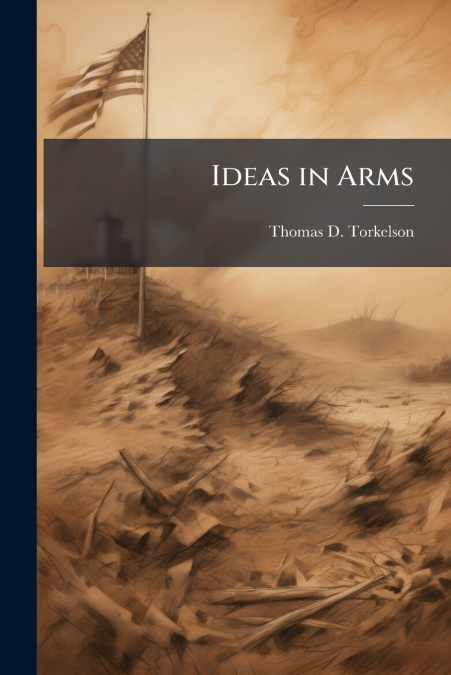
The inability of the US to achieve its stated political objectives in its Global War on Terror (GWOT) suggests its kinetic-centric military strategy is flawed. This study erects a framework of effectiveness utilizing Clausewitzian principles to judge military strategy. By determining the expressed political objectives of GWOT, the centers of gravity (COGs) that military strategy should target within this struggle, and considering GWOT’s placement along a Clausewitzian continuum of violence, this study evaluates US military efforts in Operation Enduring Freedom (OEF) through the perspective of two opposing models. First, the study presents a kinetic model founded in America’s historical implementation of its military arm that emphasizes physical effects. Second, the paper constructs a non-kinetic model comprised of the primarily psychological components of the nation’s informational capabilities. Examining actions in OEF through these two lenses reveals the institutional tension the US military experienced as it sought to leverage the relevant COG. Stemming from the preeminence of ideology among the COGs of GWOT, the study finds that the US military and civilian leadership came to recognize the detrimental effects of its continued emphasis upon kinetic means in OEF. As a thesis and anti-thesis conflict in a Hegelian, dialectic fashion, the US military arrived at a synthesis for its operations in Afghanistan. Acknowledging the need to elevate non-kinetic campaigns as the primary effort in OEF, US military operations began to stress actions directed at the COG of ideology. Although the ultimate outcome of GWOT remains to be determined, positive institutional experiences such as the Provincial Reconstruction Team (PRT) concept need to be preserved, while significant national public diplomacy reform must occur.This work has been selected by scholars as being culturally important, and is part of the knowledge base of civilization as we know it. This work was reproduced from the original artifact, and remains as true to the original work as possible. Therefore, you will see the original copyright references, library stamps (as most of these works have been housed in our most important libraries around the world), and other notations in the work.This work is in the public domain in the United States of America, and possibly other nations. Within the United States, you may freely copy and distribute this work, as no entity (individual or corporate) has a copyright on the body of the work.As a reproduction of a historical artifact, this work may contain missing or blurred pages, poor pictures, errant marks, etc. Scholars believe, and we concur, that this work is important enough to be preserved, reproduced, and made generally available to the public. We appreciate your support of the preservation process, and thank you for being an important part of keeping this knowledge alive and relevant.





