 Librería Samer Atenea
 Kálamo Books
 Librería Elías (Asturias)
 Librería Kolima (Madrid)
 Librería Proteo (Málaga)
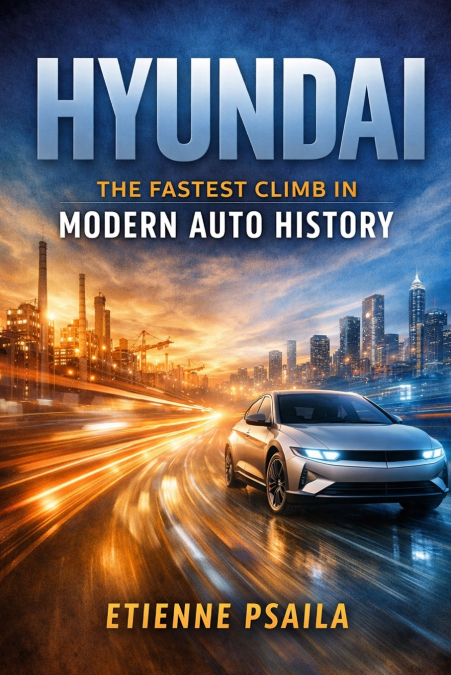
Hyundai’s rise compresses what many automakers needed a century to learn into a few decades: how to industrialize at scale, survive the scrutiny of the world’s hardest export markets, and turn manufacturing discipline into a brand that can credibly lead in design and electrification. From licensed assembly and the Pony’s nation-building symbolism to the quality reckoning of the 1990s and the warranty-era reputational reset, Hyundai’s trajectory is best understood as a story of systems-process control, supplier management, validation rigor, and the willingness to publish accountability in markets that do not forgive excuses.This book traces the company’s evolution inside South Korea’s export-led development model and the Hyundai conglomerate’s wider industrial ecosystem, then follows Hyundai Motor Group as it broadens into SUVs, premium ambitions with Genesis, performance credibility with N, and a platform-led electrification strategy built for global volume. Along the way are the consequential inflection points: the Asian Financial Crisis and Kia’s integration, the transformation of engineering culture, the governance realities of a modern chaebol, and the new geopolitics of batteries, localization, and regulation.By the 2020s, Hyundai is no longer framed by catch-up narratives. It is measured against benchmarks it once chased-on product cadence, safety and quality outcomes, design coherence, and EV platform execution. The result is a case study in modern manufacturing competition: how an industrial latecomer became a reference point, and what that shift has changed for the wider automotive industry.