
Humility of the Brain

Humility of the Brain

Humility of the Brain

Prince Ezem Ihenacho

9,50 €
IVA incluido
Disponible
Editorial:
Clink Street Publishing
Año de edición:
2015
Materia
Ética y filosofía moral
ISBN:
9781909477537
9,50 €
IVA incluido
Disponible

Selecciona una librería:

  • Librería Samer Atenea
  • Librería Aciertas (Toledo)
  • Kálamo Books
  • Librería Perelló (Valencia)
  • Librería Elías (Asturias)
  • Donde los libros
  • Librería Kolima (Madrid)
  • Librería Proteo (Málaga)

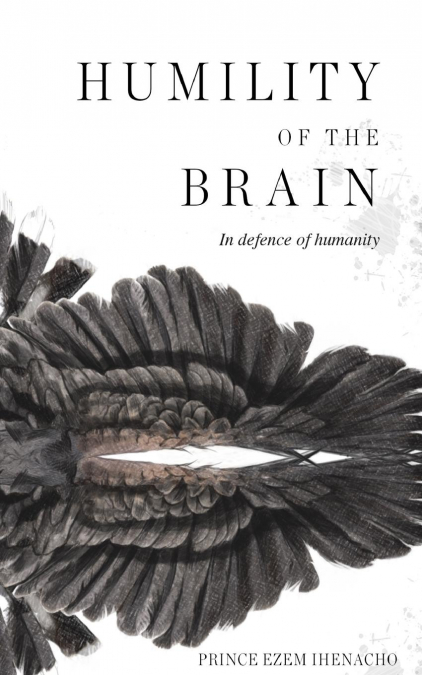
The story of our world illustrated when different parts of the human body (representing diversity in our world) went into war fighting for supremacy, everlasting life and honour. A war instigated by a fictitious little bird which was destined to live forever but had a nightmare that, the only person living within its vicinity was going to kill and eat it. A little bird that only knew immortality suddenly hit with a sense of mortal- ity. The idea to instigate war between the various parts of the person's body, was suggested by a tortoise that lived about five thousand miles away from the little bird, upon whom the secret of the little bird's everlasting life rested as revealed in the bird's dream. The little bird could not locate the tortoise at Tfirst, on its own, but was guided by a guardian angel. person's body that ought to work in partnership, bringing their peculiar differences and resources together, in one accord for the health and good of the body to wage war on one anoth- er instead, by stating 'The body is facing an imminent death but only one part will survive, live forever and be crowned the queen or king of the body. In order to be that part that would live forever and be crowned, you must prove to the rest of the body that, you are the most important part and without you, the body cannot survive.' The mouth began the war, with the brain waiting for all of them to take their turn before it came in with a bang. However, before the brain could have a go, the anus decided to hold the entire body system at ransom and, thereby forcing the brain to come in with humility instead of 'a bang.' The book summarises that 'Men are the problem and women are the solution.' Follow the logic and find out why. 'Humility of the brain', in defence of humanity.


Artículos relacionados

  • Ka Ab Ba Building The Lighted Temple
    Dr Terri R. Nelson / Dr Terri RNelson
    The book KaAbBa Building The Lighted Temple/Metaphysical Keys to the Tree of Life draws a circle that is inclusive of the Afrikan origin of the Ancient Kemetic/Egyptian wisdom. It reveals the undeniable root and link of Ancient Africa to all the religious systems that would develop worldwide. This book is explosive in its power to convey the meaning of KaAbBa, the Medu Neter  (...
    Disponible

    37,41 €

  • Technoethics and the Evolving Knowledge Society
    Rocci Luppicini
    Recently, there has been a major push to rediscover the ethical dimension of technology across the sciences, social sciences, and humanities. Technoethics and the Evolving Knowledge Society: Ethical Issues in Technological Design, Research, Development, and Innovation examines human processes and practices connected to technology embedded within social, political, and moral sph...
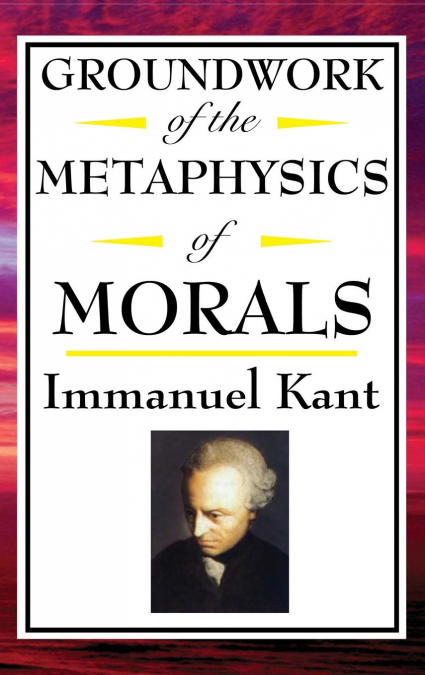
  • Kant
    Immanuel Kant
    Kant’s Groundwork of the Metaphysics of Morals is one of the most important works in modern moral philosophy. It belongs beside Plato, Aristotle, Machiavelli, and Hobbes. Here Kant sets out to articulate and defend the Categorical Imperative - the fundamental principle that underlies moral reasoning - and to lay the foundation for a comprehensive account of justice and human vi...
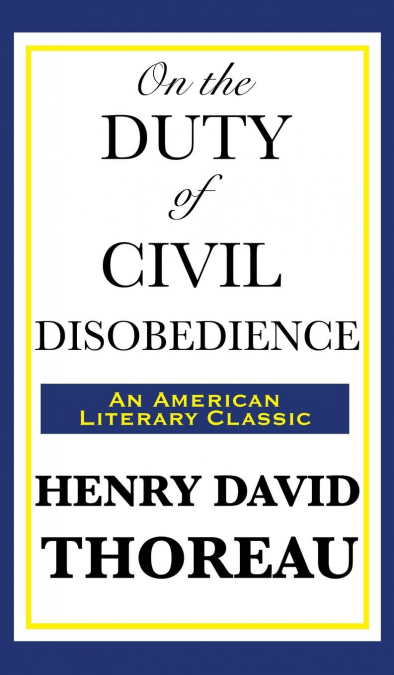
  • On the Duty of Civil Disobedience
    HENRY DAVID THOREAU
    Civil Disobedience argues that citizens should not permit their governments to overrule their consciences, and that they have a duty to avoid allowing their acquiescence to enable the government to make them the agents of injustice. Thoreau was motivated in part by his disgust with slavery and the Mexican-American War, but the sentiments he expresses here are just as pertinent ...
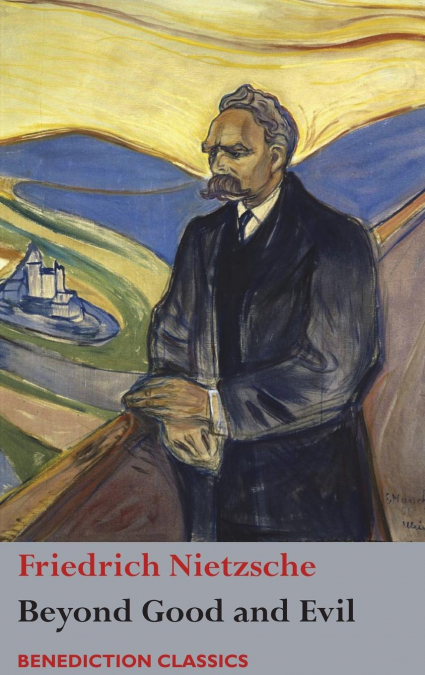
  • Beyond Good and Evil
    Friedrich Nietzsche
    Nietzsche, though primarily a philosopher, wrote widely on art, philology, history, religion, tragedy, culture, and science.  In 1886, at the height of his powers, he published Beyond Good and Evil.  Here he examines much of the best of human thought--dogmatic philosophy, Judeo-Christian morality, science and democracy – and finds it lacking.  Rejecting “slave-morality” he pres...
  • Beyond Good and Evil
    Friedrich Nietzsche
    Nietzsche, though primarily a philosopher, wrote widely on art, philology, history, religion, tragedy, culture, and science.  In 1886, at the height of his powers, he published Beyond Good and Evil.  Here he examines much of the best of human thought--dogmatic philosophy, Judeo-Christian morality, science and democracy – and finds it lacking.  Rejecting “slave-morality” he pres...
    Disponible

    9,99 €