
Human Nature And Conduct

Human Nature And Conduct

John Dewey

17,61 €
IVA incluido
Disponible
Editorial:
Les prairies numériques
Año de edición:
2020
ISBN:
9782382742389
17,61 €
IVA incluido
Disponible

Selecciona una librería:

  • Librería Samer Atenea
  • Librería Aciertas (Toledo)
  • Kálamo Books
  • Librería Perelló (Valencia)
  • Librería Elías (Asturias)
  • Donde los libros
  • Librería Kolima (Madrid)
  • Librería Proteo (Málaga)

Human Nature And ConductJohn Dewey 'Give a dog a bad name and hang him.' Human nature has been the dog of professional moralists, and consequences accord with the proverb. Man’s nature has been regarded with suspicion, with fear, with sour looks, sometimes with enthusiasm for its possibilities but only when these were placed in contrast with its actualities. It has appeared to be so evilly disposed that the business of morality was to prune and curb it it would be thought better of if it could be replaced by something else. It has been supposed that morality would be quite superfluous were it not for the inherent weakness, bordering on depravity, of human nature. Some writers with a more genial conception have attributed the current blackening to theologians who have thought to honor the divine by disparaging the human. Theologians have doubtless taken a gloomier view of man than have pagans and secularists. But this explanation doesn’t take us far. For after all these theologians are themselves human, and they would have been without influence if the human audience had not somehow responded to them. Morality is largely concerned with controlling human nature. When we are attempting to control anything we are acutely aware of what resists us. So moralists were led, perhaps, to think of human nature as evil because of its reluctance to yield to control, its rebelliousness under the yoke. But this explanation only raises another question. Why did morality set up rules so foreign to human nature? The ends it insisted upon, the regulations it imposed, were after all outgrowths of human nature. Why then was human nature so averse to them? Moreover rules can be obeyed and ideals realized only as they appeal to something in human nature and awaken in it an active response. Moral principles that exalt themselves by degrading human nature are in effect committing suicide. Or else they involve human nature in unending civil war, and treat it as a hopeless mess of contradictory forces. We are forced therefore to consider the nature and origin of that control of human nature with which morals has been occupied. And the fact which is forced upon us when we raise this question is the existence of classes. Control has been vested in an oligarchy. Indifference to regulation has grown in the gap which separates the ruled from the rulers. Parents, priests, chiefs, social censors have supplied aims, aims which were foreign to those upon whom they were imposed, to the young, laymen, ordinary folk a few have given and administered rule, and the mass have in a passable fashion and with reluctance obeyed. Everybody knows that good children are those who make as little trouble as possible for their elders, and since most of them cause a good deal of annoyance they must be naughty by nature. Generally speaking, good people have been those who did what they were told to do, and lack of eager compliance is a sign of something wrong in their nature. 3
Artículos relacionados

  • Poetry Is Our Ministry to Touch the Heart
    Anelda Lukesia Ballard / Jean Anelda Scott
    Poetry is Our Ministry to Touch the Heart, was birthed when Anelda L. Ballard became ill. God spoke to her in a dream and said 'pick up a pen and write' by being obedient this book was written through the Holy Spirit. Anelda and her mother Jean A. Scott believes that God’s wants to heal a hurting heart. This book will inspire you and encourage you to never give up hope. Jesu...
    Disponible

    11,12 €

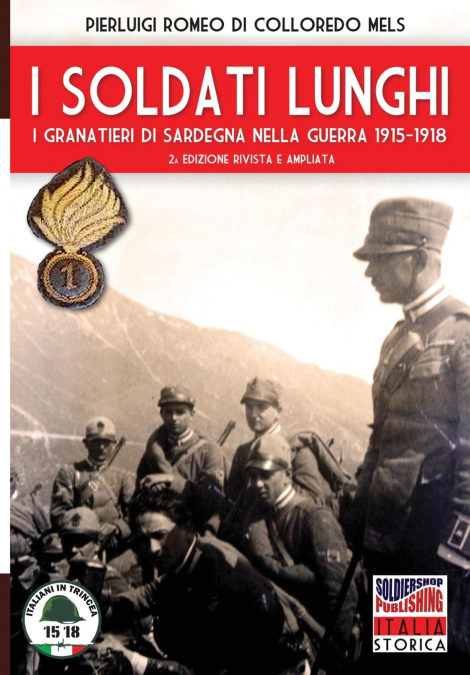
  • I soldati lunghi
    Pierluigi Romeo di Colloredo Mels
    Il 24 maggio 1915 il Regno d’Italia entrò nella Grande Guerra, che si sarebbe dimostrata il momento più alto e tragico della sua storia, a poco più di cinquant’anni dalla sua unificazione.In quella lotta tremenda durata quattro anni, la Brigata Granatieri di Sardegna , con i suoi due valorosi Reggimenti, i più antichi del Regio Esercito scrisse, nel grande quadro della guerra d...
    Disponible

    32,59 €

  • Five Beneath Philly
    Susan Bandy / Tom Richmond
    Allen Williams plans to make something of his life and escape South Philly and the work at Cross Brothers’ Meat Packing Plant. He prepares himself with excellent grades and an upcoming full-ride scholarship to climb out of South Philly forever. Then fate changes his whole world. An only son in a family of six, Allen suddenly finds himself responsible for his mother, grandmother...
    Disponible

    18,28 €

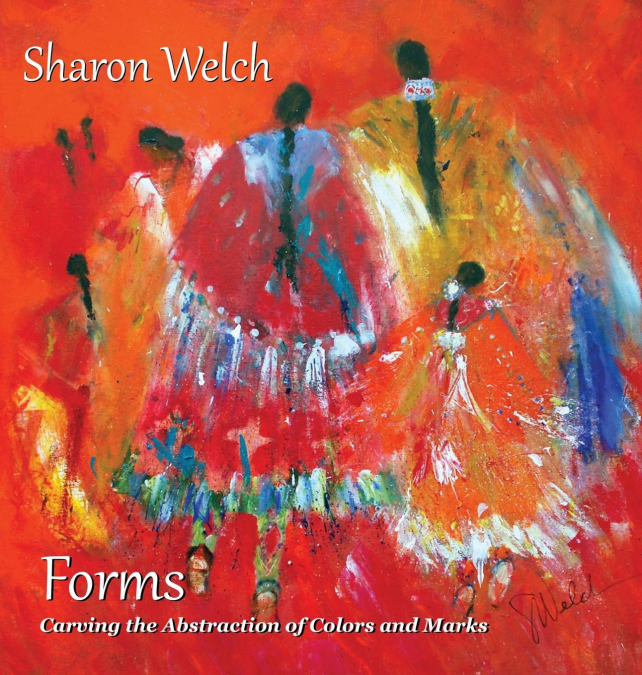
  • Forms
    Sharon Welch
    I am an award-winning artist and my works hang in private residences, community hospitals, businesses, and restaurants across the US and also abroad.  I live in Pierre, South Dakota. Since 2008 I have owned Sharon Welch Gallery and Studio where I paint and teach classes.  My theory is have fun, remove the fear of failure, experiment and let the child inside of you play.Very oft...
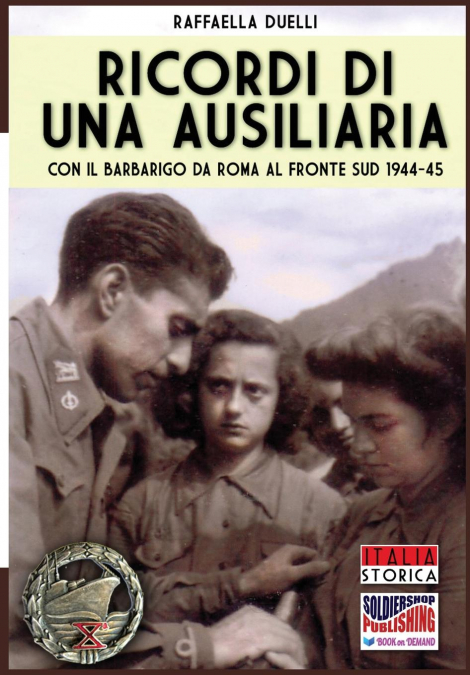
  • Ricordi di una ausiliaria
    Andrea Lombardi / Raffaella Duelli
    Le memorie di Raffaella Duelli, Volontaria nel Battaglione Barbarigo della Decima Flottiglia Mas iniziano con la partenza del Barbarigo da Roma, narrando la lunga marcia del reparto verso il nord, sotto il mitragliamento degli aerei Alleati. Quindi, è descritta vividamente l'ultima battaglia del Barbarigo sul Fronte Sud, dal Senio a Comacchio: gli appunti di Raffaella, giov...
    Disponible

    28,08 €

  • Why Didn’t You Ask?
    Panya Dixon
    From an early occurrence in her childhood to a perilous thirteen-year relationship, Panya Dixon too often suffered from various forms of physical, emotional, and sexual abuse. Conflicted between love and the pain her loved ones brought on her, she consistently had to fight for her life and her will to move on. Why Didn’t You Ask? is an expression of Panya’s truth—her trials, pa...
    Disponible

    20,35 €

Otros libros del autor

  • Democracy and Education (Esprios Classics)
    John Dewey
    John Dewey (October 20, 1859 - June 1, 1952) was an American philosopher, psychologist, and educational reformer whose ideas have been influential in education and social reform. He was one of the most prominent American scholars in the first half of the twentieth century. The overriding theme of Dewey’s works was his profound belief in democracy, be it in politics, education, ...
  • The Public and Its Problems
    John Dewey
    The Public and Its Problems (1927) by John Dewey is a philosophical and political work examining the nature of democracy in modern society.Dewey argues that a 'public' forms whenever the actions of individuals have indirect consequences for others, creating shared problems that require collective regulation. In modern, complex societies, these consequences are often obscured by...
    Disponible

    14,18 €

  • The Public and Its Problems
    John Dewey
    The Public and Its Problems (1927) by John Dewey is a philosophical and political work examining the nature of democracy in modern society.Dewey argues that a 'public' forms whenever the actions of individuals have indirect consequences for others, creating shared problems that require collective regulation. In modern, complex societies, these consequences are often obscured by...
  • Democracy and Education
    John Dewey
    Democracy and Education (1916) by John Dewey argues that education is the foundation of a healthy democracy. Dewey sees education not as rote learning, but as a social process through which individuals grow by participating in shared experiences. Schools, he claims, should mirror democratic life by encouraging cooperation, critical thinking, and problem-solving rather than pass...
    Disponible

    30,72 €

  • Democracy and Education
    John Dewey
    Democracy and Education (1916) by John Dewey argues that education is the foundation of a healthy democracy. Dewey sees education not as rote learning, but as a social process through which individuals grow by participating in shared experiences. Schools, he claims, should mirror democratic life by encouraging cooperation, critical thinking, and problem-solving rather than pass...
  • Human Nature and Conduct - An introduction to social psychology
    John Dewey
    In the spring of 1918 I was invited by Leland Stanford Junior University to give a series of three lectures upon the West Memorial Foundation. One of the topics included within the scope of the Foundation is Human Conduct and Destiny. This volume is the result, as, according to the terms of the Foundation, the lectures are to be published. The lectures as given have, however, b...
    Disponible

    16,71 €