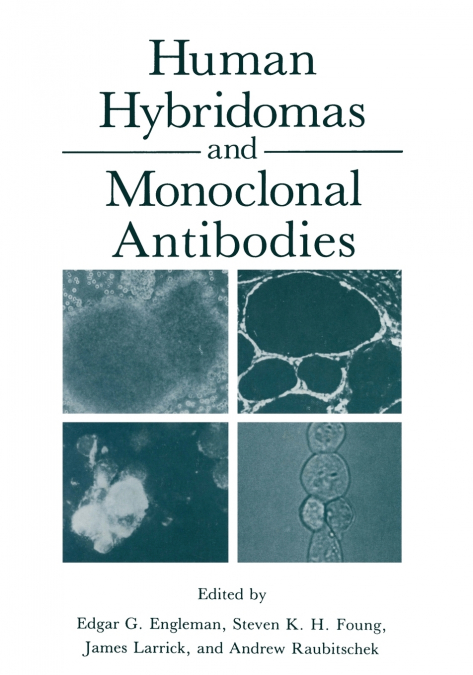

Human Hybridomas and Monoclonal Antibodies

Human Hybridomas and Monoclonal Antibodies

Edgar Engleman

136,58 €
IVA incluido
Disponible
Editorial:
Springer Nature B.V.
Año de edición:
2012
Materia
Inmunología
ISBN:
9781468449518
136,58 €
IVA incluido
Disponible

Selecciona una librería:

  • Librería Samer Atenea
  • Librería Aciertas (Toledo)
  • Kálamo Books
  • Librería Perelló (Valencia)
  • Librería Elías (Asturias)
  • Donde los libros
  • Librería Kolima (Madrid)
  • Librería Proteo (Málaga)

Soon after Kohler and Milstein described the use of somatic cell hybridization for the production of murine monoclonal antibodies of desired specificity, this relatively simple technique became widely applied. Indeed, production of murine monoclonal antibodies is now considered routine by immunologists and nonimmunologists alike. However, as heterologous proteins, mouse monoclonal antibodies have one major limitation: they are immunogenic in man and, hence, their use in vivo is severely limited. An obvious solution to this problem is to produce human hybridomas with the same techniques used for the production of rodent hybrids. Unfortunately, the history of human hybridomas has been marked by substantive and often exasperating tech­ nical problems, and the first reports of hybrids secreting human immu­ noglobulin of desired specificity did not appear until 1980. These reports were met with initial enthusiasm, but it soon became apparent that while human lymphocytes might be fused, their frequency, level of Ig synthesis, and stability were such that production of human antibodies with this method was neither routine nor practical. Nonetheless, a sufficient number of investiga­ tors persevered, and during the next 5 years relatively efficient B-cell fusion partners as well as improved methods of Epstein-Barr virus transformation were developed. Generation of human T -T hybrids has also been achieved, although problems of chromosomal stability remain a substantial obstacle, more so than with B-cell lines.
Artículos relacionados

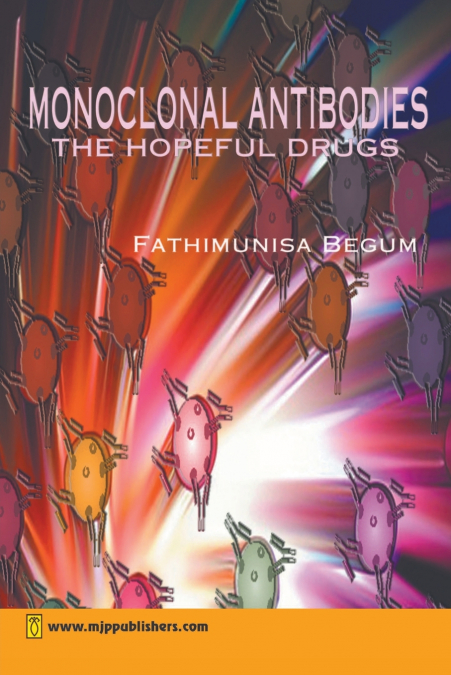
  • MONOCLONAL ANTIBODIES
    Fathimunisa Begum
    This book offers a comprehensive exploration of the groundbreaking use of monoclonal antibody drugs in modern medicine. Beginning with an insightful introduction to monoclonal antibodies, the book delves into the intricate process of their production, from immunization and hybridoma cell preservation to large-scale antibody manufacturing.In its captivating pages, readers will d...
    Disponible

    28,64 €

  • Everybody’s Antibodies
    Jr. Mark P. Friedlander
    In our daily lives, we are surrounded by countless germs that often go unnoticed, thanks to the remarkable defense mechanism within us known as the immune system. Curiously, this intricate network of tiny components remains one of the least understood aspects of our body’s organization. However, with the advent of COVID-19, our collective immune systems have faced an extraordin...
    Disponible

    10,18 €

  • INTRODUCTION TO AUTONOMIC MEDICINE
    David S Goldstein
    Autonomic medicine is emerging across the globe as an important subspecialty in healthcare. The overwhelming majority of medicine today is based on the assumption that a patient’s autonomic nervous system is intact and functioning normally. But what if it is not? What do we do when there are abnormalities in the regulatory functions of the body, such as maintaining normal blood...
  • Antibody Engineering
    Borrebaeck
    ...
    Disponible

    141,84 €

  • In Defense of Self
    William R. Clark
    ...
    Disponible

    27,64 €

  • Global Virology IV
    In the face of recent viral outbreaks and a global viral pandemic, the necessity for innovation and continued rapid advancement in viral diagnosis and treatment methods has become even more apparent. Global Virology IV: Viral Disease Diagnosis and Treatment Delivery in the 21st Century explores the latest advances in virology and trends in clinical practice, focused on foundati...