Librería Samer Atenea
 Kálamo Books
 Librería Elías (Asturias)
 Librería Kolima (Madrid)
 Librería Proteo (Málaga)
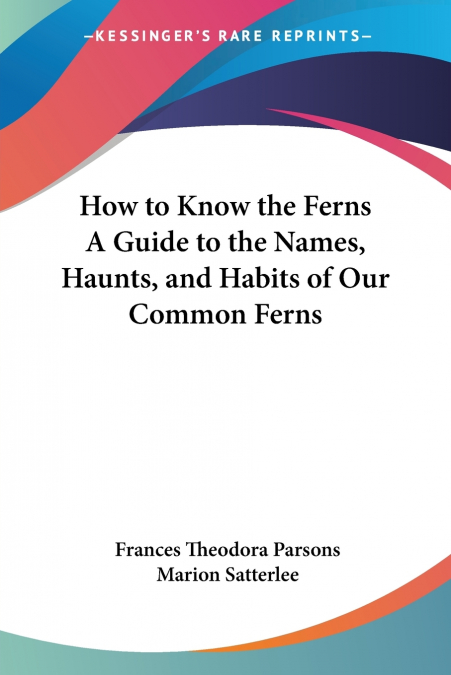
'How to Know Ferns: A Guide to the Names, Haunts, and Habits of Our Common Ferns' by Frances Theodora Parsons is an engaging introduction to the world of ferns. This book serves as an accessible guide for amateur botanists and nature enthusiasts alike, detailing the characteristics, habitats, and life cycles of various fern species. Parsons’ clear and descriptive prose allows readers to easily identify ferns in their natural environments, fostering a deeper appreciation for the intricacies of the plant kingdom.Originally published in the late 19th century, this edition retains its charm and educational value, making it a timeless resource for anyone interested in learning more about these fascinating plants. Perfect for beginners, 'How to Know Ferns' encourages a closer look at the natural world and promotes the joys of botanical discovery.This work has been selected by scholars as being culturally important, and is part of the knowledge base of civilization as we know it. This work was reproduced from the original artifact, and remains as true to the original work as possible. Therefore, you will see the original copyright references, library stamps (as most of these works have been housed in our most important libraries around the world), and other notations in the work.This work is in the public domain in the United States of America, and possibly other nations. Within the United States, you may freely copy and distribute this work, as no entity (individual or corporate) has a copyright on the body of the work.As a reproduction of a historical artifact, this work may contain missing or blurred pages, poor pictures, errant marks, etc. Scholars believe, and we concur, that this work is important enough to be preserved, reproduced, and made generally available to the public. We appreciate your support of the preservation process, and thank you for being an important part of keeping this knowledge alive and relevant.