How Old Is the Universe?

How Old Is the Universe?

David A. Weintraub / David AWeintraub

39,93 €
IVA incluido
Disponible
Editorial:
Princeton University Press
Año de edición:
2012
Materia
Astronomía, espacio y tiempo
ISBN:
9780691156286
39,93 €
IVA incluido
Disponible

Selecciona una librería:

  • Librería Samer Atenea
  • Librería Aciertas (Toledo)
  • Kálamo Books
  • Librería Perelló (Valencia)
  • Librería Elías (Asturias)
  • Donde los libros
  • Librería Kolima (Madrid)
  • Librería Proteo (Málaga)

How a great enigma of astronomy was solvedAstronomers have determined that our universe is 13.7 billion years old. How exactly did they come to this precise conclusion? How Old Is the Universe? tells the incredible story of how astronomers solved one of the most compelling mysteries in science and, along the way, introduces readers to fundamental concepts and cutting-edge advances in modern astronomy.The age of our universe poses a deceptively simple question, and its answer carries profound implications for science, religion, and philosophy. David Weintraub traces the centuries-old quest by astronomers to fathom the secrets of the nighttime sky. Describing the achievements of the visionaries whose discoveries collectively unveiled a fundamental mystery, he shows how many independent lines of inquiry and much painstakingly gathered evidence, when fitted together like pieces in a cosmic puzzle, led to the long-sought answer. Astronomers don’t believe the universe is 13.7 billion years old-they know it. You will too after reading this book. By focusing on one of the most crucial questions about the universe and challenging readers to understand the answer, Weintraub familiarizes readers with the ideas and phenomena at the heart of modern astronomy, including red giants and white dwarfs, cepheid variable stars and supernovae, clusters of galaxies, gravitational lensing, dark matter, dark energy and the accelerating universe-and much more. Offering a unique historical approach to astronomy, How Old Is the Universe? sheds light on the inner workings of scientific inquiry and reveals how astronomers grapple with deep questions about the physical nature of our universe.

Artículos relacionados

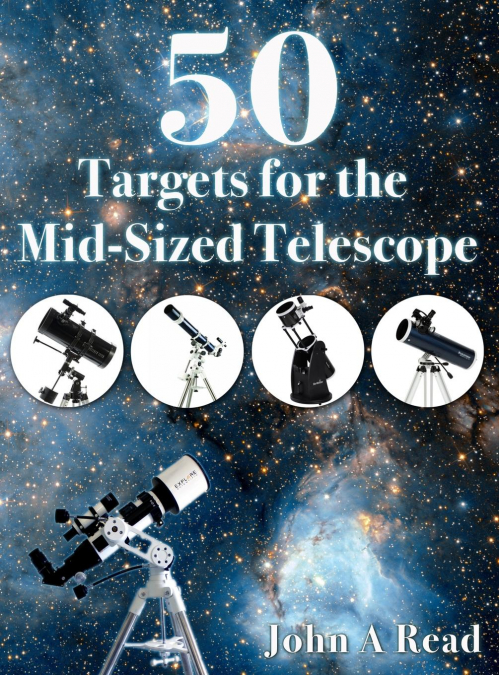
  • 50 Targets for the Mid-Sized Telescope
    John Read
    Written as a follow up to 50 Things to See with a Small Telescope, containing virtually no overlap in content, 50 Targets for the Mid-Sized Telescope introduces the beginner stargazer to an assortment of astronomical wonders. With easy-to-follow star maps, unique for each target, the budding astronomer will explore the universe like never before.Each target has been carefully c...
  • Climate Change and Global Warming - Exposed
    Andrew Johnson
    The weather is something which affects all of us, every day of our lives. It dictates our long and short-term plans. In the UK, the weather is the "default topic" of conversation for strangers and friends alike. Though it has obvious and far reaching importance, most people don't know very much about the weather. These days, they don't take time to observe it and probab...
    Disponible

    13,82 €

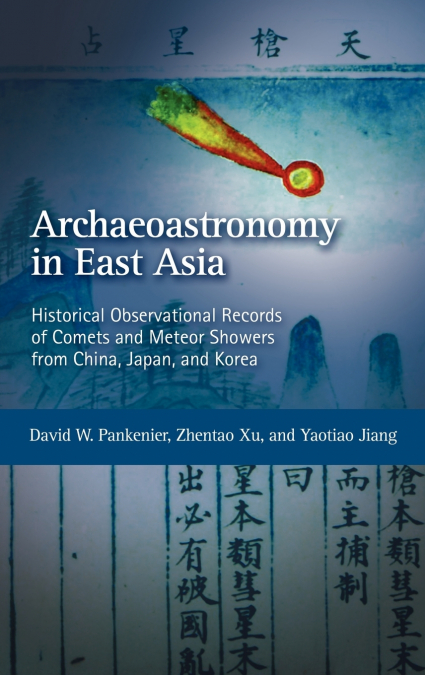
  • Archaeoastronomy in East Asia
    Until now, important research on the historical records of comets and meteor showers from China, Japan, and Korea has remained the exclusive preserve of those with expertise in the relevant languages. With a compilation like the present volume the authors hope to ameliorate that situation. Applying the same rigorous selection criteria and style of presentation as in the previou...
  • Night Vision
    Pippa Goldschmidt
    In Night Vision Pippa Goldschmidt writes about outer space and explores its multiple meanings as a place of awe and wonder to a more materialistic site in which scientific ideas are formulated and tested. This book explores space as a location of potential capital where commerce is being developed, leading to a new threatened ’enclosure of the commons’. Goldschmidt posits that ...
    Disponible

    11,26 €

  • Heaven’s Touch
    James B. Kaler
    A breathtaking account of how the surrounding cosmos impacts life on EarthDid you know that as you read these words showers of high-speed particles from exploding stars are raining down on you? As you gaze into the starry sky, you might feel isolated from the Universe around you-but you’re not. This book reveals the startling ways life on Earth is touched by our cosmic environm...
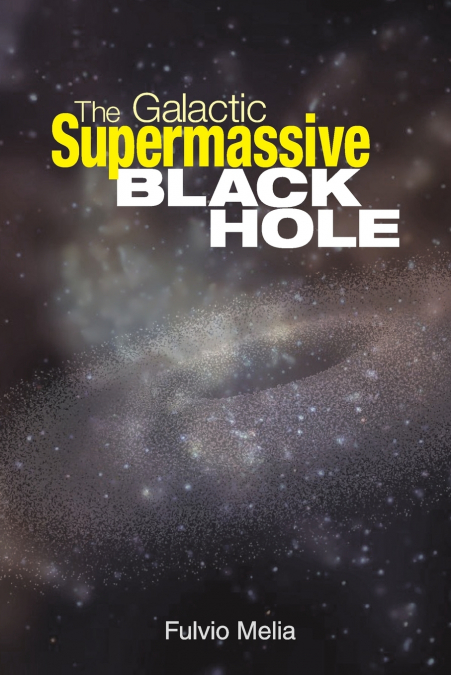
  • The Galactic Supermassive Black Hole
    Fulvio Melia
    Here, one of the world’s leading astrophysicists provides the first comprehensive and logically structured overview of the many ideas and discoveries pertaining to the supermassive black hole at the galactic center known as Sagittarius A*. By far the closest galactic nucleus in the universe, Sagittarius A* alone can provide us with a realistic expectation of learning about the ...
    Disponible

    118,87 €

Otros libros del autor

  • Religions and Extraterrestrial Life
    David A. Weintraub / David AWeintraub
    In the twenty-first century, the debate about life on other worlds is quickly changing from the realm of speculation to the domain of hard science. Within a few years, as a consequence of the rapid discovery by astronomers of planets around other stars, astronomers very likely will have discovered clear evidence of life beyond the Earth. Such a discovery of extraterrestrial lif...
    Disponible

    45,58 €

  • Is Pluto a Planet?
    David A. Weintraub / David AWeintraub
    A Note from the Author: On August 24, 2006, at the 26th General Assembly of the International Astronomical Union (IAU) in Prague, by a majority vote of only the 424 members present, the IAU (an organization of over 10,000 members) passed a resolution defining planet in such a way as to exclude Pluto and established a new class of objects in the solar system to be called 'dwarf ...
    Disponible

    40,16 €