How NATO Adapts

How NATO Adapts

Seth A Johnston

42,00 €
IVA incluido
Disponible
Editorial:
Hopkins Fulfillment Service
Año de edición:
2017
Materia
Relaciones internacionales
ISBN:
9781421421988
42,00 €
IVA incluido
Disponible

Selecciona una librería:

  • Librería Samer Atenea
  • Librería Aciertas (Toledo)
  • Kálamo Books
  • Librería Perelló (Valencia)
  • Librería Elías (Asturias)
  • Donde los libros
  • Librería Kolima (Madrid)
  • Librería Proteo (Málaga)

Despite momentous change, NATO remains a crucial safeguard of security and peace.Today’s North Atlantic Treaty Organization, with nearly thirty members and a global reach, differs strikingly from the alliance of twelve created in 1949 to 'keep the Americans in, the Russians out, and the Germans down.' These differences are not simply the result of the Cold War’s end, 9/11, or recent twenty-first-century developments but represent a more general pattern of adaptability first seen in the incorporation of Germany as a full member of the alliance in the early 1950s. Unlike other enduring post-World War II institutions that continue to reflect the international politics of their founding era, NATO stands out for the boldness and frequency of its transformations over the past seventy years.In this compelling book, Seth A. Johnston presents readers with a detailed examination of how NATO adapts. Nearly every aspect of NATO--including its missions, functional scope, size, and membership--is profoundly different than at the organization’s founding. Using a theoretical framework of 'critical junctures' to explain changes in NATO’s organization and strategy throughout its history, Johnston argues that the alliance’s own bureaucratic actors played important and often overlooked roles in these adaptations. Touching on renewed confrontation between Russia and the West, which has reignited the debate about NATO’s relevance, as well as a quarter century of post-Cold War rapprochement and more than a decade of expeditionary effort in Afghanistan, How NATO Adapts explores how crises from Ukraine to Syria have again made NATO’s capacity for adaptation a defining aspect of European and international security. Students, scholars, and policy practitioners will find this a useful resource for understanding NATO, transatlantic relations, and security in Europe and North America, as well as theories about change in international institutions.

Artículos relacionados

  • Realism in Practice
    The purpose of this book is to appraise the current relevance and validity of realism as an interpretative tool in contemporary International Relations. All chapters of the book are animated by a theoretical effort to define the conceptual aspects of realism and attempt to establish whether the tradition still provides the necessary conceptual tools to scholars.The chapters add...
    Disponible

    20,36 €

  • Predicting gender violence in India
    Shritha K Vasudevan
    In this provocative new book, Shritha Vasudevan argues that feminist international relations (IR) theory has inadvertently resulted in a biased worldview, the very opposite of what feminist IR set out to try to rectify. This book contests theoretical presumptions of Western feminist IR and attempts to reformulate it in contexts of non-Western cultures. Vasudevan deftly utilizes...
  • Contemporary security issues in Africa
    Isiaka Alani Badmus / Lere Amusan
    In volume, an emerging generation of African scholars examines specific states in Africa where instability is the order of the day. Considerations of African instability are highly relevant in today’s world, where one examines the types of regimes that were put in place after the Cold War and their effects on Africa. Multiparty systems introduced in Africa, rather than bringing...
  • Chronicles of the first and second chechen wars
    Ilya Milyukov
    Presented by Russian author and attorney Ilya Milyukov, Chronicles of the First and Second Chechen War presents the main events of the First (1994-1996) and Second (1999-2009) Wars in Chechnya, Russia’s deadliest conflicts since World War II. The First War began in December 1994 and lasted for one year and nine months, ending in August 1996. There were two major urban battles -...
  • Political instability in Africa
    Isiaka Alani Badmus / Lere Amusan
    This book offers broad-gauged analyses of the causes, nature, and changing patterns of armed conflict in Africa as well as the reasons for these patterns. It also situates conflicts that have been haunting the African continent since the time of decolonization within the various theoretical schools such as 'new war,' 'economic war,' 'neo-patrimonial,' and 'globalization.' It be...
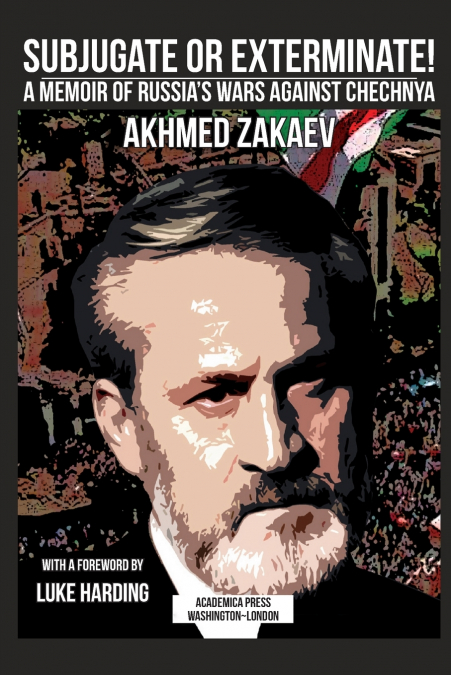
  • Subjugate or exterminate!
    Akhmed Zakaev / Arch Tait
    Foreword by Luke HardingAkhmed Zakaev is a symbol of the indomitable will of the Chechen nation. In this important memoir, he tells the story of the Chechen struggle as he experienced it, describing the conflict in human terms and providing a detailed documentary record of little known or badly understood events that will be of benefit to historians for generations to come.- Da...
    Disponible

    41,63 €