Inicio > Sociedad y ciencias sociales > Política y gobierno > How America Chooses Its Presidents
How America Chooses Its Presidents

How America Chooses Its Presidents

How America Chooses Its Presidents

Alexander S. Belenky / Alexander SBelenky

22,11 €
IVA incluido
Consulta disponibilidad
Editorial:
AuthorHouse
Año de edición:
2007
Materia
Política y gobierno
ISBN:
9781425992934

Selecciona una librería:

  • Librería Samer Atenea
  • Librería Aciertas (Toledo)
  • Kálamo Books
  • Librería Perelló (Valencia)
  • Librería Elías (Asturias)
  • Donde los libros
  • Librería Kolima (Madrid)
  • Librería Proteo (Málaga)

The 2000 presidential election underscored the reality that outcomes in presidential contests do not necessarily follow from the votes cast by American voters. Under the Electoral College, a range of outcomes is possible, and what once might have seemed utterly remote now is clearly possible.Alexander Belenky has focused directly on what he calls extreme outcomes of our presidential elections. This topic is understudied and underanalyzed. He makes a real contribution in a timely way.-Dr. Norman Ornstein, CBS election analyst, American Enterprise Institute Sometimes it takes an 'outsider’s eye' to see the U.S. political system clearly, and Alexander Belenky’s analysis of the presidential election system holds several remarkable surprises for me.Very few scholars have directly addressed fundamental flaws in the Electoral College’s logic. Belenky lays bare several flaws.-Prof. David King, Institute of Politics, John F. Kennedy School of Government, Harvard University Colorado offers . awarding its nine electoral votes proportionate to the popular vote instead of winner take all . Colorado’s 'make your vote count' initiative seeks to put power in the popular vote . Could success in Colorado start a trend? . Electoral College experts aren’t so certain .Alex Belenky, . who has written three books on the topic, including 'Extreme Outcomes of U.S. Presidential Elections', says Colorado could prompt some states to dump winner-take-all but argues that the Electoral College is 'flexible' and ought to remain in place-at least as a backup.One scenario he favors combines the popular vote and the Electoral College.'If there is at least 50 percent turnout of the electorate, then let the popular vote be decisive', he says, ’If there is not, then rely on the Electoral College'.I like it. It’s a good incentive to vote.-John Baer, Colo. Offering Electoral Change. Winner Wouldn’t 'Take All'. Philadelphia Daily News, Sept. 28, 2004 ************************************************************************************** The Electoral College got a brief spate of attention in 2000. Many people realized then for the first time that we have a system in which the president is chosen not by the voters, but by 538 electors. It is a ridiculous setup, which thwarts the will of the majority, distorts presidential campaigning and has the potential to produce a true constitutional crisis.-(Abolish The Electoral College, The New York Times, Editorial, August 29, 2004) With another close presidential contest in store, that hardy if decipherable oddity of American Politics, The Electoral College is back in the news.. The Constitution requires someone to win a majority of the electoral votes; otherwise, the House chooses a president from the top three finishers.How do you think the public would react to the discovery that in such a contigent election, each state delegation has one vote, regardless of its size-the Democratic majority from California being matched by single Republican member from Delaware? .. I suspect this whole Electoral College issue is due for serious debate ..-(David Broder, Electoral College Alternatives Deserve Careful Scrutiny, The Seattle Times, Oct 21, 2004) One more surprising features of the controversy surrounding the 2000 election was its failure to spark any substantiated effort to abolish or reform the Electoral College..The National Commission on Federal Election Reform, headed by former presidents Carter and Ford, decided early on not to even discuss the issue. 'I think it is a waste of time to talk about changing the Electoral College', Carter observed. 'I would predict that 200 years from now, we will still have the Electoral College’. -(Alexander Keyssar, Peculiar Institution, Boston Globe, October 17, 2004)
Artículos relacionados

  • How Great a Crime - to tell the truth
    Neil Kay / Steven Kay
    Joseph Gales was one of the all-time great Sheffielders – forget Joe Cocker, Jessica Ennis-Hill, Sean Bean or Michael Palin. These are all minnows compared to Joseph Gales – and their stories are boring besides that of the Galeses. The Galeses story has been forgotten and has not been brought together in one place before – it is not just something dredged up from history – an i...
    Disponible

    10,33 €

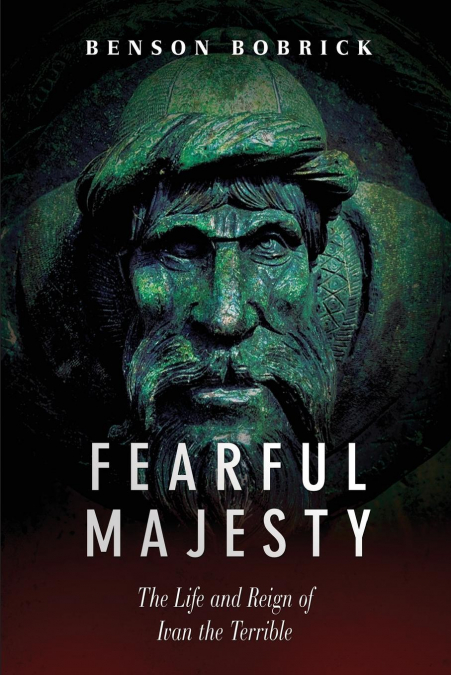
  • Fearful Majesty
    Benson Bobrick
    Ivan the Terrible - the name evokes the legend of a cruel and dangerously insane tyrant. Fearful Majesty explores that legend and exposes the man, his nature, and his time.This acclaimed biography of one of Russia’s most important and tyrannical rulers is not only a rich, readable biography, it is also surprisingly timely, revealing how many of the issues Russia faces today hav...
    Disponible

    19,27 €

  • Economic Optimization of Innovation & Risk
    Robert Shuler
    A Theory of Crash Rate for Private & Public Projects with Critical or non-Critical systems.Analyzing & managing risk has been a quest for 5000 years, and is essential to everything from water supplies, finance, and agriculture to computers and space travel. At last there is a quantitative theory and a simple equation that allows you to: - choose your failure rate - get there...
    Disponible

    13,02 €

  • The System
    Lincoln Steffens
    The 'muckraker' Lincoln Steffens dug deep into business criminality and political corruption in a powerful series of articles written for McClure's magazine. Establishment newspapers and 'System' politicians dismissed his work as just another example of the decrepit modern journalism that could never pass for genuine writing. But Steffens' dogged quest for truth and justice set...
    Disponible

    23,66 €

  • Digital Activism in Asia Reader
    The digital turn might as well be marked as an Asian turn. From flash-mobs in Taiwan to feminist mobilisations in India, from hybrid media strategies of Syrian activists to cultural protests in Thailand, we see the emergence of political acts that transform the citizen from being a beneficiary of change to becoming an agent of change. In co-shaping these changes, what the digit...
    Disponible

    22,19 €

  • The New Freedom
    Woodrow Wilson
    In 1912, Woodrow Wilson was the Democratic nominee for President of the United States. He campaigned against the Republican incumbent, William Howard Taft, and Taft’s predecessor, Theodore Roosevelt, who had split off from the Republican Party to form his own Progressive, or Bull Moose, Party. Much of the campaign focused on the US economy, particularly the candidates’ views of...
    Disponible

    8,67 €

Otros libros del autor

  • Who Will Be the Next President?
    Alexander S. Belenky / Alexander SBelenky
    This book is open access under a CC BY 4.0 license.This book addresses the peculiarities of the current presidential election system not yet addressed in other publications. It argues that any rules for electing a President that may have a chance to replace the current ones should provide an equal representation of states as equal members of the Union, and of the nation as a wh...
  • Understanding the Fundamentals of the U.S. Presidential Election System
    Alexander S. Belenky / Alexander SBelenky
    This is the first book on the U.S. presidential election system to analyze the basic principles underlying the design of the existing system and those at the heart of competing proposals for improving the system. The book discusses how the use of some election rules embedded in the U.S. Constitution and in the Presidential Succession Act may cause skewed or weird election outco...
  • How a President of the United States Is Elected
    Alexander S. Belenky / Alexander SBelenky
    This is the first book in Russian that describes the system of electing a U. S. President. Look at the following statements concerning U.S. Presidential elections:1. The system of electing a U.S. President (the election system) was never designed to service the popular will.2. The currently existing election system does not follow some major ideas of the Founding Fathers.3...
    Disponible

    21,16 €

  • How America Chooses Its Presidents
    Alexander S. Belenky / Alexander SBelenky
    How America Chooses Its Presidents addresses in a simple manner the whole spectrum of issues relating to the Electoral College from the perspective of its logical foundations. This is the first book to question the applicability of the Presidential Succession Act, a Federal Statute, in certain extreme but possible situations. The book argues that the act may not protect the cou...
    Disponible

    16,34 €