 Librería Samer Atenea
 Kálamo Books
 Librería Elías (Asturias)
 Librería Kolima (Madrid)
 Librería Proteo (Málaga)
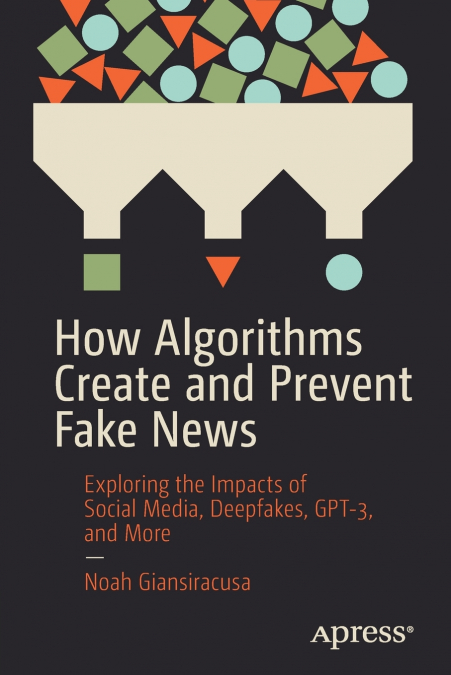
'It’s a joy to read a book by a mathematician who knows how to write. [...] There is no better guide to the strategies and stakes of this battle for the future.'---Paul Romer, Nobel Laureate, University Professor in Economics at NYU, and former Chief Economist at the World Bank. 'By explaining the flaws and foibles of everything from Google search to QAnon-and by providing level-headed evaluations of efforts to fix them-Noah Giansiracusa offers the perfect starting point for anyone entering the maze of modern digital media.'-Jonathan Rauch, senior fellow at the Brookings Institute and contributing editor of The AtlanticFrom deepfakes to GPT-3, deep learning is now powering a new assault on our ability to tell what’s real and what’s not, bringing a whole new algorithmic side to fake news. On the other hand, remarkable methods are being developed to help automate fact-checking and the detection of fake news and doctored media. Success in the modern business world requires you to understand these algorithmic currents, and to recognize the strengths, limits, and impacts of deep learning---especially when it comes to discerning the truth and differentiating fact from fiction. This book tells the stories of this algorithmic battle for the truth and how it impacts individuals and society at large. In doing so, it weaves together the human stories and what’s at stake here, a simplified technical background on how these algorithms work, and an accessible survey of the research literature exploring these various topics. How Algorithms Create and Prevent Fake News is an accessible, broad account of the various ways that data-driven algorithms have been distorting reality and rendering the truth harder to grasp. From news aggregators to Google searches to YouTube recommendations to Facebook news feeds, the way we obtain information today is filtered through the lens of tech giant algorithms. The way data is collected, labelled, and stored has a big impact on the machine learning algorithms that are trained on it, and this is a main source of algorithmic bias - which gets amplified in harmful data feedback loops. Don’t be afraid: with this book you’ll see the remedies and technical solutions that are being applied to oppose these harmful trends. There is hope.What You Will LearnThe ways that data labeling and storage impact machine learning and how feedback loops can occurThe history and inner-workings of YouTube’s recommendation algorithmThe state-of-the-art capabilities of AI-powered text generation (GPT-3) and video synthesis/doctoring (deepfakes) and how these technologies have been used so farThe algorithmic tools available to help with automated fact-checking and truth-detectionWho This Book is ForPeople who don’t have a technical background (in data, computers, etc.) but who would like to learn how algorithms impact society; business leaders who want to know the powers and perils of relying on artificial intelligence. A secondary audience is people with a technical background who want to explore the larger social and societal impact of their work.