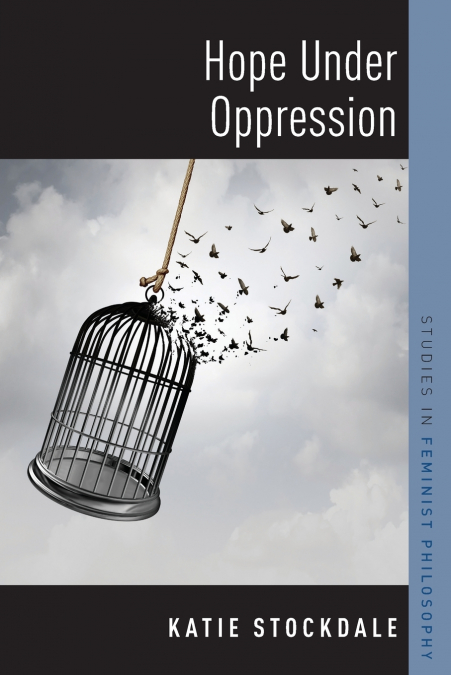

Hope Under Oppression

Hope Under Oppression

Katie Stockdale

55,15 €
IVA incluido
Disponible
Editorial:
Oxford University Press
Año de edición:
2021
Materia
Ética y filosofía moral
ISBN:
9780197563571
55,15 €
IVA incluido
Disponible

Selecciona una librería:

  • Librería Samer Atenea
  • Librería Aciertas (Toledo)
  • Kálamo Books
  • Librería Perelló (Valencia)
  • Librería Elías (Asturias)
  • Donde los libros
  • Librería Kolima (Madrid)
  • Librería Proteo (Málaga)

We have all been told, at one time or another, to never give up hope. It’s a common injunction to children, but as we grow older, sustaining hope becomes more challenging, particularly in a world we come to see as often frightening, dark, and unjust. But what is this thing hope, and why ishope so valuable that we are so often urged to preserve and protect it? This book explores the nature and essential role of hope in human life under conditions of oppression. Oppression is often a threat and damage to hope, yet many members of oppressed groups, including prominent activists pursuing a more just world, find hope valuable and even essential to theirpersonal and political lives. Katie Stockdale offers a unique evaluative framework for hope that captures its intrinsic value, the rationality and morality of hope, and ultimately how we can hope well in the non-ideal world we share. She develops an account of the relationship between hope and angerabout oppression and argues that when people are angry about oppression, they tend to also harbour hope for repair. When people’s hopes for repair are not realized, as is often the case for those who are oppressed, their anger can evolve into bitterness. They feel unresolved anger as a result oflosing hope that injustice will be sufficiently acknowledged and addressed. Fortunately, things do not have to be this way. Even when people may feel that they have lost all hope, faith can help them to be resilient in the face of oppression. They can join with others who share their experiences or commitments for a better world, uniting with them in collective action. Bydoing so, they can strengthen hope for the future when hope might otherwise be lost. Ultimately, this work illustrates the crucial value of hope for both individuals and collectives in the pursuit of justice, and in an increasingly uncertain world.


Artículos relacionados

  • Ka Ab Ba Building The Lighted Temple
    Dr Terri R. Nelson / Dr Terri RNelson
    The book KaAbBa Building The Lighted Temple/Metaphysical Keys to the Tree of Life draws a circle that is inclusive of the Afrikan origin of the Ancient Kemetic/Egyptian wisdom. It reveals the undeniable root and link of Ancient Africa to all the religious systems that would develop worldwide. This book is explosive in its power to convey the meaning of KaAbBa, the Medu Neter  (...
    Disponible

    37,41 €

  • Technoethics and the Evolving Knowledge Society
    Rocci Luppicini
    Recently, there has been a major push to rediscover the ethical dimension of technology across the sciences, social sciences, and humanities. Technoethics and the Evolving Knowledge Society: Ethical Issues in Technological Design, Research, Development, and Innovation examines human processes and practices connected to technology embedded within social, political, and moral sph...
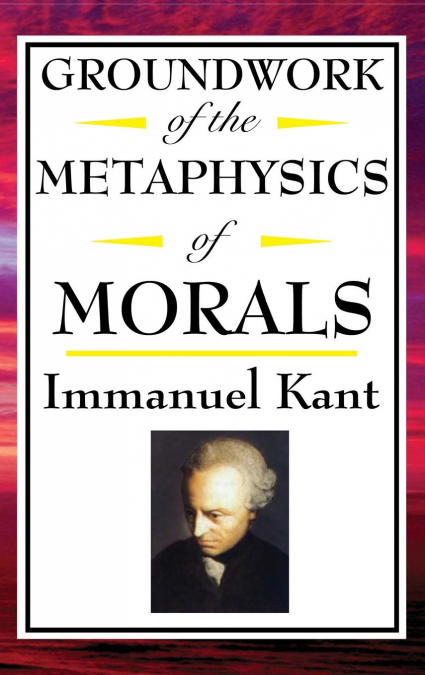
  • Kant
    Immanuel Kant
    Kant’s Groundwork of the Metaphysics of Morals is one of the most important works in modern moral philosophy. It belongs beside Plato, Aristotle, Machiavelli, and Hobbes. Here Kant sets out to articulate and defend the Categorical Imperative - the fundamental principle that underlies moral reasoning - and to lay the foundation for a comprehensive account of justice and human vi...
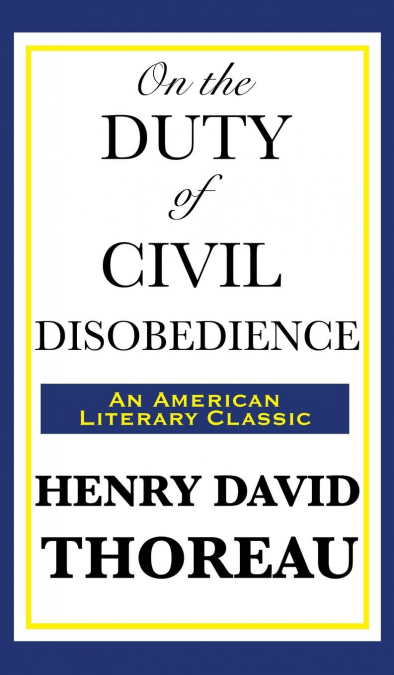
  • On the Duty of Civil Disobedience
    HENRY DAVID THOREAU
    Civil Disobedience argues that citizens should not permit their governments to overrule their consciences, and that they have a duty to avoid allowing their acquiescence to enable the government to make them the agents of injustice. Thoreau was motivated in part by his disgust with slavery and the Mexican-American War, but the sentiments he expresses here are just as pertinent ...
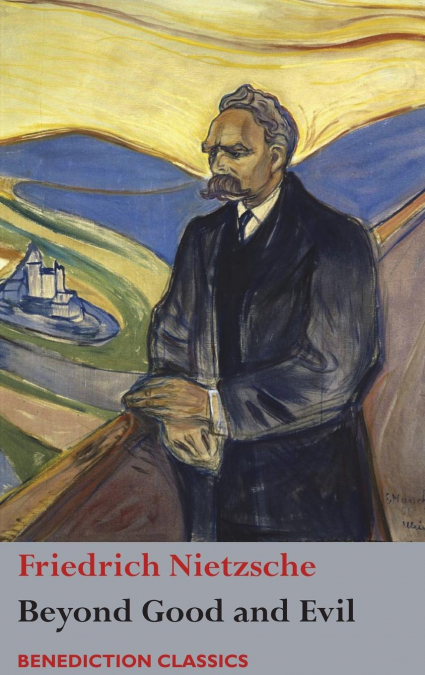
  • Beyond Good and Evil
    Friedrich Nietzsche
    Nietzsche, though primarily a philosopher, wrote widely on art, philology, history, religion, tragedy, culture, and science.  In 1886, at the height of his powers, he published Beyond Good and Evil.  Here he examines much of the best of human thought--dogmatic philosophy, Judeo-Christian morality, science and democracy – and finds it lacking.  Rejecting “slave-morality” he pres...
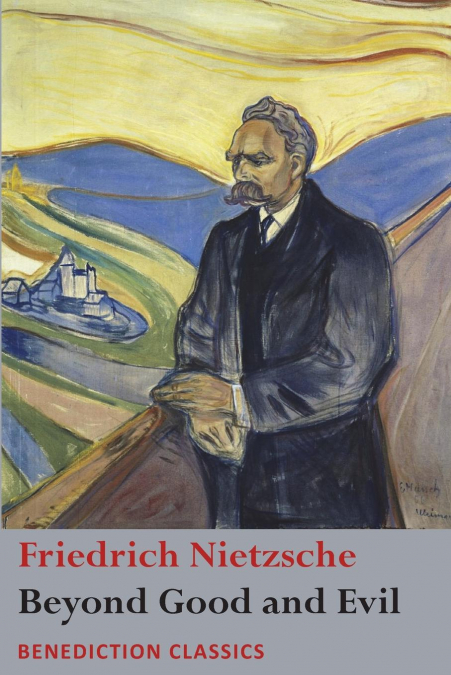
  • Beyond Good and Evil
    Friedrich Nietzsche
    Nietzsche, though primarily a philosopher, wrote widely on art, philology, history, religion, tragedy, culture, and science.  In 1886, at the height of his powers, he published Beyond Good and Evil.  Here he examines much of the best of human thought--dogmatic philosophy, Judeo-Christian morality, science and democracy – and finds it lacking.  Rejecting “slave-morality” he pres...
    Disponible

    9,99 €