Honesty

Honesty

Christian B Miller

50,69 €
IVA incluido
Consulta disponibilidad
Editorial:
Oxford University Press
Año de edición:
2021
Materia
Ética y filosofía moral
ISBN:
9780197567494

Selecciona una librería:

  • Librería Samer Atenea
  • Librería Aciertas (Toledo)
  • Kálamo Books
  • Librería Perelló (Valencia)
  • Librería Elías (Asturias)
  • Donde los libros
  • Librería Kolima (Madrid)
  • Librería Proteo (Málaga)

Honesty is an important virtue. Parents want to develop it in their children. Close relationships depend upon it. Employers value it in their employees. Surprisingly, however, philosophers have said very little about the virtue of honesty over the past fifty years. In this book, Christian B. Miller aims to draw much greater attention to this neglected virtue. The first part of the book looks at the concept of honesty. It takes up questions such as: What does honesty involve? What are the motives of an honest person? How does practical wisdom relate to honesty? Miller explores what connects the many sides of honesty, including not lying, not stealing, not breaking promises, not misleading others, and not cheating. He argues that the honest person reliably does not intentionally distort the facts as she takes them to be. Miller then examines the empirical psychology of honesty. He takes up the question of whether most people are honest, dishonest, or somewhere in between. Drawing extensively on recent studies of cheating and lying, the model Miller articulates ultimately implies that most of us have a long way to go to reach an honest character. Honesty: The Philosophy and Psychology of a Neglected Virtue provides both a richer understanding of what our character looks like, as well as what the goal of being an honest person actually involves. Miller then leaves it up to us to decide if we want to take steps to shrink the character gap between the two.
Artículos relacionados

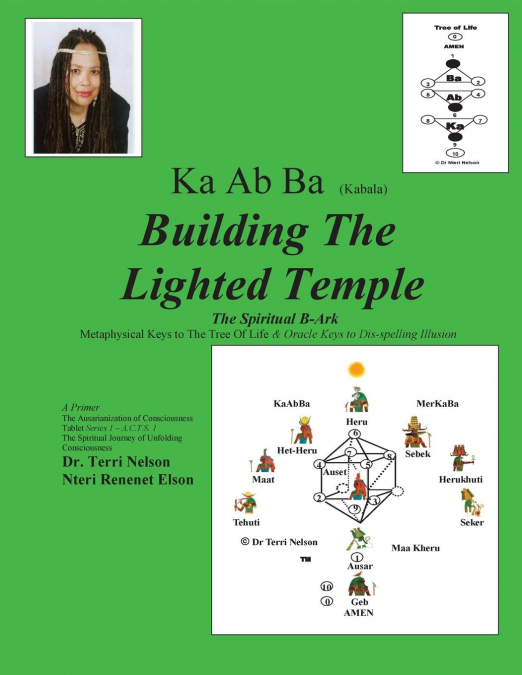
  • Ka Ab Ba Building The Lighted Temple
    Dr Terri R. Nelson / Dr Terri RNelson
    The book KaAbBa Building The Lighted Temple/Metaphysical Keys to the Tree of Life draws a circle that is inclusive of the Afrikan origin of the Ancient Kemetic/Egyptian wisdom. It reveals the undeniable root and link of Ancient Africa to all the religious systems that would develop worldwide. This book is explosive in its power to convey the meaning of KaAbBa, the Medu Neter  (...
    Disponible

    37,41 €

  • Technoethics and the Evolving Knowledge Society
    Rocci Luppicini
    Recently, there has been a major push to rediscover the ethical dimension of technology across the sciences, social sciences, and humanities. Technoethics and the Evolving Knowledge Society: Ethical Issues in Technological Design, Research, Development, and Innovation examines human processes and practices connected to technology embedded within social, political, and moral sph...
  • Kant
    Immanuel Kant
    Kant’s Groundwork of the Metaphysics of Morals is one of the most important works in modern moral philosophy. It belongs beside Plato, Aristotle, Machiavelli, and Hobbes. Here Kant sets out to articulate and defend the Categorical Imperative - the fundamental principle that underlies moral reasoning - and to lay the foundation for a comprehensive account of justice and human vi...
  • On the Duty of Civil Disobedience
    HENRY DAVID THOREAU
    Civil Disobedience argues that citizens should not permit their governments to overrule their consciences, and that they have a duty to avoid allowing their acquiescence to enable the government to make them the agents of injustice. Thoreau was motivated in part by his disgust with slavery and the Mexican-American War, but the sentiments he expresses here are just as pertinent ...
  • Beyond Good and Evil
    Friedrich Nietzsche
    Nietzsche, though primarily a philosopher, wrote widely on art, philology, history, religion, tragedy, culture, and science.  In 1886, at the height of his powers, he published Beyond Good and Evil.  Here he examines much of the best of human thought--dogmatic philosophy, Judeo-Christian morality, science and democracy – and finds it lacking.  Rejecting “slave-morality” he pres...
  • Beyond Good and Evil
    Friedrich Nietzsche
    Nietzsche, though primarily a philosopher, wrote widely on art, philology, history, religion, tragedy, culture, and science.  In 1886, at the height of his powers, he published Beyond Good and Evil.  Here he examines much of the best of human thought--dogmatic philosophy, Judeo-Christian morality, science and democracy – and finds it lacking.  Rejecting “slave-morality” he pres...
    Disponible

    9,99 €

Otros libros del autor

  • Integrity, Honesty, and Truth Seeking
    Christian B Miller
    We tend to admire people who stay true to their convictions in the face of opposition, who are not tempted to twist or withhold the truth for selfish reasons, and who seek the truth even when it means giving up their cherished views. Indeed, integrity, honesty, and truth seeking are crucial virtues on both intimate and global scales, significant in everything from our relations...
    Disponible

    20,77 €

  • Character and Moral Psychology
    Christian B Miller
    Philosophers and psychologists have been hard at work trying to unlock the mysteries of our characters. Unfortunately, their answers have been all over the map. According to one position, every single person has all of the moral virtues, such as modesty and compassion, although to varying degrees. Yet according to another position, no one has any character traits at all since t...