 Librería Samer Atenea
 Kálamo Books
 Librería Elías (Asturias)
 Librería Kolima (Madrid)
 Librería Proteo (Málaga)
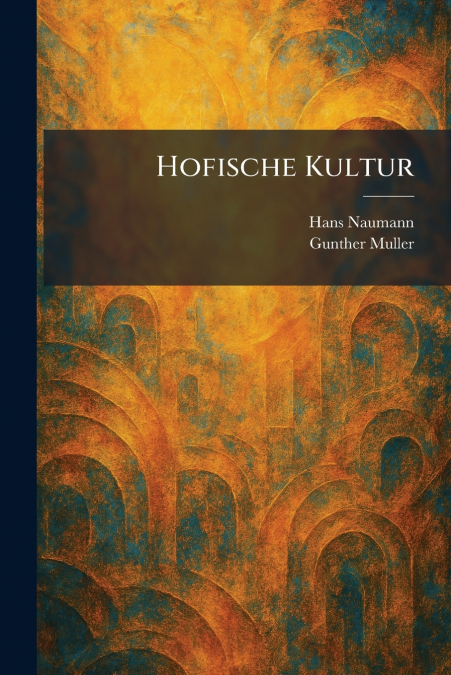
'Hofische Kultur' ist eine tiefgreifende Untersuchung der mittelalterlichen Gesellschaft und ihrer kulturellen Ausdrucksformen. Das Werk von Hans Naumann und Günther Müller beleuchtet die Entstehung und Entwicklung des ritterlichen Idealbildes und die soziologischen Strukturen des Hoflebens im Hochmittelalter. Dabei analysieren die Autoren die Wechselwirkung zwischen Literatur, Ethik und gesellschaftlicher Realität, wobei insbesondere der Einfluss des Minnesangs und der höfischen Epik auf das Selbstverständnis des Adels im Fokus steht.Die Untersuchung spannt einen weiten Bogen von den germanischen Wurzeln bis hin zur vollausgebildeten ritterlichen Kultur des 12. und 13. Jahrhunderts. Die Autoren untersuchen, wie die Ideale von Ehre, Beständigkeit und ritterlicher Tugend das tägliche Leben und die literarische Produktion jener Ãra prägten. 'Hofische Kultur' gilt als ein wegweisender Beitrag zur germanistischen Mediävistik und bietet wertvolle Einblicke in die Geistesgeschichte Europas. Durch die Verknüpfung von Literaturgeschichte und Kultursoziologie bleibt dieses Werk eine unverzichtbare Quelle für Forscher und Leser, die sich für die Komplexität des mittelalterlichen Weltbildes interessieren.This work has been selected by scholars as being culturally important, and is part of the knowledge base of civilization as we know it. This work was reproduced from the original artifact, and remains as true to the original work as possible. Therefore, you may see the original copyright references, library stamps (as most of these works have been housed in our most important libraries around the world), and other notations in the work.This work is in the public domain in the United States of America, and possibly other nations. Within the United States, you may freely copy and distribute this work, as no entity (individual or corporate) has a copyright on the body of the work.As a reproduction of a historical artifact, this work may contain missing or blurred pages, poor pictures, errant marks, etc. Scholars believe, and we concur, that this work is important enough to be preserved, reproduced, and made generally available to the public. We appreciate your support of the preservation process, and thank you for being an important part of keeping this knowledge alive and relevant.