
History of Nordic Computing

History of Nordic Computing


131,51 €
IVA incluido
Consulta disponibilidad
Editorial:
Springer Nature B.V.
Año de edición:
2005
Materia
Política y gobierno
ISBN:
9780387241678

Selecciona una librería:

  • Librería Samer Atenea
  • Librería Aciertas (Toledo)
  • Kálamo Books
  • Librería Perelló (Valencia)
  • Librería Elías (Asturias)
  • Donde los libros
  • Librería Kolima (Madrid)
  • Librería Proteo (Málaga)

Computing in the Nordic countries started in late 1940s mainly as an engineering activity to build computing devices to perform mathematical calculations and assist mathematicians and engineers in scientific problem solving. The early computers of the Nordic countries emerged during the 1950s and had names like BARK, BESK, DASK, SMIL, SARA, ESKO, and NUSSE. Each of them became a nucleus in institutes and centres for mathematical computations programmed and used by highly qualified professionals. However, one should not forget the punched-card machine technology at this time that had existed for several decades. In addition, we have a Nordic name, namely Frederik Rosing Bull, contributing to the fundaments of punched card technology and forming the French company Bull. Commercial products such as FACIT EDB and SAAB D20-series computers in Sweden, the Danish GIER computer, the Nokia MIKKO computer in Finland, as well as the computers of Norsk Data in Norway followed the early computers. In many cases, however, companies and institutions did not further develop or exploit Nordic computing hardware, even though it exhibited technical advantages. Consequently, in the 1970s, US computers, primarily from IBM, flooded the Nordic market.
Artículos relacionados

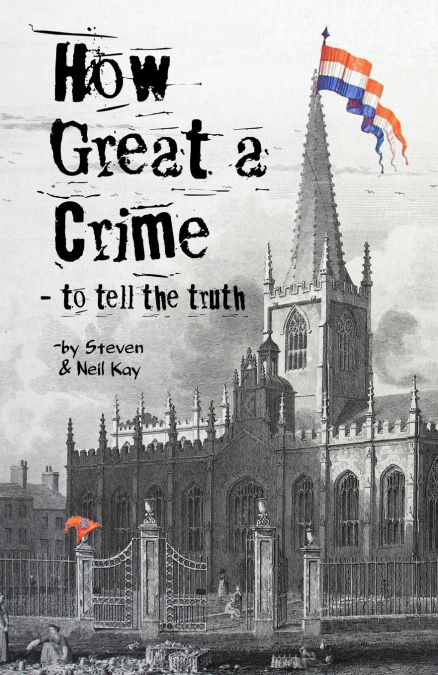
  • How Great a Crime - to tell the truth
    Neil Kay / Steven Kay
    Joseph Gales was one of the all-time great Sheffielders – forget Joe Cocker, Jessica Ennis-Hill, Sean Bean or Michael Palin. These are all minnows compared to Joseph Gales – and their stories are boring besides that of the Galeses. The Galeses story has been forgotten and has not been brought together in one place before – it is not just something dredged up from history – an i...
    Disponible

    10,33 €

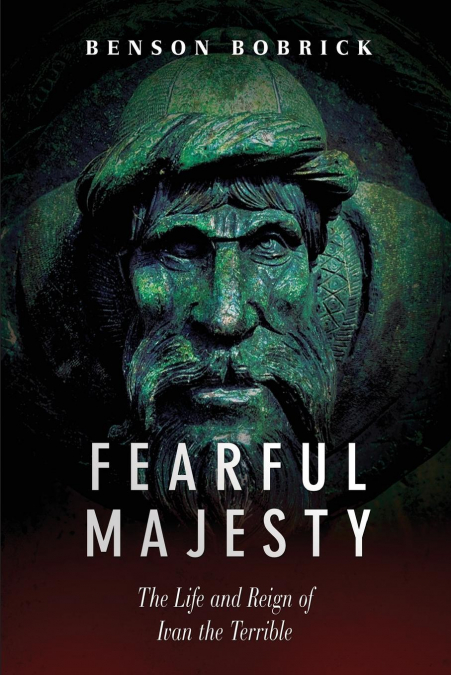
  • Fearful Majesty
    Benson Bobrick
    Ivan the Terrible - the name evokes the legend of a cruel and dangerously insane tyrant. Fearful Majesty explores that legend and exposes the man, his nature, and his time.This acclaimed biography of one of Russia’s most important and tyrannical rulers is not only a rich, readable biography, it is also surprisingly timely, revealing how many of the issues Russia faces today hav...
    Disponible

    19,27 €

  • Economic Optimization of Innovation & Risk
    Robert Shuler
    A Theory of Crash Rate for Private & Public Projects with Critical or non-Critical systems.Analyzing & managing risk has been a quest for 5000 years, and is essential to everything from water supplies, finance, and agriculture to computers and space travel. At last there is a quantitative theory and a simple equation that allows you to: - choose your failure rate - get there...
    Disponible

    13,02 €

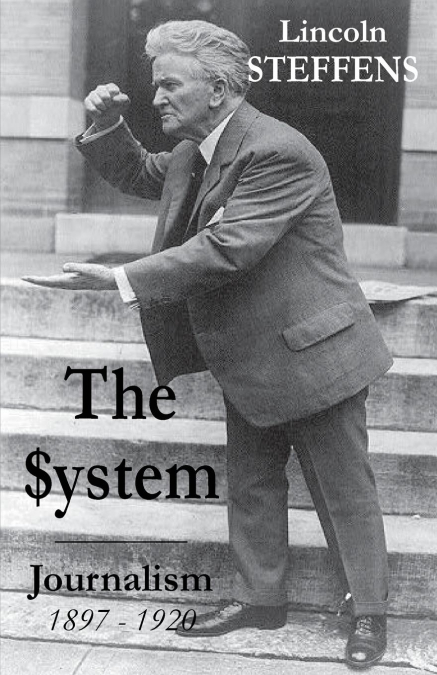
  • The System
    Lincoln Steffens
    The 'muckraker' Lincoln Steffens dug deep into business criminality and political corruption in a powerful series of articles written for McClure's magazine. Establishment newspapers and 'System' politicians dismissed his work as just another example of the decrepit modern journalism that could never pass for genuine writing. But Steffens' dogged quest for truth and justice set...
    Disponible

    23,66 €

  • Digital Activism in Asia Reader
    The digital turn might as well be marked as an Asian turn. From flash-mobs in Taiwan to feminist mobilisations in India, from hybrid media strategies of Syrian activists to cultural protests in Thailand, we see the emergence of political acts that transform the citizen from being a beneficiary of change to becoming an agent of change. In co-shaping these changes, what the digit...
    Disponible

    22,19 €

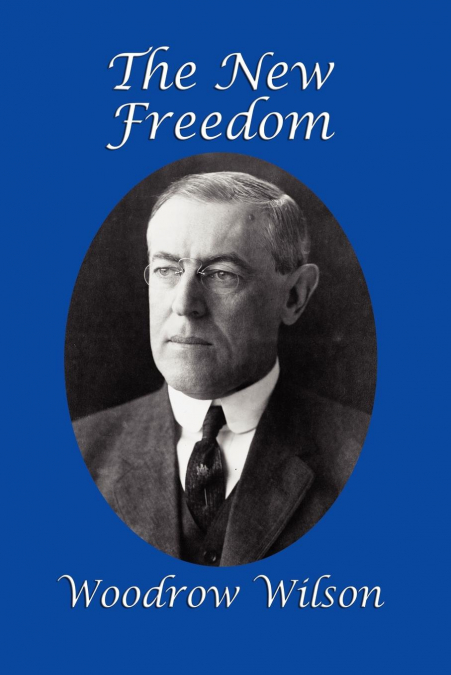
  • The New Freedom
    Woodrow Wilson
    In 1912, Woodrow Wilson was the Democratic nominee for President of the United States. He campaigned against the Republican incumbent, William Howard Taft, and Taft’s predecessor, Theodore Roosevelt, who had split off from the Republican Party to form his own Progressive, or Bull Moose, Party. Much of the campaign focused on the US economy, particularly the candidates’ views of...
    Disponible

    8,67 €