
Inicio > Humanidades > Historia > History of Nazi Holocaust and genocide (1941-1945)
History of Nazi Holocaust and genocide (1941-1945)

History of Nazi Holocaust and genocide (1941-1945)

History of Nazi Holocaust and genocide (1941-1945)

Loree Vallejo

32,05 €
IVA incluido
Disponible
Editorial:
Alpha Editions
Año de edición:
2018
Materia
Historia
ISBN:
9789352979714
32,05 €
IVA incluido
Disponible

Selecciona una librería:

  • Librería Samer Atenea
  • Librería Aciertas (Toledo)
  • Kálamo Books
  • Librería Perelló (Valencia)
  • Librería Elías (Asturias)
  • Donde los libros
  • Librería Kolima (Madrid)
  • Librería Proteo (Málaga)

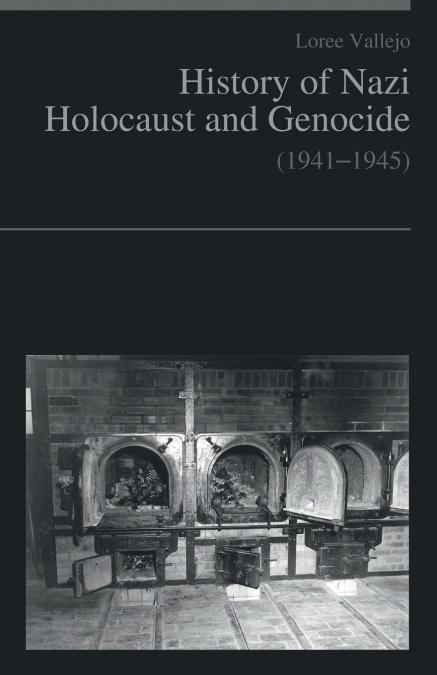
"The Holocaust, also referred to as the Shoah, was a genocide during World War II in which Nazi Germany, aided by its collaborators, systematically murdered some six million European Jews, around two-thirds of the Jewish population of Europe, between 1941 and 1945. Jews were targeted for extermination as part of a larger event involving the persecution and murder of other groups, including in particular the Roma and ""incurably sick"", as well as ethnic Poles and other Slavs, Soviet citizens, Soviet prisoners of war, political opponents, gay men and Jehovah's Witnesses, resulting in up to 17 million deaths overall.Germany implemented the persecution in stages. Following Adolf Hitler's rise to power in 1933, the government passed laws to exclude Jews from civil society, most prominently the Nuremberg Laws in 1935. Starting in 1933, the Nazis built a network of concentration camps in Germany for political opponents and people deemed ""undesirable"". After the invasion of Poland in 1939, the regime set up ghettos to segregate Jews. Over 42,000 camps, ghettos, and other detention sites were established.The deportation of Jews to the ghettos culminated in the policy of extermination the Nazis called the ""Final Solution to the Jewish Question"", discussed by senior Nazi officials at the Wannsee Conference in Berlin in January 1942. As German forces captured territories in the East, all anti-Jewish measures were radicalized. Under the coordination of the SS, with directions from the highest leadership of the Nazi Party, killings were committed within Germany itself, throughout German-occupied Europe, and across all territories controlled by the Axis powers. Paramilitary death squads called Einsatzgruppen in cooperation with Wehrmacht police battalions and local collaborators murdered around 1.3 million Jews in mass shootings between 1941 and 1945. By mid-1942, victims were being deported from the ghettos in sealed freight trains to extermination camps where, if they survived the journey, they were killed in gas chambers. The killing continued until the end of World War II in Europe in May 1945." 
Artículos relacionados

  • Raising Freedom's Banner
    Paul Harris
    World wide history of peaceful street demonstrations from their earliest beginning in eighteenth century England to their use throughout the world in the twenty-first century. Describes why some demonstration movements succeeded and others failed. Contrasts demonstrations within the law with civil disobedience demonstrations. Describes Peterloo, the Chartists, the Suffragettes,...
    Disponible

    23,59 €

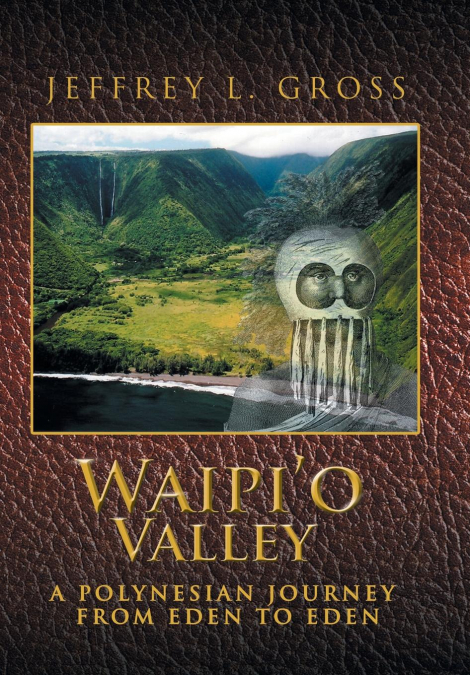
  • Waipi’o Valley
    Jeffrey L. Gross
    Waipi’o Valley: A Polynesian Journey from Eden to Eden recounts the remarkable migrations of the Polynesians across a third of the circumference of the earth. Their amazing journey began from Kalana i Hau’ola, the biblical “Garden of Eden” located along the shore of the Persian Gulf, extended to the Indus River Valley of ancient Vedic India, to Egypt where some ancestors of the...
  • Floralia
    June Rainsford Butler
    A century characterized by a growing interest in science, the opportunity for travel, and leisure for gardening furnishes the setting for Butler’s book. The rise of landscape gardening in England is traced, and the origin and history of its most famous gardens are given. The close relation between England and America in the field of horticulture is also discussed.Originally pub...
    Disponible

    61,20 €

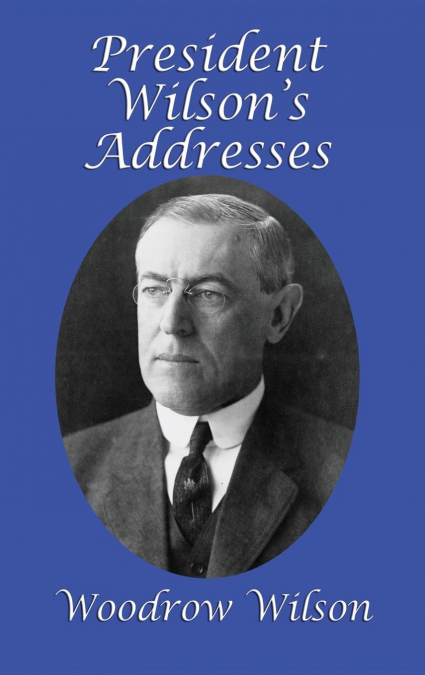
  • President Wilson’s Addresses
    Woodrow Wilson
    'These addresses of President Woodrow Wilson are almost entirely concerned with political affairs, and more specifically with defining Americanism. Yet they also show that even as he moved from academia to the heights of politics, Wilson retained something of the teacher’s interest in showing the relation between specific instances and the general forms of thought or action of ...
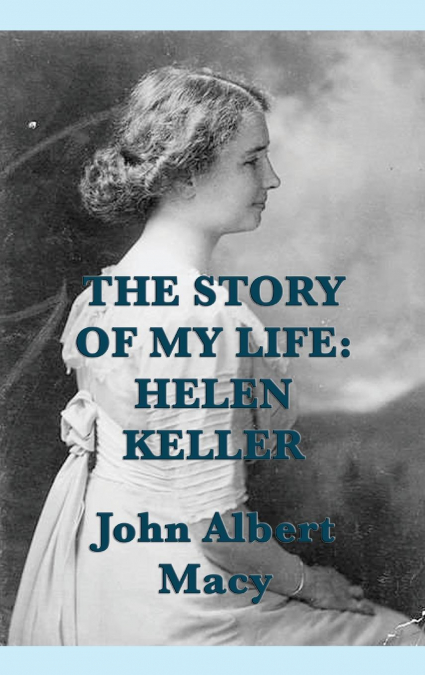
  • The Story of my Life
    John Albert Macy
    The Story of My Life, is Helen Keller’s autobiography detailing her early life, especially her experiences with Anne Sullivan. The book is dedicated to inventor Alexander Graham Bell. The dedication reads, 'To ALEXANDER GRAHAM BELL Who has taught the deaf to speak and enabled the listening ear to hear speech from the Atlantic to the Rockies, I dedicate this Story of My Life.' ...
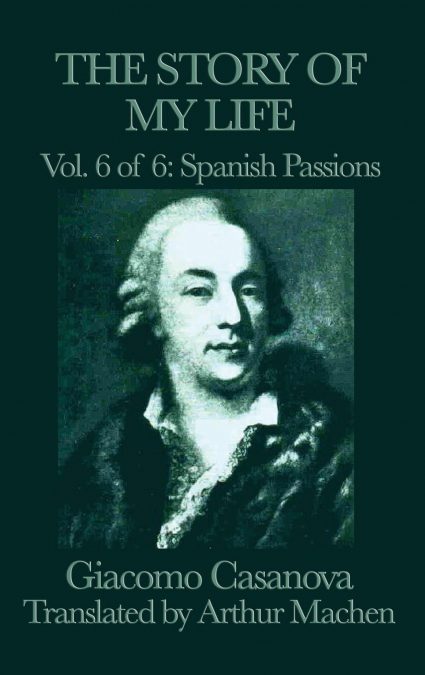
  • The Story of My Life Vol. 6 Spanish Passions
    Giacomo Casanova
    Casanova was an Italian adventurer and author from the Republic of Venice. His autobiography, Histoire de ma vie (Story of My Life), is regarded as one of the most authentic sources of the customs and norms of European social life during the 18th century. He has become so famous for his often complicated and elaborate affairs with women that his name is now synonymous with 'wom...

Otros libros del autor