 Librería Samer Atenea
 Kálamo Books
 Librería Elías (Asturias)
 Librería Kolima (Madrid)
 Librería Proteo (Málaga)
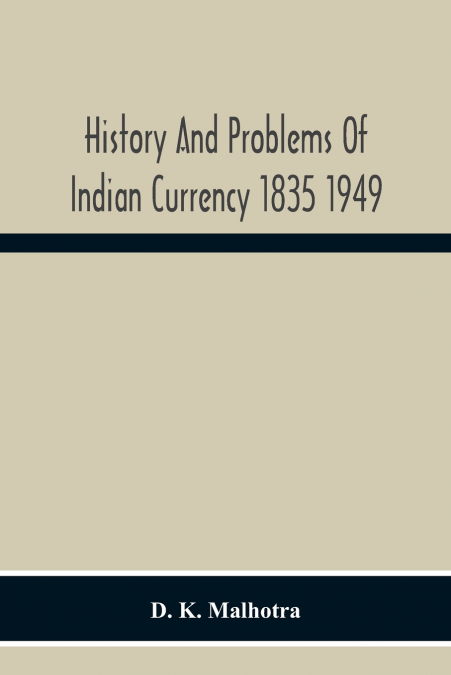
History And Problems Of Indian Currency 1835 1949, by D.K. Malhotra, sets out the financial foundations of modern India with rare clarity. Money shaped India’s modern story. Across a shifting century, Malhotra traces the rupee evolution and the Indian currency system, showing how decisions about issue, exchange and convertibility resonated far beyond banking halls. This is a historical finance study that combines careful description of policy choices with the social and commercial context of the British India period and early 20th century India. Readers encounter detailed currency policy analysis presented in readable prose: economic mechanisms are explained, institutional change is located in both imperial administration and local markets, and comparative economic history perspectives suggest why India’s monetary path mattered to world finance. The prose is purposeful rather than ornate, making the work equally useful as an academic reference book for specialists and as an accessible account for those discovering indian economic history for the first time. Malhotra’s methodical attention to contemporary records and statistics gives readers the documentary grounding to follow complex policy shifts without losing sight of real-world impacts. His balanced tone makes specialised currency issues intelligible to non-specialists while retaining the analytical depth prized in a university economics course.Republished by Alpha Editions in a careful modern edition, this volume preserves the spirit of the original while making it effortless to enjoy today - a heritage title prepared for readers and collectors alike. Its historical significance is plain: a contemporaneous, methodical account that informs debates on monetary reform India and remains relevant to students and researchers on a university economics course. Casual readers will appreciate the clear narrative of coin, currency and commerce; classic-literature collectors will prize a restored edition that marries scholarship with collectible presence. For anyone assembling a reasoned picture of the colonial india economy or surveying the rupee’s institutional history, Malhotra’s work endures as an essential and elegant reference. As a bridge between administrative history and narrative exposition, the book remains a touchstone for anyone studying monetary reform india or the broader transformations of the colonial india economy.