 Librería Samer Atenea
 Kálamo Books
 Librería Elías (Asturias)
 Librería Kolima (Madrid)
 Librería Proteo (Málaga)
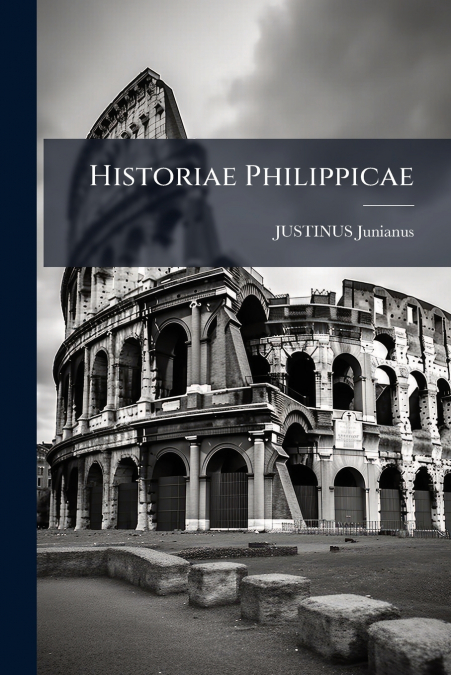
Historiae Philippicae by Justinus (Marcus Junianus Justinus) is a valuable historical work that presents a condensed version of a much larger history written by Pompeius Trogus, a Gaul of the Augustan era. This book focuses primarily on the rise and fall of various empires and kingdoms, offering insights into the political and military events that shaped the ancient world. Central to Justinus’ narrative is the story of Philip II of Macedon and his son, Alexander the Great, whose conquests and ambitions dramatically altered the course of history. Justinus’ work provides a unique perspective, drawing from Trogus’ original ethnographical and geographical details, making it a valuable resource for understanding the cultural and societal contexts of the regions under Macedonian and later Roman influence. While an abridgement, Historiae Philippicae preserves critical historical data and anecdotes, offering readers a compelling look into the lives of rulers, the strategies of war, and the dynamics of power in antiquity. This enduring history remains relevant for anyone interested in the classical world and the lasting legacy of its civilizations.This work has been selected by scholars as being culturally important, and is part of the knowledge base of civilization as we know it. This work was reproduced from the original artifact, and remains as true to the original work as possible. Therefore, you will see the original copyright references, library stamps (as most of these works have been housed in our most important libraries around the world), and other notations in the work.This work is in the public domain in the United States of America, and possibly other nations. Within the United States, you may freely copy and distribute this work, as no entity (individual or corporate) has a copyright on the body of the work.As a reproduction of a historical artifact, this work may contain missing or blurred pages, poor pictures, errant marks, etc. Scholars believe, and we concur, that this work is important enough to be preserved, reproduced, and made generally available to the public. We appreciate your support of the preservation process, and thank you for being an important part of keeping this knowledge alive and relevant.