 Librería Samer Atenea
 Kálamo Books
 Librería Elías (Asturias)
 Librería Kolima (Madrid)
 Librería Proteo (Málaga)
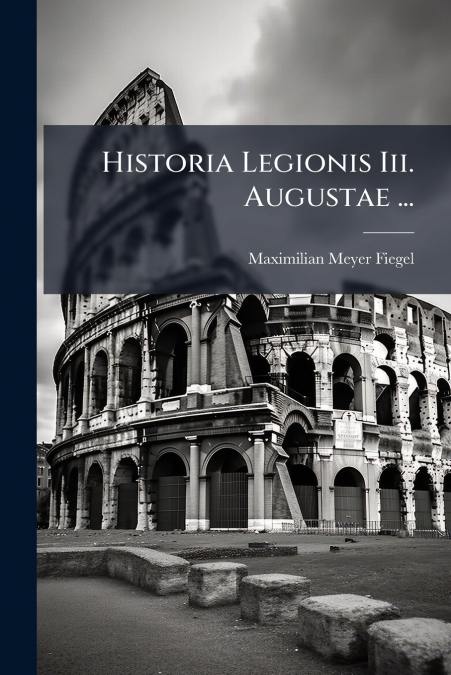
Historia Legionis III. Augustae to szczegółowe studium historii Trzeciego Legionu Augusta, jednej z kluczowych jednostek armii rzymskiej. Autor, Maximilian Meyer Fiegel, przedstawia kompleksową analizę działalności legionu, jego udziału w kampaniach wojskowych oraz znaczenia dla umacniania władzy Rzymu. Książka stanowi cenne źródło wiedzy dla historyków i miłośników starożytności, oferując wgląd w organizację, taktykę i życie codzienne legionistów. Praca ta, opublikowana w 1882 roku, pozostaje istotnym materiałem badawczym, ukazującym rolę Trzeciego Legionu Augusta w kształtowaniu historii Imperium Rzymskiego. Szczegółowe opisy i analiza źródeł sprawiają, że książka jest nieocenionym zasobem dla każdego, kto pragnie zgłębić wiedzę na temat rzymskiej armii i jej wpływu na bieg dziejów.This work has been selected by scholars as being culturally important, and is part of the knowledge base of civilization as we know it. This work was reproduced from the original artifact, and remains as true to the original work as possible. Therefore, you will see the original copyright references, library stamps (as most of these works have been housed in our most important libraries around the world), and other notations in the work.This work is in the public domain in the United States of America, and possibly other nations. Within the United States, you may freely copy and distribute this work, as no entity (individual or corporate) has a copyright on the body of the work.As a reproduction of a historical artifact, this work may contain missing or blurred pages, poor pictures, errant marks, etc. Scholars believe, and we concur, that this work is important enough to be preserved, reproduced, and made generally available to the public. We appreciate your support of the preservation process, and thank you for being an important part of keeping this knowledge alive and relevant.