 Librería Samer Atenea
 Kálamo Books
 Librería Elías (Asturias)
 Librería Kolima (Madrid)
 Librería Proteo (Málaga)
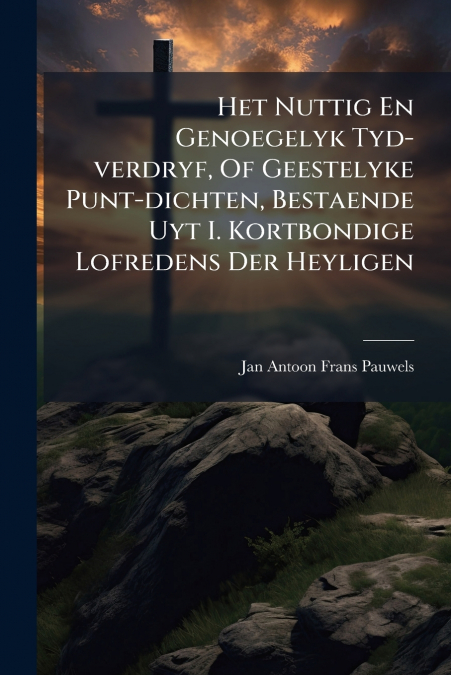
Het Nuttig En Genoegelyk Tyd-verdryf, Of Geestelyke Punt-dichten, Bestaende Uyt I. Kortbondige Lofredens Der Heyligen, by Jan Antoon Frans Pauwels, offers a collection of spiritual poetry and reflections. This work presents concise and reverent praises of saints, providing readers with an inspirational and contemplative experience. The poems are designed to offer both spiritual enrichment and pleasurable reading, making it a valuable addition to devotional literature.This collection reflects the religious and literary sensibilities of its time, inviting readers to delve into the lives and virtues of various saints through the medium of verse. Pauwels’ work serves as a testament to the enduring appeal of hagiographic poetry and its ability to inspire faith and reflection. This book is a significant contribution to the genre of religious poetry and a fascinating window into the spiritual practices of the period.This work has been selected by scholars as being culturally important, and is part of the knowledge base of civilization as we know it. This work was reproduced from the original artifact, and remains as true to the original work as possible. Therefore, you will see the original copyright references, library stamps (as most of these works have been housed in our most important libraries around the world), and other notations in the work.This work is in the public domain in the United States of America, and possibly other nations. Within the United States, you may freely copy and distribute this work, as no entity (individual or corporate) has a copyright on the body of the work.As a reproduction of a historical artifact, this work may contain missing or blurred pages, poor pictures, errant marks, etc. Scholars believe, and we concur, that this work is important enough to be preserved, reproduced, and made generally available to the public. We appreciate your support of the preservation process, and thank you for being an important part of keeping this knowledge alive and relevant.