 Librería Samer Atenea
 Kálamo Books
 Librería Elías (Asturias)
 Librería Kolima (Madrid)
 Librería Proteo (Málaga)
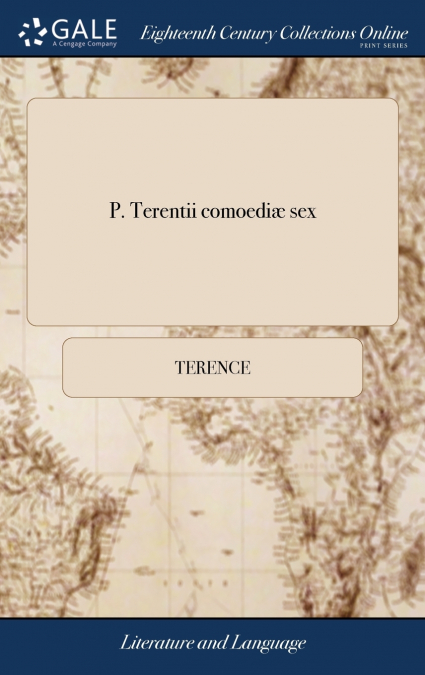
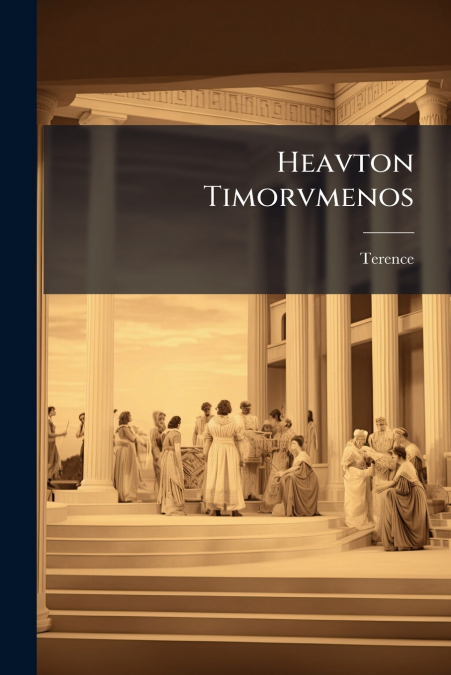
Heauton Timoroumenos, or 'The Self-Tormentor,' is a comedy by the Roman playwright Terence. First performed in 163 BC, the play explores themes of guilt, forgiveness, and the complexities of father-son relationships. The plot revolves around Menedemus, who torments himself with hard labor, believing his harsh treatment drove his son Clinia abroad. When Clinia secretly returns, along with his friend Clitipho, and Clitipho’s love interest, Antiphila, a series of deceptions and misunderstandings unfold. Terence’s skillful use of dialogue and character development makes 'Heauton Timoroumenos' a compelling study of human nature. The play offers a glimpse into Roman society and provides enduring insights into the universal challenges of family and personal responsibility. 'Heauton Timoroumenos' remains a significant work of classical literature, appreciated for its wit, emotional depth, and theatrical craftsmanship.This work has been selected by scholars as being culturally important, and is part of the knowledge base of civilization as we know it. This work was reproduced from the original artifact, and remains as true to the original work as possible. Therefore, you will see the original copyright references, library stamps (as most of these works have been housed in our most important libraries around the world), and other notations in the work.This work is in the public domain in the United States of America, and possibly other nations. Within the United States, you may freely copy and distribute this work, as no entity (individual or corporate) has a copyright on the body of the work.As a reproduction of a historical artifact, this work may contain missing or blurred pages, poor pictures, errant marks, etc. Scholars believe, and we concur, that this work is important enough to be preserved, reproduced, and made generally available to the public. We appreciate your support of the preservation process, and thank you for being an important part of keeping this knowledge alive and relevant.