

 Librería Samer Atenea
 Kálamo Books
 Librería Elías (Asturias)
 Librería Kolima (Madrid)
 Librería Proteo (Málaga)
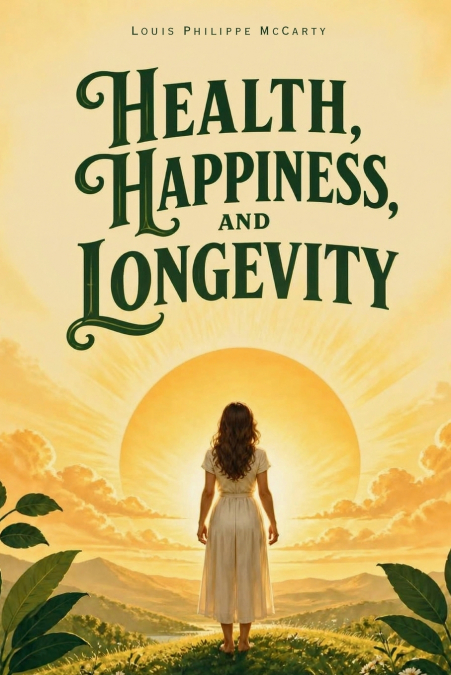
The pursuit of a long and fulfilling life is hardly a modern obsession. For generations, people have searched for the habits and principles that might preserve vitality, strengthen the body, and bring greater balance to everyday life.In Health, Happiness, and Longevity, Louis Philippe McCarty presents a fascinating early exploration of personal wellness and the art of living well. Written during a period of growing enthusiasm for physical culture, hygiene, nutrition, exercise, and preventive living, this classic work reveals how an earlier generation approached questions that remain remarkably familiar today.What habits contribute to lasting vitality? How should activity and rest be balanced? What role do food, cleanliness, fresh air, sleep, moderation, and state of mind play in personal well-being? And can the choices made each day influence not only how long we live, but how well we experience those years?McCarty considers these questions through a practical philosophy centered on everyday life. Rather than presenting health as something to consider only when illness occurs, he encourages greater attention to the routines and behaviors that continually shape the body. Diet, movement, rest, hygiene, environment, and personal discipline become interconnected elements in the pursuit of a stronger and more balanced life.This emphasis on daily habits makes the book particularly interesting for contemporary readers. Modern discussions of wellness, healthy aging, self-care, vitality, preventive health, and balanced living often return to many of the same fundamental concerns, even though scientific knowledge has advanced enormously since McCarty’s time.The book also provides an intriguing glimpse into the history of the wellness movement. Long before healthy living became a major modern industry, writers and reformers were encouraging ordinary people to become more conscious of their physical habits and personal well-being. McCarty’s work belongs to this important tradition, connecting health with individual responsibility, moderation, consistency, and purposeful living.Readers interested in classic health literature, historical self-help, physical culture, healthy habits, natural living, personal wellness, and the history of longevity will find much to explore. Some observations may feel unexpectedly familiar, while others clearly reflect the medical theories and social attitudes of an earlier age. This contrast makes the book especially valuable as both a cultural document and a classic work of health philosophy.At its heart, Health, Happiness, and Longevity considers something deeper than simply adding years to life. Longevity becomes meaningful when accompanied by energy, independence, contentment, and the ability to remain engaged with the world. Health provides the foundation, happiness gives those years quality, and thoughtful habits support the possibility of preserving both.Because this is a historical work, its medical discussions and recommendations should be understood within the scientific knowledge of the period and should not replace contemporary professional medical advice. Read in its proper context, however, the book offers a compelling portrait of the evolving search for better health and longer life.A rewarding rediscovery for readers fascinated by wellness, vitality, healthy aging, self-improvement, and the history of healthy living, this classic invites us to look back at yesterday’s ideas while reconsidering the timeless question of what it truly means to live well.








