 Librería Samer Atenea
 Kálamo Books
 Librería Elías (Asturias)
 Librería Kolima (Madrid)
 Librería Proteo (Málaga)
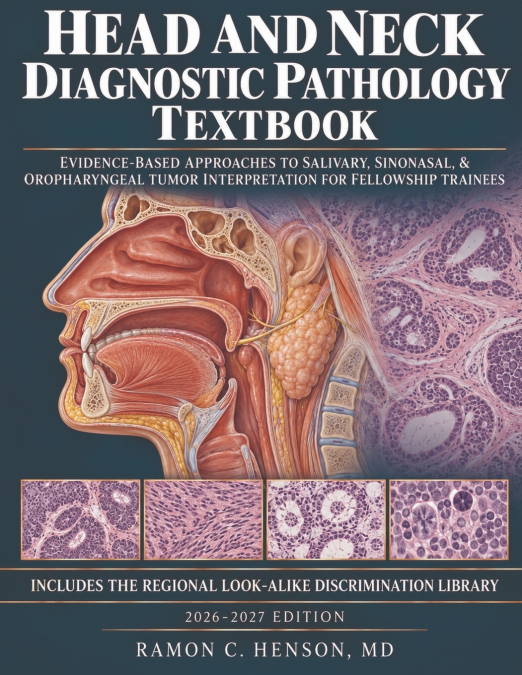
Name the Tumor, Stage It Correctly, and Send the Report the Surgeon Can Use This textbook teaches head and neck surgical pathology the way experienced sign-out pathologists reason: mechanism first, architecture second, cytology third, and ancillary testing only in service of a hypothesis. It reflects the WHO 5th edition classification, AJCC 8th edition staging with depth of invasion and extranodal extension, the Milan and Bethesda cytology systems, and current fusion-gene and HPV testing, and it is written for pathology residents, head and neck and surgical pathology fellows, and pathologists who see these specimens only occasionally. Sixteen site-based chapters run from specimen handling through oral, oropharyngeal, nasopharyngeal, sinonasal, laryngeal, odontogenic, salivary, neck, and thyroid disease to cytology and molecular workflows, with staging tables, stepwise algorithms, and narrative cases. With this textbook you will be able to: Grossing, margin, and neck level protocols with structured reporting - hand the surgeon depth of invasion and margin status in a usable form Oral epithelial dysplasia, proliferative verrucous leukoplakia, and oral and laryngeal squamous carcinoma variants - grade and stage with confidence on small biopsies HPV-associated oropharyngeal carcinoma, p16 and high-risk HPV testing, and nasopharyngeal carcinoma with EBER - choose the test that settles the diagnosis SWI/SNF-deficient, NUT, and HPV-related multiphenotypic sinonasal carcinomas, olfactory neuroblastoma, and mucosal melanoma - separate poorly differentiated look-alikes Odontogenic cysts and tumors and fibro-osseous and giant cell lesions - match histology to radiographic behavior Salivary gland tumors from pleomorphic adenoma to secretory, adenoid cystic, and salivary duct carcinoma - apply fusion testing and current grading Neck masses, lymph node metastasis, carcinoma of unknown primary, and thyroid and parathyroid disease - trace a lesion to its origin and classify follicular-patterned tumors The Regional Look-Alike Discrimination Library - scan 59 indexed look-alike sets, each with discriminating features, resolving test, and anchor finding Add this textbook to your sign-out desk and build a diagnostic method that holds up on the next biopsy.