

 Librería Samer Atenea
 Kálamo Books
 Librería Elías (Asturias)
 Librería Kolima (Madrid)
 Librería Proteo (Málaga)
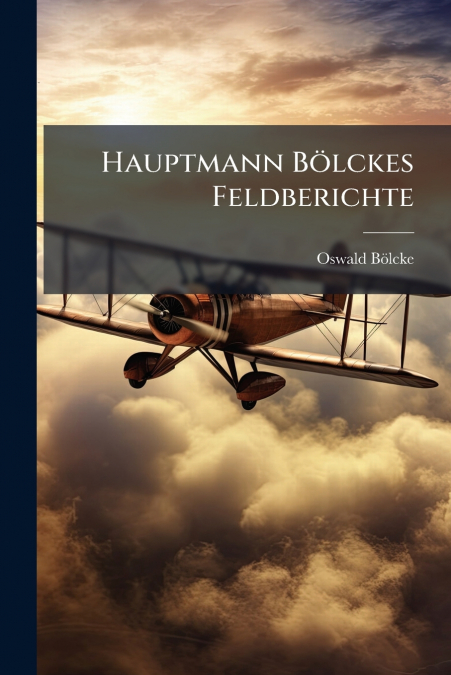
Hauptmann Bölckes Feldberichte bietet einen seltenen Einblick in die Erfahrungen eines der berühmtesten deutschen Jagdflieger des Ersten Weltkriegs, Oswald Bölcke. In seinen Feldberichten schildert Bölcke detailliert seine Luftkämpfe und Beobachtungen an der Westfront. Diese Sammlung, veröffentlicht im Jahr 1917, vermittelt ein authentisches Bild der frühen Luftkriegsführung und der Herausforderungen, denen sich die Piloten stellten. Bölckes Berichte sind nicht nur militärhistorisch wertvoll, sondern auch ein persönliches Zeugnis eines Mannes, der als einer der Väter der modernen Luftkampftaktik gilt.Dieses Buch ist ein Muss für jeden, der sich für Militärgeschichte, Luftfahrtgeschichte oder die Lebensgeschichten von Kriegshelden interessiert. Die Originalberichte Bölckes bieten einen direkten und ungefilterten Blick auf die Ereignisse des Ersten Weltkriegs aus der Perspektive eines hochdekorierten und einflussreichen Piloten.This work has been selected by scholars as being culturally important, and is part of the knowledge base of civilization as we know it. This work was reproduced from the original artifact, and remains as true to the original work as possible. Therefore, you will see the original copyright references, library stamps (as most of these works have been housed in our most important libraries around the world), and other notations in the work.This work is in the public domain in the United States of America, and possibly other nations. Within the United States, you may freely copy and distribute this work, as no entity (individual or corporate) has a copyright on the body of the work.As a reproduction of a historical artifact, this work may contain missing or blurred pages, poor pictures, errant marks, etc. Scholars believe, and we concur, that this work is important enough to be preserved, reproduced, and made generally available to the public. We appreciate your support of the preservation process, and thank you for being an important part of keeping this knowledge alive and relevant.





