 Librería Samer Atenea
 Kálamo Books
 Librería Elías (Asturias)
 Librería Kolima (Madrid)
 Librería Proteo (Málaga)
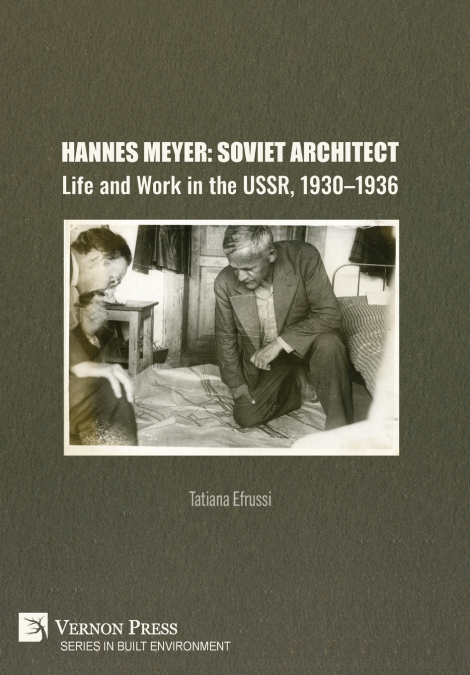
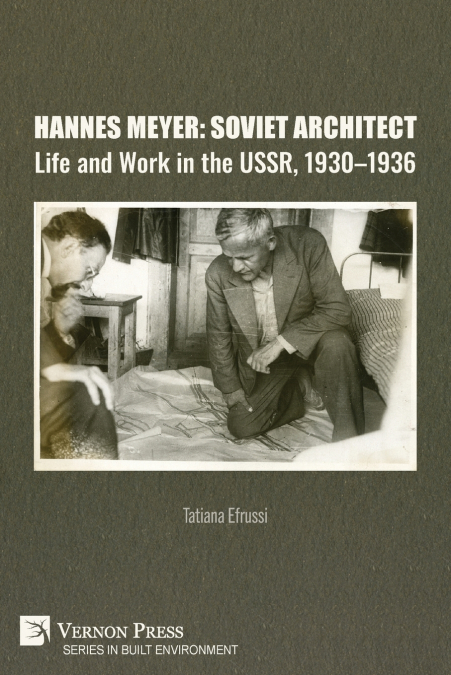
Swiss architect and urban planner, the second director of the Bauhaus Dessau, Hannes Meyer, spent about six years in the USSR-from 1930 to 1936. This book presents the first in-depth study of Hannes Meyer’s activities during the years of early Stalinism. There is a global interest in this architect’s legacy today, but his work can hardly be understood without a closer examination of the key chapter in his career. This book is an attempt to challenge the usual Western-centered perspective and explore not only what Meyer could bring to the Soviet Union but also what he sought to learn there and how this interaction influenced his work and thinking. The somewhat provocative title underscores this thesis. A detailed reconstruction of his professional activities during this period was made possible through archival research in several countries (Russia, Germany, Austria, and Switzerland) and field trips across Russia. In the end, the narrative offers a glimpse into the Soviet architectural context of the 1930s-networks, hierarchies, behavioral strategies, theories, and interpretations of major polemical concepts such as 'proletarian architecture' and 'socialist realism.' Among the projects for 'socialist cities,' Meyer was commissioned to create the urban plan for the capital of the Jewish Autonomous Region in the USSR-Birobidzhan. The dedicated book chapter explores his involvement in the search for a distinct Soviet 'Jewish style.' Hannes Meyer, the most controversial of the architects associated with the Bauhaus, was passionately involved in politics, and available documents indicate his desire to become a 'Soviet architect' at all costs. The research allows us to view Meyer not only as a victim but also as an actor in the early Stalinist system based on violence.