Rastatt) Friedenskongress (1797 - 1799
 Librería Samer Atenea
 Kálamo Books
 Librería Elías (Asturias)
 Librería Kolima (Madrid)
 Librería Proteo (Málaga)
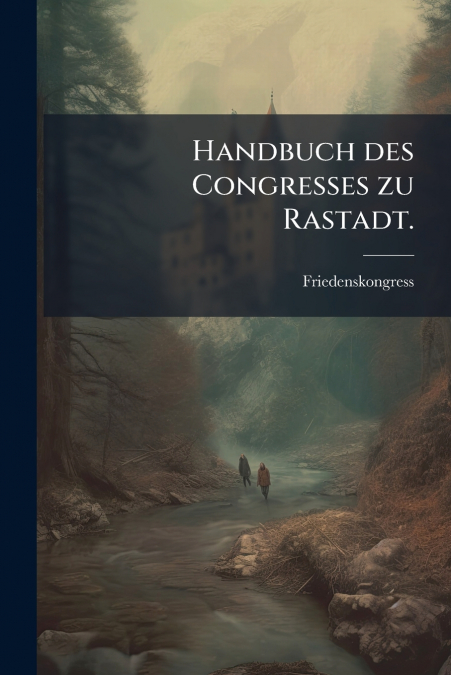
Das 'Handbuch des Congresses zu Rastadt' bietet einen detaillierten Einblick in die komplexen Verhandlungen, die während des Rastatter Friedenskongresses von 1797 bis 1799 stattfanden. Dieses historische Dokument beleuchtet die politischen und diplomatischen Herausforderungen der Zeit, als europäische Mächte versuchten, nach den Wirren der Französischen Revolution und den Napoleonischen Kriegen Frieden zu schließen. Der Band enthält wertvolle Informationen über die beteiligten Akteure, die diskutierten Themen und die letztendlichen Ergebnisse des Kongresses, der durch seine dramatischen Ereignisse und sein jähes Ende in die Geschichte einging.Dieses Werk ist eine unschätzbare Ressource für Historiker und alle, die sich für die europäische Geschichte des späten 18. Jahrhunderts, die Geschichte der Diplomatie und die Napoleonische Ära interessieren.This work has been selected by scholars as being culturally important, and is part of the knowledge base of civilization as we know it. This work was reproduced from the original artifact, and remains as true to the original work as possible. Therefore, you will see the original copyright references, library stamps (as most of these works have been housed in our most important libraries around the world), and other notations in the work.This work is in the public domain in the United States of America, and possibly other nations. Within the United States, you may freely copy and distribute this work, as no entity (individual or corporate) has a copyright on the body of the work.As a reproduction of a historical artifact, this work may contain missing or blurred pages, poor pictures, errant marks, etc. Scholars believe, and we concur, that this work is important enough to be preserved, reproduced, and made generally available to the public. We appreciate your support of the preservation process, and thank you for being an important part of keeping this knowledge alive and relevant.