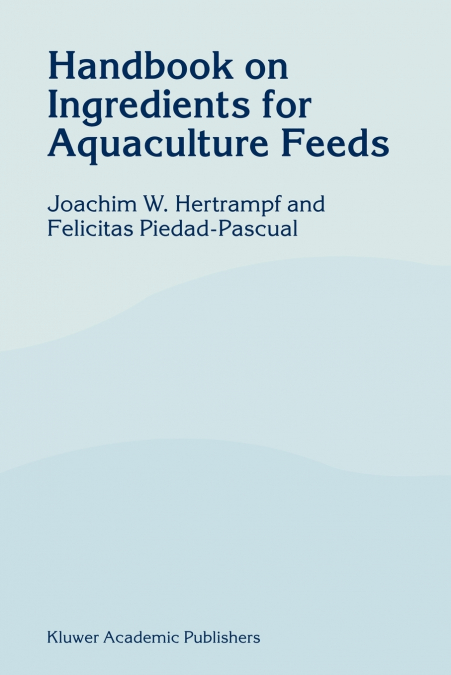
Handbook on Ingredients for Aquaculture Feeds

Handbook on Ingredients for Aquaculture Feeds

F. Piedad-Pascual / J.W. Hertrampf

267,58 €
IVA incluido
Disponible
Editorial:
Springer Nature B.V.
Año de edición:
2003
ISBN:
9781402015274
267,58 €
IVA incluido
Disponible

Selecciona una librería:

  • Librería Samer Atenea
  • Librería Aciertas (Toledo)
  • Kálamo Books
  • Librería Perelló (Valencia)
  • Librería Elías (Asturias)
  • Donde los libros
  • Librería Kolima (Madrid)
  • Librería Proteo (Málaga)

Current growth in global aquaculture is paralleled by an equally significant increase in companies involved in aquafeed manufacture. Latest information has identified over 1,200 such companies, not including those organizations in production of a variety of other materials, i. e. , vitamins, minerals, and therapeutics, all used in varying degrees in proper feed formulation. Aquaculture industries raising particular economically valued species, i. e. , penaeid shrimps and salmonids, are making major demands on feed ingredients, while relatively new industries, such as til apia farming, portent a significant acceleration in demand for properly formulated aquafeeds by the end of the present decade and into the next century. As requirements for aquafeeds increases, shortages are anticipated in various ingredients, especially widely used proteinaceous resources such as fish meal. A variety of other proteinaceous commodities are being considered as partial or complete replacement for fish meal, especially use of plant protein sources such as soybean meal. In the past five years, vegetable protein meal production has increased 10% while fish meal production has dropped over 50%, since 1989, largely attributed to overfishing and serious decline in wild stock. Throughout fisheries processing industries, traditional concepts as 'waste' have given way to more prudent approaches, emphasizing total by-product recovery. Feed costs are a major consideration in aquaculture where in some groups, i. e. , salmonids, high protein-containing feeds using quality fish meal, can account for as much as 40 to 60% of production costs.
Artículos relacionados

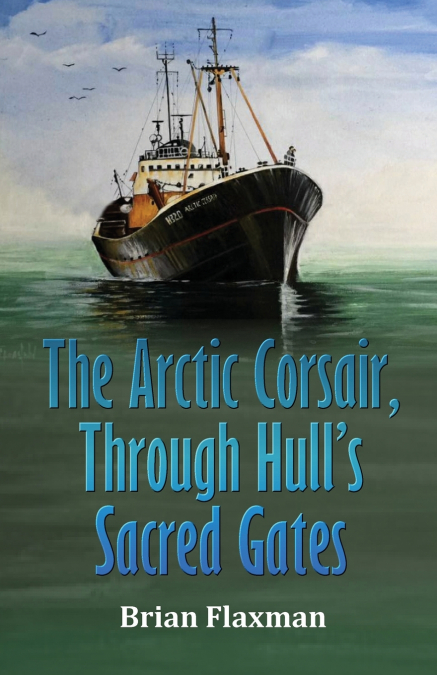
  • The Arctic Corsair, Through Hull’s Sacred Gates
    Brian Flaxman
    A fisherman’s job is dangerous and especially of you sail from Hull. 39 Trawlers were iced up and in danger of sinking in the 1968 storm at Iceland. The Hull community prayed for their loved ones to come home safely The Arctic Corsair survived and can soon be visited in Hull. ...
    Disponible

    11,11 €

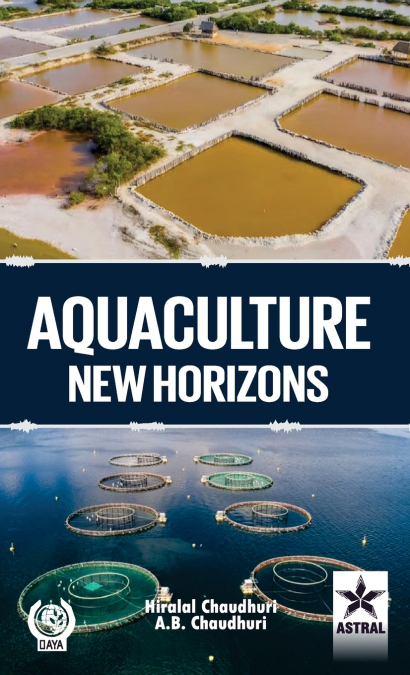
  • Aquaculture
    A B Chaudhuri / Hiralal Chaudhuri
    The book 'Aquaculture: New Horizons' is a documentation of Professor Hiralal Chaudhuri, the doyen aquaculture scientists; only a few of his publications were available to edit as most of his reprints, reports and unpublished works were donated to the library of the University of the Philippines. Some of his most important works on 'Induced Breeding' of Carps have been documente...
  • Fish Handling and Processing
    Contents - Acknowledgements - Foreword - Illustrations -Chapter 1. About this book - Chapter 2. The handling of fish at sea - Chapter 3. The handling and distribution of fish on land - Chapter 4. The smoking of fish - Chapter 5. Salt curing - Chapter 6. Drying - Chapter 7. Freezing and cold storage - Chapter 8. Thawing - Chapter 9. Canning - Chapter 10. Fish meal and oil - Chap...
  • Marine Algae
    Christopher Clark / Flavia S Darqui / Joseph Cook
    The book provides a comprehensive exploration of the taxonomy and ecology of marine algae, covering various aspects such as adaptability, diversity, allelopathic interactions, biochemical traits, morphology, phylogeny, and environmental impacts. The content integrates various scientific disciplines, including microbiology, biochemistry, molecular biology, ecology, and taxonomy,...
  • Physical Oceanography
    Li F Liang / Min Li
    Explore the historical circumstances that paved the way for the development of Physical Oceanography as a distinct scientific discipline. Gain insights into the various components of the oceanic environment and the factors that influence its behavior. Understand the profound impact of the atmosphere on oceanic conditions and the intricate relationship between the two. Explore t...
  • Tropical Marine Biology
    Danielle May / Joan Aquino
    It describes marine life and marine processes that ranges from the unimaginably abundant microscopic organisms that drive the oceans’ food web to the apex predators. It provides fundamental overview of the tropical marine biology. The subject matter is presented in a lucid and succinct style so that even those who do not have a prerequisite knowledge of the subject can easily u...

Otros libros del autor

  • Handbook on Ingredients for Aquaculture Feeds
    F. Piedad-Pascual / J.W. Hertrampf
    Current growth in global aquaculture is paralleled by an equally significant increase in companies involved in aquafeed manufacture. Latest information has identified over 1,200 such companies, not including those organizations in production of a variety of other materials, i. e. , vitamins, minerals, and therapeutics, all used in varying degrees in p...