
Inicio > Humanidades > Filosofía > Ética y filosofía moral > Handbook of Philosophical Logic
Handbook of Philosophical Logic

Handbook of Philosophical Logic


267,42 €
IVA incluido
Consulta disponibilidad
Editorial:
Springer Nature B.V.
Año de edición:
2005
Materia
Ética y filosofía moral
ISBN:
9781402035203

Selecciona una librería:

  • Librería Samer Atenea
  • Librería Aciertas (Toledo)
  • Kálamo Books
  • Librería Perelló (Valencia)
  • Librería Elías (Asturias)
  • Donde los libros
  • Librería Kolima (Madrid)
  • Librería Proteo (Málaga)

such questions for centuries (unrestricted by the capabilities of any ha- ware). Theprinciplesgoverningtheinteractionofseveralprocesses, forexample, are abstract an similar to principles governing the cooperation of two large organisation. A detailed rule based e?ective but rigid bureaucracy is very much similar to a complex computer program handling and manipulating data. My guess is that the principles underlying one are very much the same as those underlying the other. Ibelievethedayisnotfarawayinthefuturewhenthecomputerscientist will wake up one morning with the realisation that he is actually a kind of formal philosopher! The projected number of volumes for this Handbook is about 18. The subjecthasevolvedanditsareashavebecomeinterrelatedtosuchanextent that it no longer makes sense to dedicate volumes to topics. However, the volumes do follow some natural groupingsof chapters. Iwould liketothank our authorsand readersfor their contributionsand their commitment in making this Handbook a success. Thanksalso to our publication administrator Mrs J. Spurr for her usual dedication and excellence and to Kluwer Academic Publishers (now Springer) for their continuing support for the Handbook. Dov Gabbay King’s College London 10 Logic IT Natural Program Arti?cial in- Logicp- language control spec- telligence gramming processing i?cation, veri?cation, concurrency Temporal Expressive Expressive Planning. Extension of logic power of tense power for re- Time depen- Horn clause operators. current events. dent data. with time Temporal Speci?cation Eventcalculus. capability. indices. Sepa- of tempo- Persistence Event calculus. ration of past ral control. through time- Temporal logic from future Decision prob- theFrame programming. lems. Model Problem. T- checking. poral query language. temporal transactions.


Artículos relacionados

  • Ka Ab Ba Building The Lighted Temple
    Dr Terri R. Nelson / Dr Terri RNelson
    The book KaAbBa Building The Lighted Temple/Metaphysical Keys to the Tree of Life draws a circle that is inclusive of the Afrikan origin of the Ancient Kemetic/Egyptian wisdom. It reveals the undeniable root and link of Ancient Africa to all the religious systems that would develop worldwide. This book is explosive in its power to convey the meaning of KaAbBa, the Medu Neter  (...
    Disponible

    37,41 €

  • Technoethics and the Evolving Knowledge Society
    Rocci Luppicini
    Recently, there has been a major push to rediscover the ethical dimension of technology across the sciences, social sciences, and humanities. Technoethics and the Evolving Knowledge Society: Ethical Issues in Technological Design, Research, Development, and Innovation examines human processes and practices connected to technology embedded within social, political, and moral sph...
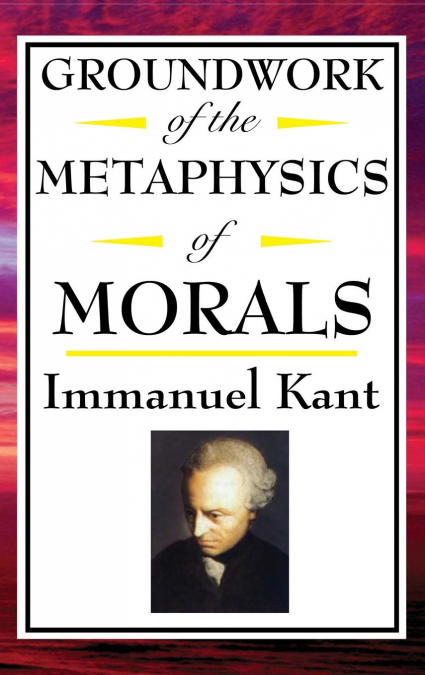
  • Kant
    Immanuel Kant
    Kant’s Groundwork of the Metaphysics of Morals is one of the most important works in modern moral philosophy. It belongs beside Plato, Aristotle, Machiavelli, and Hobbes. Here Kant sets out to articulate and defend the Categorical Imperative - the fundamental principle that underlies moral reasoning - and to lay the foundation for a comprehensive account of justice and human vi...
  • On the Duty of Civil Disobedience
    HENRY DAVID THOREAU
    Civil Disobedience argues that citizens should not permit their governments to overrule their consciences, and that they have a duty to avoid allowing their acquiescence to enable the government to make them the agents of injustice. Thoreau was motivated in part by his disgust with slavery and the Mexican-American War, but the sentiments he expresses here are just as pertinent ...
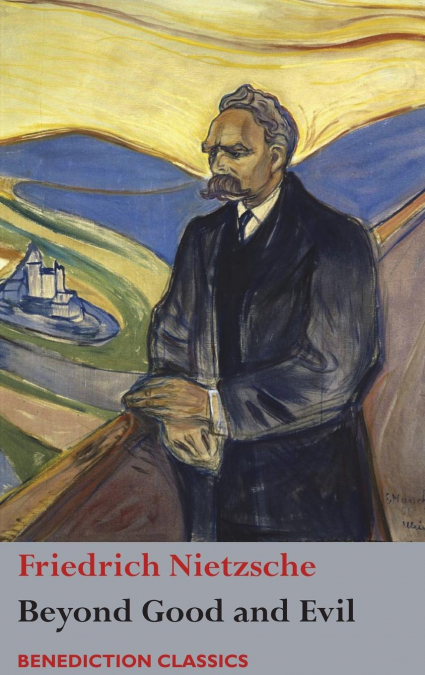
  • Beyond Good and Evil
    Friedrich Nietzsche
    Nietzsche, though primarily a philosopher, wrote widely on art, philology, history, religion, tragedy, culture, and science.  In 1886, at the height of his powers, he published Beyond Good and Evil.  Here he examines much of the best of human thought--dogmatic philosophy, Judeo-Christian morality, science and democracy – and finds it lacking.  Rejecting “slave-morality” he pres...
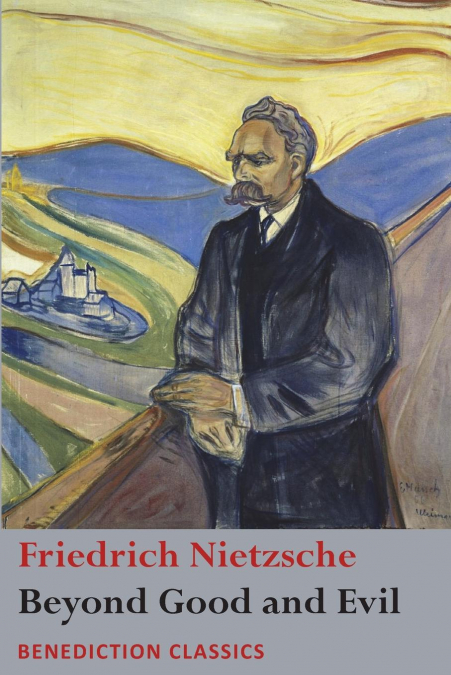
  • Beyond Good and Evil
    Friedrich Nietzsche
    Nietzsche, though primarily a philosopher, wrote widely on art, philology, history, religion, tragedy, culture, and science.  In 1886, at the height of his powers, he published Beyond Good and Evil.  Here he examines much of the best of human thought--dogmatic philosophy, Judeo-Christian morality, science and democracy – and finds it lacking.  Rejecting “slave-morality” he pres...
    Disponible

    9,99 €