Inicio > Lenguas > Lingüistica > Handbook of Descriptive Linguistic Fieldwork
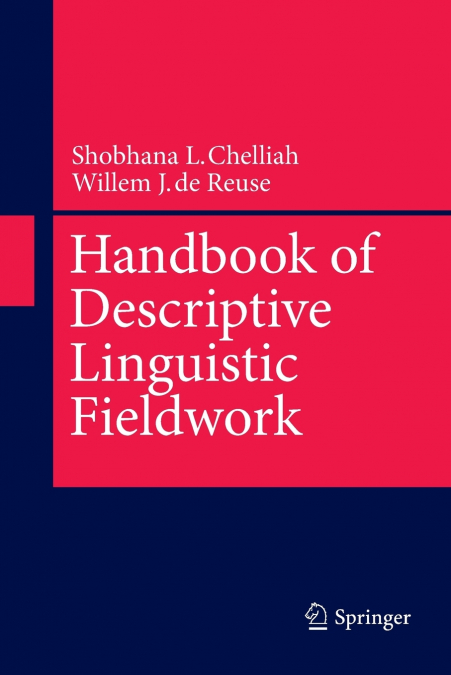
Handbook of Descriptive Linguistic Fieldwork

Handbook of Descriptive Linguistic Fieldwork

Shobhana L. Chelliah / Willem J. de Reuse

243,53 €
IVA incluido
Disponible
Editorial:
Springer Nature B.V.
Año de edición:
2014
Materia
Lingüistica
ISBN:
9789400792180
243,53 €
IVA incluido
Disponible

Selecciona una librería:

  • Librería Samer Atenea
  • Librería Aciertas (Toledo)
  • Kálamo Books
  • Librería Perelló (Valencia)
  • Librería Elías (Asturias)
  • Donde los libros
  • Librería Kolima (Madrid)
  • Librería Proteo (Málaga)

The Handbook of Descriptive Linguistic Fieldwork is the most comprehensive reference on linguistic fieldwork on the market bringing together all the reader needs to carry out successful linguistic fieldwork. Based on the experiences of two veteran linguistic fieldworkers and advice from more than a twenty active fieldwork researchers, this handbook provides an encyclopedic review of current publications on linguistic fieldwork and surveys past and present approaches and solutions to problems in the field, and the historical, political, and social variables correlating with fieldwork in different areas of the world. The discussion of the ethical dimensions of fieldwork, as well as what constitutes the 'typical' linguistic fieldwork setting or consultant is explored from multiple perspectives relevant to fieldwork on every continent. Included is information omitted in most other texts on the subject such as the collection, representation, management, and methods of extracting grammatical information from discourse and conversational data as well as the relationship between questionnaire-based elicitation, text-based elicitation, and philology, and the need for combinations of these methods. The book is useful before, during and after linguistic field trips since it provides extensive practical macro and micro organization and planning fieldwork tips as well as a handy sketch of major typological features for use in linguistic analysis. Comprehensive references are provided at the end of each chapter as resources relevant to the reader’s particular interests.
Artículos relacionados

  • User-Centered Computer Aided Language Learning
    Giorgos Zacharia / Panayiotis Zaphiris
    ...
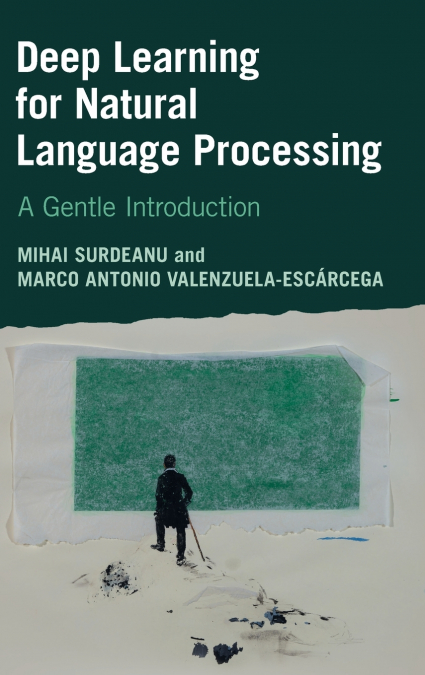
  • Deep Learning for Natural Language Processing
    Marco Antonio Valenzuela-Escárcega / Mihai Surdeanu
    ...
    Disponible

    47,60 €

  • Deep Learning for Natural Language Processing
    Marco Antonio Valenzuela-Escárcega / Mihai Surdeanu
    ...
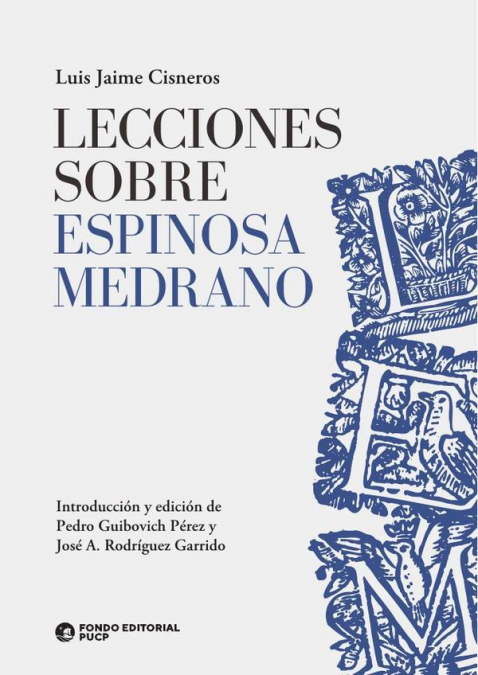
  • Lecciones sobre espinosa medrano
    Luis Jaime Cisneros Vizquerra
    La obra de Juan de Espinosa Medrano, apodado en su tiempo «El Lunarejo» (c. 1629-1688), fue uno de los mayores focos de interés académico de Luis Jaime Cisneros (1921-2011). En 1980 aparecieron sus primeros trabajos dedicados a estudiar los textos capitales de Espinosa Medrano (el Apologético en favor de don Luis de Góngora, la Panegírica declamación por la protección de las ci...
    Disponible

    17,63 €

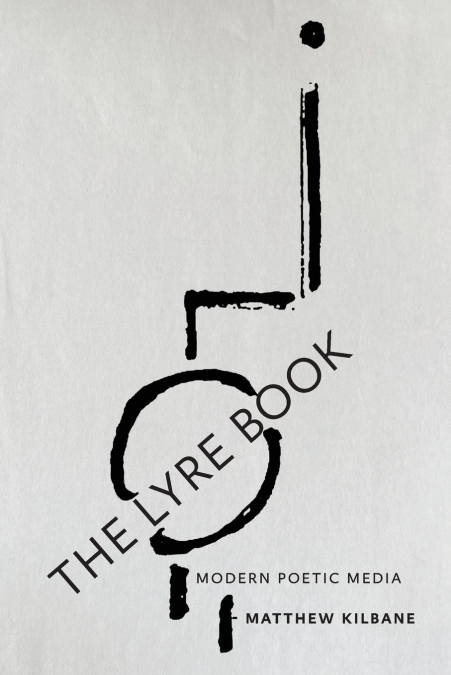
  • Lyre Book
    Matthew Kilbane
    Redefines modern lyric poetry at the intersection of literary and media studies.In The Lyre Book, Matthew Kilbane urges literary scholars to consider lyric not as a genre or a reading practice but as a media condition: the generative tension between writing and sound. In addition to clarifying issues central to the study of modern poetry--including its proximity to popular song...
    Disponible

    50,84 €

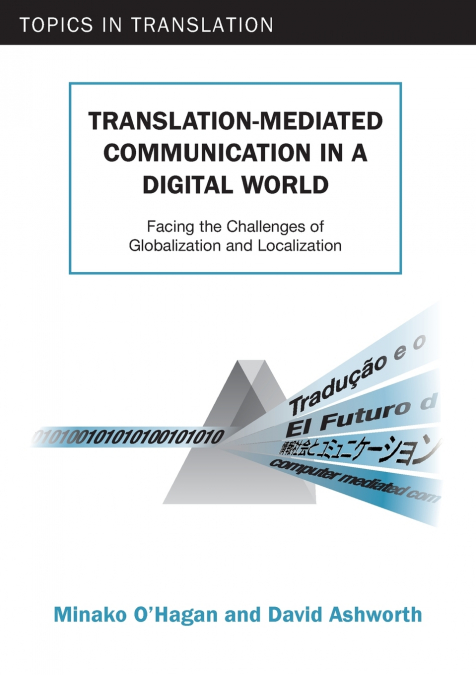
  • Translation-mediated Communication in a Digital World
    David Ashworth / Minako O’Hagan
    The Internet is accelerating globalization by exposing organizations and individuals to global audiences. This in turn is driving teletranslation and teleinterpretation, new types of multilingual support, which are functional in digital communications environments. The book describes teletranslation and teleinterpretation by exploring a number of key emerging contexts for langu...
    Disponible

    45,19 €