 Librería Samer Atenea
 Kálamo Books
 Librería Elías (Asturias)
 Librería Kolima (Madrid)
 Librería Proteo (Málaga)
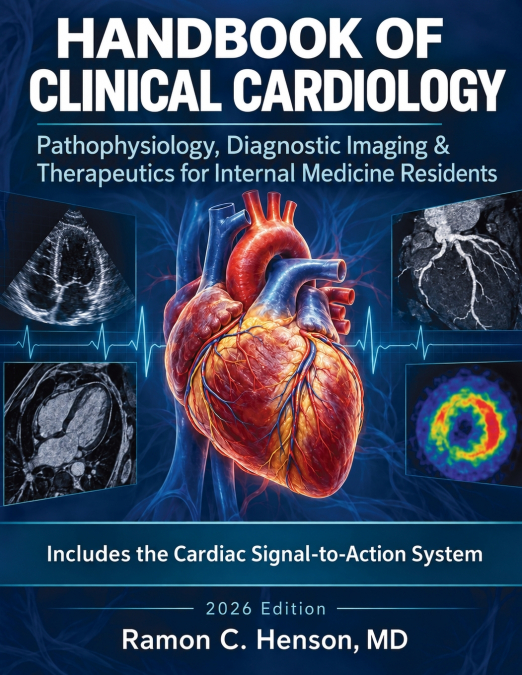
Turn Cardiovascular Signals into Defensible Clinical Action This 2026 handbook connects cardiovascular physiology to the decisions made at the bedside, in the imaging suite, during acute stabilization, and across long-term follow-up. Written for internal medicine residents, fellows, and clinicians who need mechanism-based clarity, it moves from examination and electrocardiography through coronary disease, heart failure, valve disorders, arrhythmias, pulmonary vascular disease, congenital conditions, pregnancy, cardio-oncology, intervention, surgery, and digital care. The Cardiac Signal-to-Action System links each recognizable finding to its physiologic meaning, diagnostic pivot, treatment threshold, safety trap, and immediate action anchor. Use the handbook to strengthen these point-of-care capabilities: Bedside examination and symptom architecture — connect murmurs, pulses, venous waveforms, congestion, and perfusion to chamber physiology ECG and ambulatory monitoring — distinguish conduction disease, ischemic patterns, atrial arrhythmias, wide-complex tachycardia, and artifact Multimodality imaging and hemodynamics — select and reconcile echocardiography, CT, MRI, nuclear testing, and invasive pressure data Coronary prevention and acute care — integrate risk, biomarkers, reperfusion urgency, antithrombotic safety, and secondary prevention Heart failure and structural disease — interpret loading conditions, ventricular remodeling, valve severity, cardiomyopathy phenotype, and intervention timing Critical cardiovascular stabilization — phenotype syncope, shock, right ventricular failure, tamponade, and acute aortic syndromes Procedural and longitudinal care — anticipate device, catheter, surgical, rehabilitation, pregnancy, cancer-treatment, and follow-up decisions Build a repeatable cardiovascular reasoning discipline that remains useful as evidence, technology, and treatment options evolve.