Inicio > Humanidades > Historia > Haciendas and Economic Development
Haciendas and Economic Development

Haciendas and Economic Development

Richard B. Lindley / Richard BLindley

26,95 €
IVA incluido
Disponible
Editorial:
Univ of Chicago behalf of University of Texas
Año de edición:
1983
Materia
Historia
ISBN:
9781477304594
26,95 €
IVA incluido
Disponible

Selecciona una librería:

  • Librería Samer Atenea
  • Librería Aciertas (Toledo)
  • Kálamo Books
  • Librería Perelló (Valencia)
  • Librería Elías (Asturias)
  • Donde los libros
  • Librería Kolima (Madrid)
  • Librería Proteo (Málaga)

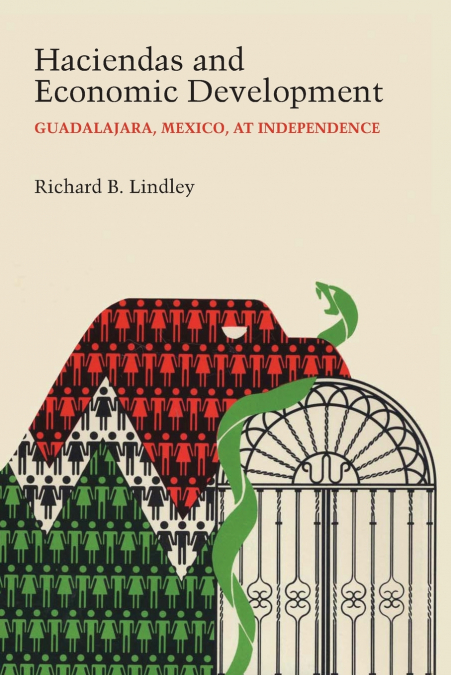
Agriculture, commerce, and mining were the engines that drove New Spain, and past historians have treated these economic categories as sociological phenomena as well. For these historians, society in eighteenth-century New Spain was comprised, on the one hand, of creoles, feudalistic land barons who were natives of the New World, and, on the other, of peninsulars, progressive, urban merchants born on the Iberian peninsula. In their view, creole-peninsular resentment ultimately led to the wars for independence that took place in the American hemisphere in the early nineteenth century. Richard B. Lindley’s study of Guadalajara’s wealthy citizens on the eve of independence contradicts this view, clearly demonstrating that landowners, merchants, creoles, and peninsulars, through intermarriage, formed large family enterprises with mixed agricultural, commercial, and mining interests. These family enterprises subdued potential conflicts of interest between Spaniards and Americans, making partners of potential competitors. When the wars for national independence began in 1810, Spain’s ability to protect its colonies from outside influence was destroyed. The resultant influx of British trade goods and finance shook the structure of colonial society, as abundant British capital quickly reduced the capital shortage that had been the main reason for large-scale, diversified family businesses. Elite family enterprises survived, but became less traditional and more specialized institutions. This transformation from traditional, personalized community relations to modern, anonymous corporations, with all that it implied for government and productivity, constitutes the real revolution that began in 1810.

Artículos relacionados

  • Raising Freedom's Banner
    Paul Harris
    World wide history of peaceful street demonstrations from their earliest beginning in eighteenth century England to their use throughout the world in the twenty-first century. Describes why some demonstration movements succeeded and others failed. Contrasts demonstrations within the law with civil disobedience demonstrations. Describes Peterloo, the Chartists, the Suffragettes,...
    Disponible

    23,59 €

  • Waipi’o Valley
    Jeffrey L. Gross
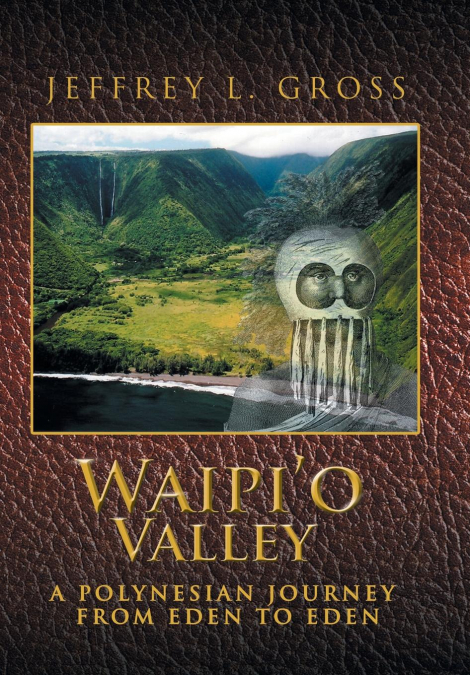
    Waipi’o Valley: A Polynesian Journey from Eden to Eden recounts the remarkable migrations of the Polynesians across a third of the circumference of the earth. Their amazing journey began from Kalana i Hau’ola, the biblical “Garden of Eden” located along the shore of the Persian Gulf, extended to the Indus River Valley of ancient Vedic India, to Egypt where some ancestors of the...
  • Floralia
    June Rainsford Butler
    A century characterized by a growing interest in science, the opportunity for travel, and leisure for gardening furnishes the setting for Butler’s book. The rise of landscape gardening in England is traced, and the origin and history of its most famous gardens are given. The close relation between England and America in the field of horticulture is also discussed.Originally pub...
    Disponible

    61,20 €

  • President Wilson’s Addresses
    Woodrow Wilson
    'These addresses of President Woodrow Wilson are almost entirely concerned with political affairs, and more specifically with defining Americanism. Yet they also show that even as he moved from academia to the heights of politics, Wilson retained something of the teacher’s interest in showing the relation between specific instances and the general forms of thought or action of ...
  • The Story of my Life
    John Albert Macy
    The Story of My Life, is Helen Keller’s autobiography detailing her early life, especially her experiences with Anne Sullivan. The book is dedicated to inventor Alexander Graham Bell. The dedication reads, 'To ALEXANDER GRAHAM BELL Who has taught the deaf to speak and enabled the listening ear to hear speech from the Atlantic to the Rockies, I dedicate this Story of My Life.' ...
  • The Story of My Life Vol. 6 Spanish Passions
    Giacomo Casanova
    Casanova was an Italian adventurer and author from the Republic of Venice. His autobiography, Histoire de ma vie (Story of My Life), is regarded as one of the most authentic sources of the customs and norms of European social life during the 18th century. He has become so famous for his often complicated and elaborate affairs with women that his name is now synonymous with 'wom...