Librería Samer Atenea
 Kálamo Books
 Librería Elías (Asturias)
 Librería Kolima (Madrid)
 Librería Proteo (Málaga)
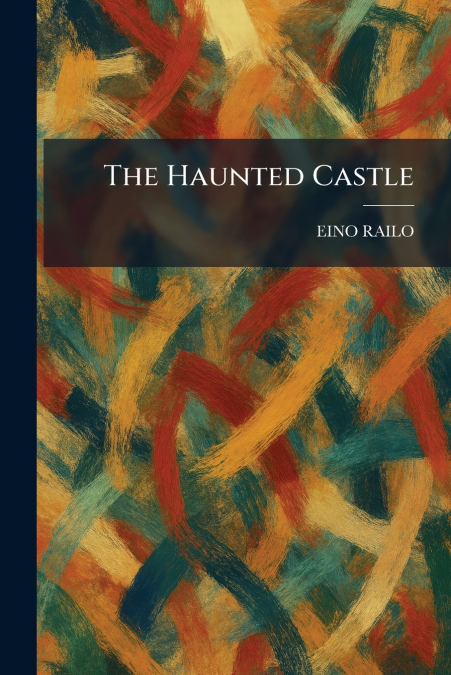
Why does the haunted castle persist long after its crumbling towers and secret chambers have become familiar? This Finnish literary-historical study follows that enduring structure through English Gothic literature, showing how architecture, folklore and inherited narrative materials were reshaped into instruments of supernatural terror. Ruins and monasteries become more than scenery: they provide the imaginative framework for ghosts, demons, concealed crimes and the burdens of the past.Across works by Horace Walpole, Ann Radcliffe, Matthew Gregory Lewis, Walter Scott, Byron, Coleridge, Shelley, Maturin, Poe, Hawthorne, Stevenson and Wilde, recurring figures and anxieties acquire new forms. Tyrants, criminal monks, persecuted women and Byronic heroes inhabit stories marked by forbidden love, madness, melancholy, occultism and inherited guilt. Rather than treating these motifs as isolated conventions, the study compares their uses and traces their development through Romanticism and beyond, revealing continuities between literary traditions often considered separately.Later transformations carry Gothic fear beyond the castle itself. Supernatural mysteries begin to intersect with investigation, while occult forces and dreams of immortality move towards detective narratives and scientific horror. By examining how familiar materials change across writers, periods and genres, the study presents Gothic literature as an evolving tradition whose terrors repeatedly adapt to new intellectual and narrative forms. This book was out of print for decades and is now republished by Alpha Editions.It has been restored for today’s and future generations.This edition is not just a reprint - it’s a collector’s item and a cultural treasure.