 Librería Samer Atenea
 Kálamo Books
 Librería Elías (Asturias)
 Librería Kolima (Madrid)
 Librería Proteo (Málaga)
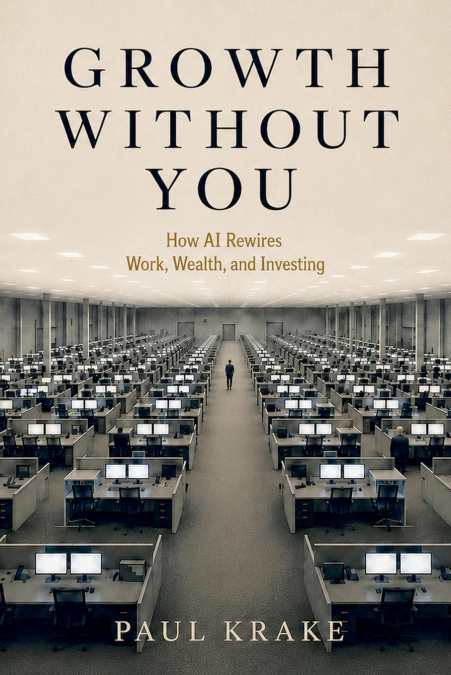
Artificial intelligence is the moment when cognition itself becomes a service.For fifty years, globalization, automation, software, the internet, and real-time data have made the global economy faster, leaner, and more efficient. Companies manage inventories in real time, optimize supply chains, automate routine processes, and respond to demand with unprecedented speed. Economic friction has been systematically removed from the corporate system. Outside of COVID, the United States has not had a recession since 2009. That reflects, in no small part, the efficiency gains already embedded inside modern companies.AI is the next and most consequential stage of that process. Previous waves removed friction from logistics, finance, communication, production, and information flow. AI removes friction from cognition: analysis, judgment, and decision-making. Work that once required trained people, expensive teams, and institutional experience can increasingly be delivered through software.That creates an enormous headwind for workers. Cognition was the last monopoly of human labor, and that monopoly is now being challenged. Labor is becoming less central to the business cycle and corporate profitability. Companies can expand revenue, raise margins, and compound profits without adding people in proportion to output. The economy can look strong from the outside while becoming more fragile for the workers inside it.The logic is brutal. As AI systems become more capable, businesses will naturally replace expensive human cognitive capacity with cheaper machine intelligence. AI offers unimaginable potential in human health, drug discovery, scientific research, and productivity. It also creates enormous uncertainty for tomorrow’s college graduates and for the suburban white-collar worker now facing displacement.What happens to the economy when growth no longer requires proportional increases in labor?Are economic cycles becoming less relevant as technology removes friction from the system?If profits continue to rise while labor’s share falls, who captures the benefits of AI-driven growth?Do traditional investment frameworks still work in an economy no longer organized around recession, recovery, and rotation?What should individuals, investors, companies, and governments do when the old bargain between work, wages, and prosperity breaks down?The winners will be those who control the scarce assets through which AI is deployed: infrastructure, energy, data, distribution, trust, and customer access. The fiscal, monetary, and social consequences are unavoidable. Tax systems built around wages will weaken as more income flows to profits, capital gains, and intellectual property. Welfare states will face less secure workers. Central banks will confront output rising as labor demand weakens.Capital has won. The challenge now is to remember that capitalism only works in a society stable enough to sustain it.