 Librería Samer Atenea
 Kálamo Books
 Librería Elías (Asturias)
 Librería Kolima (Madrid)
 Librería Proteo (Málaga)
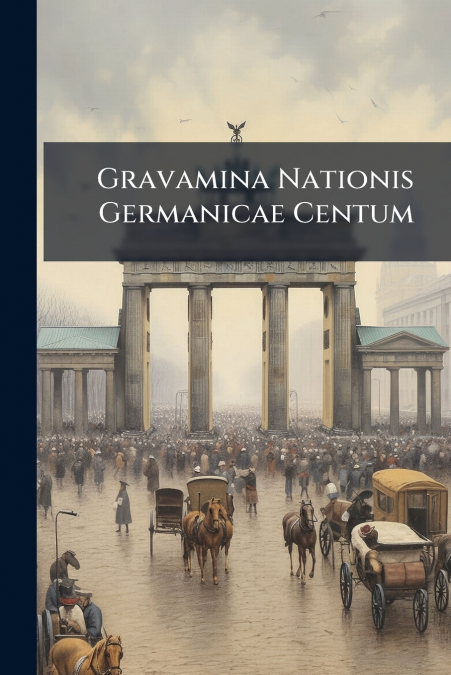
'Gravamina Nationis Germanicae Centum' presents a comprehensive list of one hundred grievances of the German nation against the Roman Catholic Church. Compiled anonymously, this historical document reflects the tensions and conflicts that simmered in the Holy Roman Empire during the late medieval and early Renaissance periods. The grievances detail various abuses and excesses attributed to the papacy and its representatives, touching on issues of financial exploitation, ecclesiastical corruption, and the erosion of local autonomy.This collection provides valuable insight into the socio-political landscape that ultimately fueled the Protestant Reformation. It stands as a testament to the growing discontent with the Church’s practices and the widespread desire for reform. Students of history, religious studies, and political science will find this an essential resource for understanding the complex dynamics of the era and the factors that led to profound changes in European society.This work has been selected by scholars as being culturally important, and is part of the knowledge base of civilization as we know it. This work was reproduced from the original artifact, and remains as true to the original work as possible. Therefore, you will see the original copyright references, library stamps (as most of these works have been housed in our most important libraries around the world), and other notations in the work.This work is in the public domain in the United States of America, and possibly other nations. Within the United States, you may freely copy and distribute this work, as no entity (individual or corporate) has a copyright on the body of the work.As a reproduction of a historical artifact, this work may contain missing or blurred pages, poor pictures, errant marks, etc. Scholars believe, and we concur, that this work is important enough to be preserved, reproduced, and made generally available to the public. We appreciate your support of the preservation process, and thank you for being an important part of keeping this knowledge alive and relevant.