 Librería Samer Atenea
 Kálamo Books
 Librería Elías (Asturias)
 Librería Kolima (Madrid)
 Librería Proteo (Málaga)
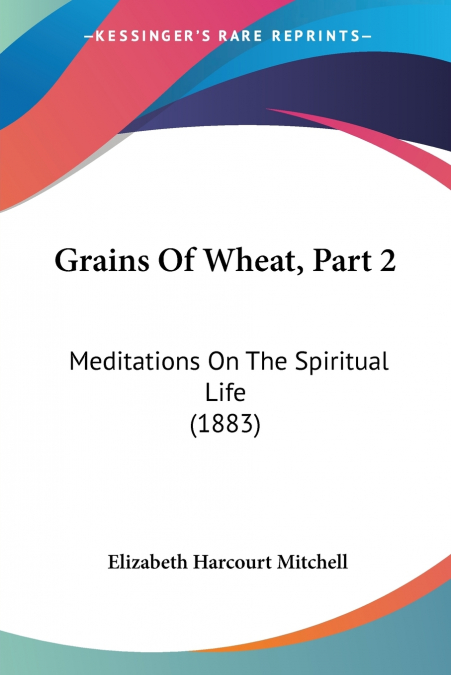
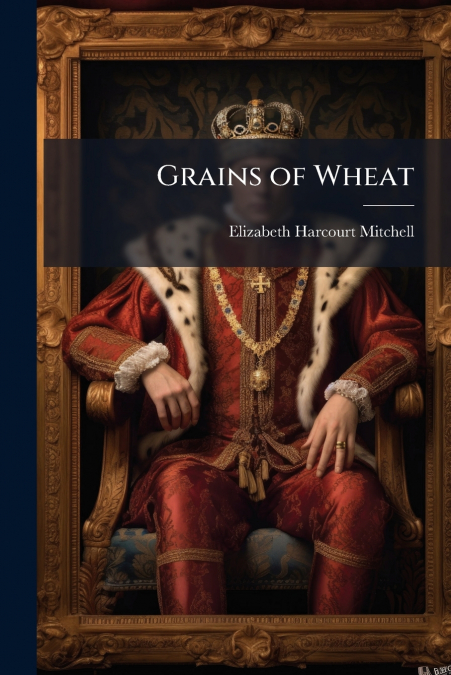
'Grains of Wheat,' penned by Elizabeth Harcourt Mitchell and potentially published around 1882, offers readers a poignant exploration of faith and resilience in the face of adversity. This compelling narrative weaves a tale rich with moral and spiritual undertones, characteristic of the Christian allegorical fiction of its time. While specific plot details remain elusive, the title itself suggests themes of growth, transformation, and the reaping of what is sown. Mitchell’s work is a window into the religious sentiments and literary styles prevalent in the late 19th century. Readers interested in historical fiction with a strong moral compass or those studying the evolution of Christian literature will find 'Grains of Wheat' a worthwhile read. The enduring appeal of such stories lies in their capacity to address universal themes of hope, redemption, and the quiet strength found in unwavering belief.This work has been selected by scholars as being culturally important, and is part of the knowledge base of civilization as we know it. This work was reproduced from the original artifact, and remains as true to the original work as possible. Therefore, you will see the original copyright references, library stamps (as most of these works have been housed in our most important libraries around the world), and other notations in the work.This work is in the public domain in the United States of America, and possibly other nations. Within the United States, you may freely copy and distribute this work, as no entity (individual or corporate) has a copyright on the body of the work.As a reproduction of a historical artifact, this work may contain missing or blurred pages, poor pictures, errant marks, etc. Scholars believe, and we concur, that this work is important enough to be preserved, reproduced, and made generally available to the public. We appreciate your support of the preservation process, and thank you for being an important part of keeping this knowledge alive and relevant.