
Governing Banking’s Future

Governing Banking’s Future

Catherine England

206,69 €
IVA incluido
Consulta disponibilidad
Editorial:
Springer Nature B.V.
Año de edición:
1991
Materia
Finanzas
ISBN:
9780792391371

Selecciona una librería:

  • Librería Samer Atenea
  • Librería Aciertas (Toledo)
  • Kálamo Books
  • Librería Perelló (Valencia)
  • Librería Elías (Asturias)
  • Donde los libros
  • Librería Kolima (Madrid)
  • Librería Proteo (Málaga)

Risk-based capital standards presume a need for common capital standards across countries. The details of forging an agreement were left to the staffs of the primary bank regulators in each country, and compromises were inevitable. Although domestic constituencies’ reactions to the proposals were invited, the arduous negotiations that led to the proposals generated intense pressure on the principals not to make changes. The European Community’s approach to financial integration seems to be driven by a political desire to achieve an integrated market within Europe, despite significant institution al differences among countries. Underlying that desire is a belief that the market pressures that result from different regulatory systems operating in the same market will produce the right answer . The financial provisions of the U .S.-Canada free-trade agreement take a direction that, in my judgment, is more productive. The provisions are more limited in scope than are those of the European initiative. National treatment and national sovereignty are preserved. However, the delicate issue of national responsibility for failing institutions, and its relationship to monetary policies, is not addressed. A Better Alternative A productive basis for international regulation can be formulated around three principles: 1. free entry for foreign-owned subsidiaries chartered under the laws of the host country; 2. national treatment for those subsidiaries; and 3. national responsibility for (a) monetary policy, (b) prevention of unwarranted financial panics in domestically chartered institutions, whether foreign or domestically owned, and (c) supervision of all domestically chartered institutions, regardless of ownership.
Artículos relacionados

  • Global Perspectives on Risk Management and Accounting in the Public Sector
    The effects of recent economic and financial crises have reached an international scale; a number of different nations have experienced the fallout of these events, calling into question issues of accountability and reform in public management. Global Perspectives on Risk Management and Accounting in the Public Sector is a pivotal reference source for the latest research on cur...
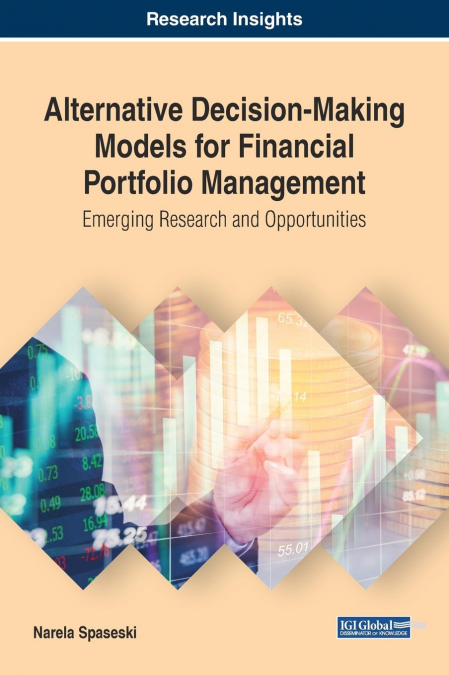
  • Alternative Decision-Making Models for Financial Portfolio Management
    Narela Spaseski
    Economics is an integral aspect to every successful society, yet basic financial practices have gone unchanged for decades. Analyzing unconventional finance methods can provide new ways to ensure personal financial futures on an individual level, as well as boosting international economies. Alternative Decision-Making Models for Financial Portfolio Management: Emerging Research...
  • Multi-Sided Platforms (MSPs) and Sharing Strategies in the Digital Economy
    Sergey Yablonsky
    Rapid technological advancements have the ability to positively or negatively impact corporate growth and success. Professional leaders and decision makers must consider such advancements when designing and implementing new policies in preparation for the sustainable future of the business environment. Multi-Sided Platforms (MSPs) and Sharing Strategies in the Digital Economy: ...
  • The Complete Penny Stock Course
    Jamil Ben Alluch
    You can learn trading penny stocks from the masses and become part of the 90% of traders who lose money in the stock market, or you can learn from the Best. The Complete Penny Stock Course is based on Timothy Sykes’, various training programs. His strategies have helped individuals like Tim Grittani, Michael Goode and Stephen Dux become millionaires within a couple of years.Thi...
    Disponible

    37,63 €

  • ADVANCED FINANCE THEORIES
    POON SER-HUANG / Ser-Huang Poon
    For PhD finance courses in business schools, there is equal emphasis placed on mathematical rigour as well as economic reasoning. Advanced Finance Theories provides modern treatments to five key areas of finance theories in Merton's collection of continuous time work, viz. portfolio selection and capital market theory, optimum consumption and intertemporal portfolio selecti...
  • Jefferson's Nightmare
    William O. Joseph
    Common working people have been getting screwed by the banking industry for hundreds of years. In the United States over 21 million family members have lost their homes since 2007. Millions more have watched their careers go up in smoke. If you think there is nothing wrong with such a system then don't bother to read this book.   Two hundred years ago, Thomas Jefferson ha...
    Disponible

    12,42 €

Otros libros del autor

  • Governing Banking’s Future
    Catherine England
    Risk-based capital standards presume a need for common capital standards across countries. The details of forging an agreement were left to the staffs of the primary bank regulators in each country, and compromises were inevitable. Although domestic constituencies’ reactions to the proposals were invited, the arduous negotiations that led to the propo...
    Disponible

    206,84 €

  • Governing Banking’s Future
    Catherine England
    Risk-based capital standards presume a need for common capital standards across countries. The details of forging an agreement were left to the staffs of the primary bank regulators in each country, and compromises were inevitable. Although domestic constituencies’ reactions to the proposals were invited, the arduous negotiations that led to the propo...
    Disponible

    66,65 €