
Gorgias

Gorgias

Gorgias

Plato

30,64 €
IVA incluido
Disponible
Editorial:
Kessinger Publishing
Año de edición:
2004
Materia
Ética y filosofía moral
ISBN:
9781419122132
30,64 €
IVA incluido
Disponible

Selecciona una librería:

  • Librería Samer Atenea
  • Librería Aciertas (Toledo)
  • Kálamo Books
  • Librería Perelló (Valencia)
  • Librería Elías (Asturias)
  • Donde los libros
  • Librería Kolima (Madrid)
  • Librería Proteo (Málaga)

Gorgias is a philosophical dialogue written by Plato, which explores the nature of rhetoric and its relation to philosophy. The book is named after Gorgias, a famous Greek orator and sophist who is a central figure in the dialogue. The dialogue is set in Athens, and begins with Socrates engaging in a conversation with Gorgias, in which he questions the value of rhetoric and the role of the orator in society. Gorgias argues that rhetoric is a powerful tool for persuasion and can be used for both good and evil purposes. Socrates challenges Gorgias’ views and argues that true knowledge and wisdom cannot be attained through rhetoric alone, but must be based on a deeper understanding of reality. He also argues that the pursuit of virtue is more important than the pursuit of pleasure or power. The dialogue continues with various other characters, including Gorgias’ student Polus and the philosopher Callicles, engaging in debates on the nature of rhetoric and its relation to morality and justice. Overall, Gorgias is a complex and thought-provoking work that raises important questions about the nature of truth, knowledge, and morality, and the role of language and persuasion in shaping our understanding of the world.SOCRATES: Very good, Callicles; but will he answer our questions? for I want to hear from him what is the nature of his art, and what it is which he professes and teaches; he may, as you (Chaerephon) suggest, defer the exhibition to some other time.This scarce antiquarian book is a facsimile reprint of the old original and may contain some imperfections such as library marks and notations. Because we believe this work is culturally important, we have made it available as part of our commitment for protecting, preserving, and promoting the world’s literature in affordable, high quality, modern editions, that are true to their original work.


Artículos relacionados

  • Ka Ab Ba Building The Lighted Temple
    Dr Terri R. Nelson / Dr Terri RNelson
    The book KaAbBa Building The Lighted Temple/Metaphysical Keys to the Tree of Life draws a circle that is inclusive of the Afrikan origin of the Ancient Kemetic/Egyptian wisdom. It reveals the undeniable root and link of Ancient Africa to all the religious systems that would develop worldwide. This book is explosive in its power to convey the meaning of KaAbBa, the Medu Neter  (...
    Disponible

    37,41 €

  • Technoethics and the Evolving Knowledge Society
    Rocci Luppicini
    Recently, there has been a major push to rediscover the ethical dimension of technology across the sciences, social sciences, and humanities. Technoethics and the Evolving Knowledge Society: Ethical Issues in Technological Design, Research, Development, and Innovation examines human processes and practices connected to technology embedded within social, political, and moral sph...
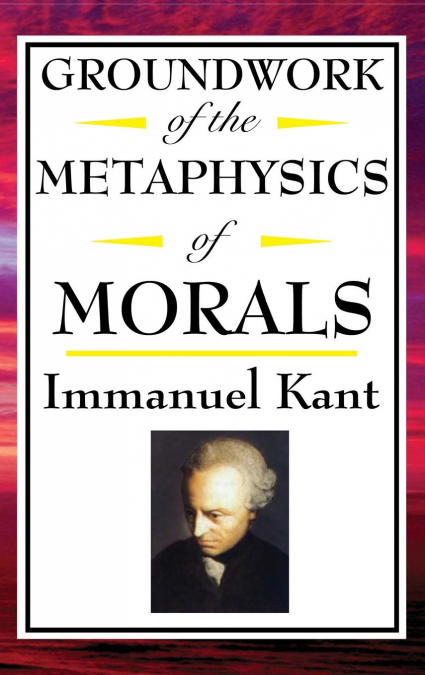
  • Kant
    Immanuel Kant
    Kant’s Groundwork of the Metaphysics of Morals is one of the most important works in modern moral philosophy. It belongs beside Plato, Aristotle, Machiavelli, and Hobbes. Here Kant sets out to articulate and defend the Categorical Imperative - the fundamental principle that underlies moral reasoning - and to lay the foundation for a comprehensive account of justice and human vi...
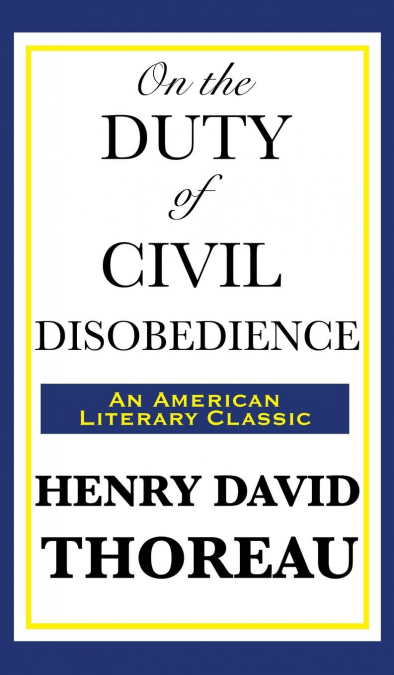
  • On the Duty of Civil Disobedience
    HENRY DAVID THOREAU
    Civil Disobedience argues that citizens should not permit their governments to overrule their consciences, and that they have a duty to avoid allowing their acquiescence to enable the government to make them the agents of injustice. Thoreau was motivated in part by his disgust with slavery and the Mexican-American War, but the sentiments he expresses here are just as pertinent ...
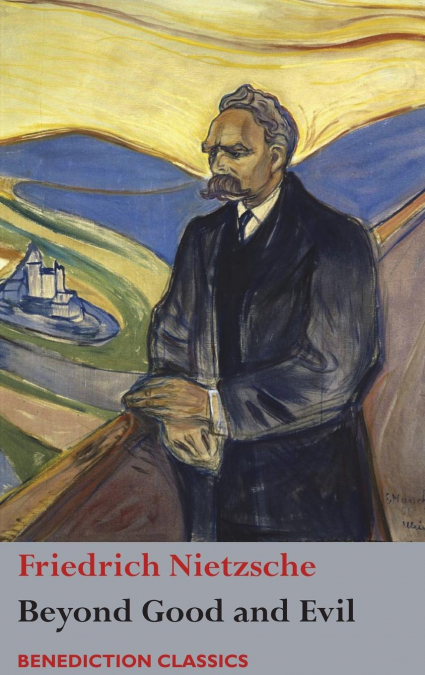
  • Beyond Good and Evil
    Friedrich Nietzsche
    Nietzsche, though primarily a philosopher, wrote widely on art, philology, history, religion, tragedy, culture, and science.  In 1886, at the height of his powers, he published Beyond Good and Evil.  Here he examines much of the best of human thought--dogmatic philosophy, Judeo-Christian morality, science and democracy – and finds it lacking.  Rejecting “slave-morality” he pres...
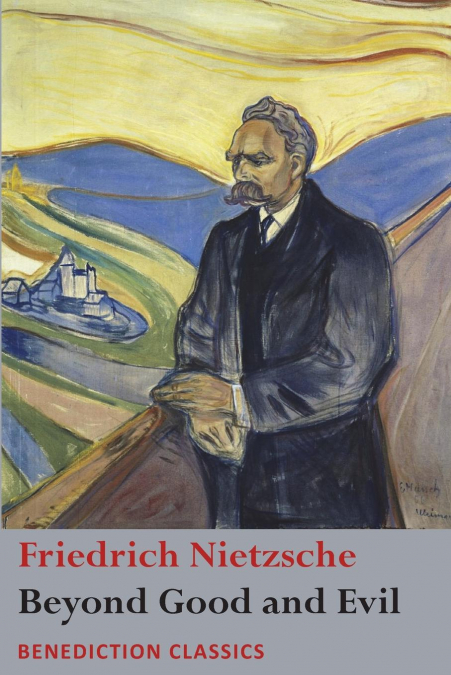
  • Beyond Good and Evil
    Friedrich Nietzsche
    Nietzsche, though primarily a philosopher, wrote widely on art, philology, history, religion, tragedy, culture, and science.  In 1886, at the height of his powers, he published Beyond Good and Evil.  Here he examines much of the best of human thought--dogmatic philosophy, Judeo-Christian morality, science and democracy – and finds it lacking.  Rejecting “slave-morality” he pres...
    Disponible

    9,99 €

Otros libros del autor

  • Plato’s Apology
    Plato
    Plato’s Apology - A Riveting Defense of Philosophy and the Pursuit of TruthStep into the courtroom of ancient Athens and witness a moment that forever shaped the course of Western thought. Plato’s 'Apology' is not an apology in the modern sense but a powerful and eloquent defense of philosophy, virtue, and the examined life, as spoken by Socrates himself.In this timeless dialog...
  • Gorgias
    Plato
    A Timeless Debate on Power, Justice, and the Pursuit of TruthPlato’s Gorgias is a masterful exploration of rhetoric, morality, and the essence of a just life. Through a dynamic dialogue led by Socrates, this philosophical classic dives into the art of persuasion and its role in politics and society.As Socrates engages with the influential sophist Gorgias and others, readers are...
  • Apologia Di Socrate
    Plato
    Platone scrisse questo testo nel 399 a. C. in seguito alla morte di Socrate. Come altri testi giovanili di Platone, l’Apologia di Socrate risulta tanto affine al pensiero di quest’ultimo, da risultarne come un suo scritto. In realtà Socrate sosteneva la diffusione orale del pensiero e non esistono libri scritti di suo pugno: l’Apologia, se non una cronaca, è certamente il docum...
  • Symposium (Esprios Classics)
    Plato
    Plato (428/427 or 424/423 - 348/347 BC) was an Athenian philosopher during the Classical period in Ancient Greece, founder of the Platonist school of thought and the Academy, the first institution of higher learning in the Western world. He is widely considered one of the most important and influential individuals in human history, and the pivotal figure in the history of Ancie...
  • Apology, Crito, and Phaedo of Socrates (Esprios Classics)
    Plato
    Plato (428/427 or 424/423 - 348/347 BC) was an Athenian philosopher during the Classical period in Ancient Greece, founder of the Platonist school of thought and the Academy, the first institution of higher learning in the Western world. He is widely considered one of the most important and influential individuals in human history, and the pivotal figure in the history of Ancie...
  • Apology (Esprios Classics)
    Plato
    Plato (428/427 or 424/423 - 348/347 BC) was an Athenian philosopher during the Classical period in Ancient Greece, founder of the Platonist school of thought and the Academy, the first institution of higher learning in the Western world. He is widely considered one of the most important and influential individuals in human history, and the pivotal figure in the history of Ancie...