Goodness and Advice

Goodness and Advice

Judith Jarvis Thomson

50,25 €
IVA incluido
Disponible
Editorial:
Princeton University Press
Año de edición:
2003
Materia
Ética y filosofía moral
ISBN:
9780691114736
50,25 €
IVA incluido
Disponible

Selecciona una librería:

  • Librería Samer Atenea
  • Librería Aciertas (Toledo)
  • Kálamo Books
  • Librería Perelló (Valencia)
  • Librería Elías (Asturias)
  • Donde los libros
  • Librería Kolima (Madrid)
  • Librería Proteo (Málaga)

How should we live? What do we owe to other people? In Goodness and Advice, the eminent philosopher Judith Jarvis Thomson explores how we should go about answering such fundamental questions. In doing so, she makes major advances in moral philosophy, pointing to some deep problems for influential moral theories and describing the structure of a new and much more promising theory. Thomson begins by lamenting the prevalence of the idea that there is an unbridgeable gap between fact and value--that to say something is good, for example, is not to state a fact, but to do something more like expressing an attitude or feeling. She sets out to challenge this view, first by assessing the apparently powerful claims of Consequentialism. Thomson makes the striking argument that this familiar theory must ultimately fail because its basic requirement--that people should act to bring about the 'most good'--is meaningless. It rests on an incoherent conception of goodness, and supplies, not mistaken advice, but no advice at all. Thomson then outlines the theory that she thinks we should opt for instead. This theory says that no acts are, simply, good: an act can at most be good in one or another way--as, for example, good for Smith or for Jones. What we ought to do is, most importantly, to avoid injustice; and whether an act is unjust is a function both of the rights of those affected, including the agent, and of how good or bad the act is for them. The book, which originated in the Tanner lectures that Thomson delivered at Princeton University’s Center for Human Values in 1999, includes two chapters by Thomson ('Goodness' and 'Advice'), provocative comments by four prominent scholars--Martha Nussbaum, Jerome Schneewind, Philip Fisher, and Barbara Herrnstein Smith--and replies by Thomson to those comments.


Artículos relacionados

  • Ka Ab Ba Building The Lighted Temple
    Dr Terri R. Nelson / Dr Terri RNelson
    The book KaAbBa Building The Lighted Temple/Metaphysical Keys to the Tree of Life draws a circle that is inclusive of the Afrikan origin of the Ancient Kemetic/Egyptian wisdom. It reveals the undeniable root and link of Ancient Africa to all the religious systems that would develop worldwide. This book is explosive in its power to convey the meaning of KaAbBa, the Medu Neter  (...
    Disponible

    37,41 €

  • Technoethics and the Evolving Knowledge Society
    Rocci Luppicini
    Recently, there has been a major push to rediscover the ethical dimension of technology across the sciences, social sciences, and humanities. Technoethics and the Evolving Knowledge Society: Ethical Issues in Technological Design, Research, Development, and Innovation examines human processes and practices connected to technology embedded within social, political, and moral sph...
  • Kant
    Immanuel Kant
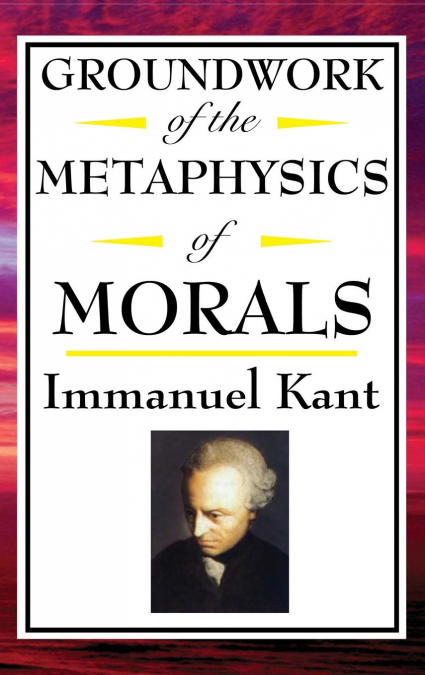
    Kant’s Groundwork of the Metaphysics of Morals is one of the most important works in modern moral philosophy. It belongs beside Plato, Aristotle, Machiavelli, and Hobbes. Here Kant sets out to articulate and defend the Categorical Imperative - the fundamental principle that underlies moral reasoning - and to lay the foundation for a comprehensive account of justice and human vi...
  • On the Duty of Civil Disobedience
    HENRY DAVID THOREAU
    Civil Disobedience argues that citizens should not permit their governments to overrule their consciences, and that they have a duty to avoid allowing their acquiescence to enable the government to make them the agents of injustice. Thoreau was motivated in part by his disgust with slavery and the Mexican-American War, but the sentiments he expresses here are just as pertinent ...
  • Beyond Good and Evil
    Friedrich Nietzsche
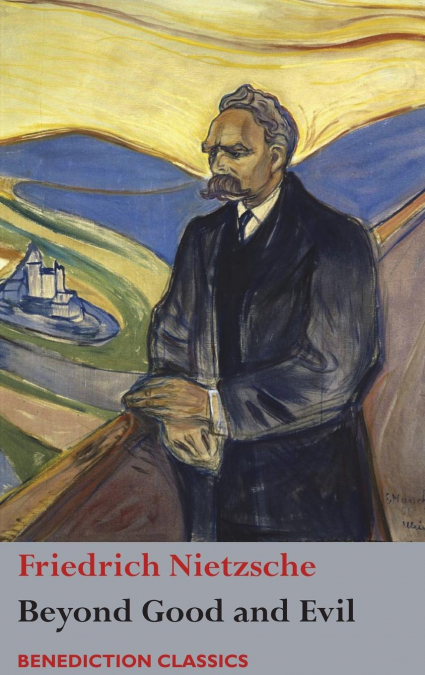
    Nietzsche, though primarily a philosopher, wrote widely on art, philology, history, religion, tragedy, culture, and science.  In 1886, at the height of his powers, he published Beyond Good and Evil.  Here he examines much of the best of human thought--dogmatic philosophy, Judeo-Christian morality, science and democracy – and finds it lacking.  Rejecting “slave-morality” he pres...
  • Beyond Good and Evil
    Friedrich Nietzsche
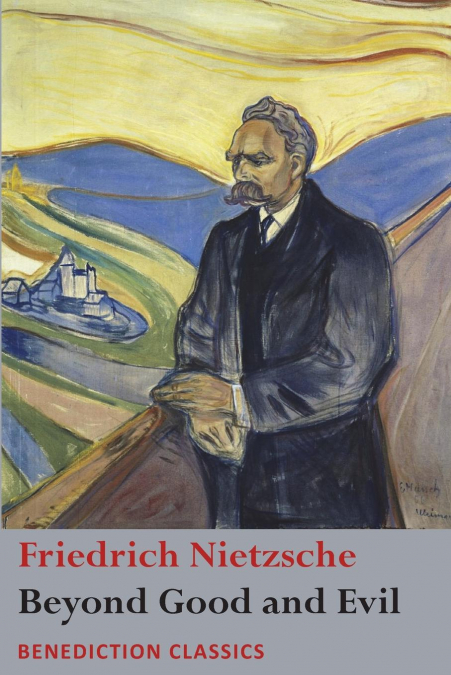
    Nietzsche, though primarily a philosopher, wrote widely on art, philology, history, religion, tragedy, culture, and science.  In 1886, at the height of his powers, he published Beyond Good and Evil.  Here he examines much of the best of human thought--dogmatic philosophy, Judeo-Christian morality, science and democracy – and finds it lacking.  Rejecting “slave-morality” he pres...
    Disponible

    9,99 €