Good Neighbors

Good Neighbors

Nancy L. Rosenblum / Nancy LRosenblum

36,07 €
IVA incluido
Disponible
Editorial:
Princeton University Press
Año de edición:
2018
Materia
Ética y filosofía moral
ISBN:
9780691180762
36,07 €
IVA incluido
Disponible

Selecciona una librería:

  • Librería Samer Atenea
  • Librería Aciertas (Toledo)
  • Kálamo Books
  • Librería Perelló (Valencia)
  • Librería Elías (Asturias)
  • Donde los libros
  • Librería Kolima (Madrid)
  • Librería Proteo (Málaga)

How our everyday interactions as neighbors shape-and sometimes undermine-democracy'Love thy neighbor' is an impossible exhortation. Good neighbors greet us on the street and do small favors, but neighbors also startle us with sounds at night and unleash their demons on us, they monitor and reproach us, and betray us to authorities. The moral principles prescribed for friendship, civil society, and democratic public life apply imperfectly to life around home, where we interact day to day without the formal institutions, rules of conduct, and means of enforcement that guide us in other settings.In Good Neighbors, Nancy Rosenblum explores how encounters among neighbors create a democracy of everyday life, which has been with us since the beginning of American history and is expressed in settler, immigrant, and suburban narratives and in novels, poetry, and popular culture. During disasters, like Hurricane Katrina, the democracy of everyday life is a resource for neighbors who improvise rescue and care. Degraded, this framework can give way to betrayal by neighbors, as faced by the Japanese Americans interned during World War II, or to terrible violence such as the lynching of African Americans. Under extreme conditions the barest act of neighborliness is a bulwark against total ethical breakdown. The elements of the democracy of everyday life-reciprocity, speaking out, and 'live and let live'-comprise a democratic ideal not reducible to public principles of justice or civic virtue, but it is no less important. The democracy of everyday life, Rosenblum argues, is the deep substrate of democracy in America and can be its saving remnant.


Artículos relacionados

  • Ka Ab Ba Building The Lighted Temple
    Dr Terri R. Nelson / Dr Terri RNelson
    The book KaAbBa Building The Lighted Temple/Metaphysical Keys to the Tree of Life draws a circle that is inclusive of the Afrikan origin of the Ancient Kemetic/Egyptian wisdom. It reveals the undeniable root and link of Ancient Africa to all the religious systems that would develop worldwide. This book is explosive in its power to convey the meaning of KaAbBa, the Medu Neter  (...
    Disponible

    37,41 €

  • Technoethics and the Evolving Knowledge Society
    Rocci Luppicini
    Recently, there has been a major push to rediscover the ethical dimension of technology across the sciences, social sciences, and humanities. Technoethics and the Evolving Knowledge Society: Ethical Issues in Technological Design, Research, Development, and Innovation examines human processes and practices connected to technology embedded within social, political, and moral sph...
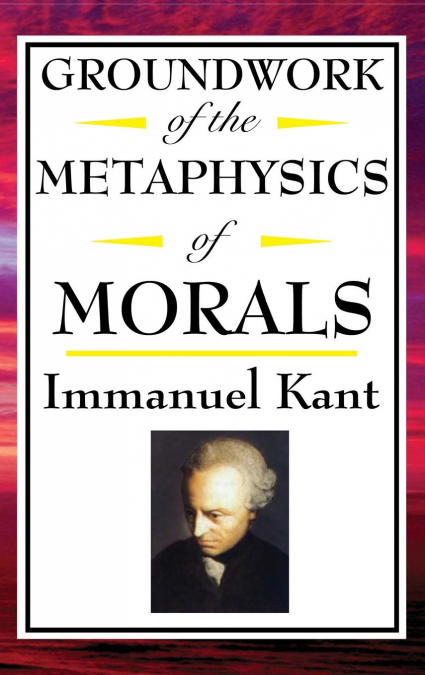
  • Kant
    Immanuel Kant
    Kant’s Groundwork of the Metaphysics of Morals is one of the most important works in modern moral philosophy. It belongs beside Plato, Aristotle, Machiavelli, and Hobbes. Here Kant sets out to articulate and defend the Categorical Imperative - the fundamental principle that underlies moral reasoning - and to lay the foundation for a comprehensive account of justice and human vi...
  • On the Duty of Civil Disobedience
    HENRY DAVID THOREAU
    Civil Disobedience argues that citizens should not permit their governments to overrule their consciences, and that they have a duty to avoid allowing their acquiescence to enable the government to make them the agents of injustice. Thoreau was motivated in part by his disgust with slavery and the Mexican-American War, but the sentiments he expresses here are just as pertinent ...
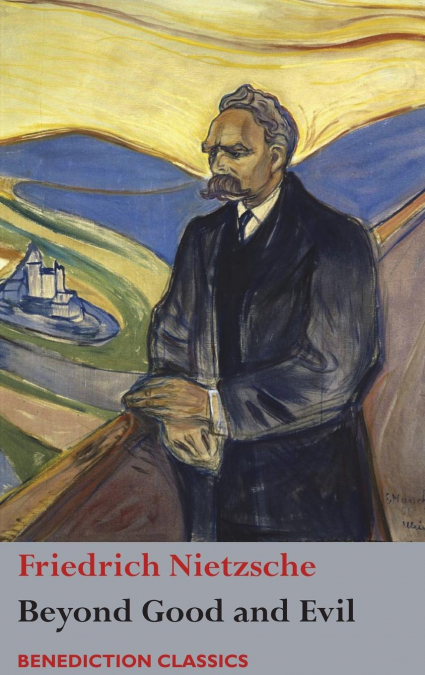
  • Beyond Good and Evil
    Friedrich Nietzsche
    Nietzsche, though primarily a philosopher, wrote widely on art, philology, history, religion, tragedy, culture, and science.  In 1886, at the height of his powers, he published Beyond Good and Evil.  Here he examines much of the best of human thought--dogmatic philosophy, Judeo-Christian morality, science and democracy – and finds it lacking.  Rejecting “slave-morality” he pres...
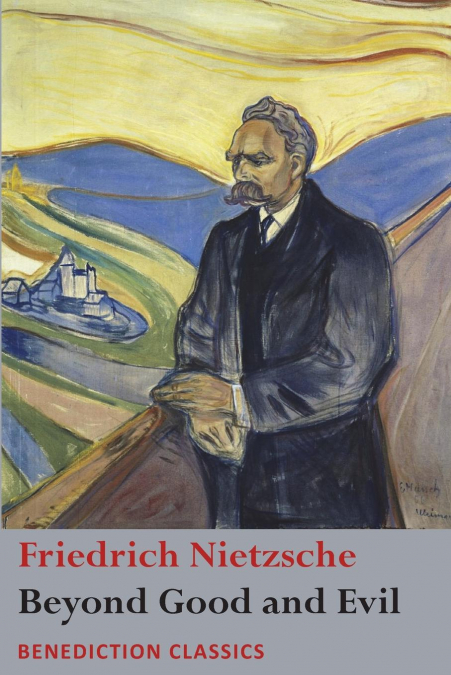
  • Beyond Good and Evil
    Friedrich Nietzsche
    Nietzsche, though primarily a philosopher, wrote widely on art, philology, history, religion, tragedy, culture, and science.  In 1886, at the height of his powers, he published Beyond Good and Evil.  Here he examines much of the best of human thought--dogmatic philosophy, Judeo-Christian morality, science and democracy – and finds it lacking.  Rejecting “slave-morality” he pres...
    Disponible

    9,99 €

Otros libros del autor

  • Membership and Morals
    Nancy L. Rosenblum / Nancy LRosenblum
    In recent years, membership has dropped in traditional voluntary associations such as Rotary Clubs, Jaycees, and bowling leagues. At the same time, concern is rising about the growth of paramilitary and hate groups. Scholars have warned that these trends are undermining civic society by creating a dangerous number of isolated, mistrustful individuals and organized, antisocial r...
    Disponible

    64,33 €