Globalizing Fortune on the Early Modern Stage

Globalizing Fortune on the Early Modern Stage

Jane Hwang Degenhardt

134,67 €
IVA incluido
Consulta disponibilidad
Editorial:
Oxford University Press
Año de edición:
2022
Materia
Estudios literarios: obras de teatro y dramaturgos
ISBN:
9780198867920

Selecciona una librería:

  • Librería Samer Atenea
  • Librería Aciertas (Toledo)
  • Kálamo Books
  • Librería Perelló (Valencia)
  • Librería Elías (Asturias)
  • Donde los libros
  • Librería Kolima (Madrid)
  • Librería Proteo (Málaga)

How were understandings of chance, luck, and fortune affected by early capitalist developments such as the global expansion of English trade and colonial exploration? And how could the recognition that fortune wielded a powerful force in the world be squared with Protestant beliefs about the all-controlling hand of divine providence? Was everything pre-determined, or was there room for chance and human agency? Globalizing Fortune addresses these questions by demonstrating how English economic expansion and global transformation produced a new philosophy of fortune oriented around discerning and optimizing unexpected opportunities. The popular theater played an influential role in dramatizing the new prospects and dangers opened up by nascent global economics and fostering a set of ethical practices for engaging with fortune’s unpredictable turns. While largely derided as a sinful, earthly distraction in the Boethian tradition of the Middle Ages, fortune made a comeback on the English Renaissance stage as a force associated with valiant risks, ennobling adventures, and purposeful action. The early modern stage also reveals how a new philosophy of fortune led to economic exploitation and racialized exclusions. Offering in-depth discussions of plays by Shakespeare, Marlowe, Heywood, Dekker, and others, Globalizing Fortune demonstrates how the history of the English commercial theaterDLlike that of English seaborne expansionDLwas also a history of fortune. The public theater not only shaped popular understandings of fortune’s role in a culture undergoing economic transformation, but also addressed this transformation from a unique position because of its own implication in London commerce, its reliance on paying customers, and its vulnerability to the risks and contingencies of live performance. Drawing attention to an archive of plays dramatizing maritime travel, trade, and adventure, this book shows how the popular stage shaped evolving understandings of fortune by cultivating new viewing practices and mechanisms of theatrical wonder, as well as modeling proper ways of acting in the face of unknown outcomes and contingency. In short, Globalizing Fortune demonstrates how the public theater offered the first modern understanding of fortune as a globalizing commercial and ethical phenomenon.
Artículos relacionados

  • Shakespeare’s identities
    James Driscoll
    No dramatist has treated identity in as many ways and in such depth as William Shakespeare. In Shakespeare’s Identities, James P. Driscoll shows how the Bard used history, comedy, tragedy, and romance to develop comprehensive treatments of personal identity.Driscoll’s innovative study examines four aspects of identity: the conscious, social, real, and ideal. Drawing on Jungian ...
    Disponible

    45,23 €

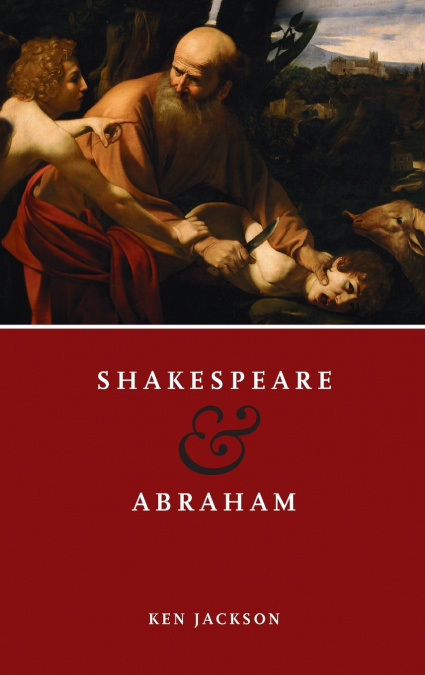
  • Shakespeare and Abraham
    Ken Jackson
    Shakespeare and Abraham shows how Shakespeare’s engagement with the biblical narrative of Abraham’s sacrifice of Isaac manifests in his plays. ...
  • William Shakespeare, Richard Barnfield, and the Sixth Earl of Derby
    Leo Daugherty
    This book is the first to argue that the Rival Poet of Shakespeare’s Sonnets is the well-known young Elizabethan writer Richard Barnfield (1574-1620), long suspected to have been one of Shakespeare’s 'private friends' (as they were termed by Francis Meres in 1598), with whom (as Meres also tells us) Shakespeare shared some of his sonnets. This is also the first book to argue th...
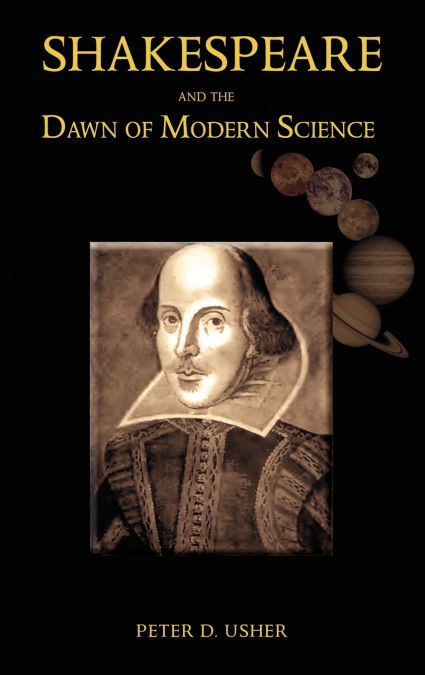
  • Shakespeare and the Dawn of Modern Science
    Peter D. Usher
    In Shakespeare and the Dawn of Modern Science, renowned astronomy expert Peter Usher expands upon his allegorical interpretation of Hamlet and analyzes four more plays, Love’s Labour’s Lost, Cymbeline, The Merchant of Venice, and The Winter’s Tale. With painstaking thoroughness, he dissects the plays and reveals that, contrary to current belief, Shakespeare was well aware of th...
  • The Comic Matrix of Shakespeare’s Tragedies
    Susan Snyder
    Comic elements in Shakespeare’s tragedies have often been noted, but while most critics have tended to concentrate on humorous interludes or on a single play, Susan Snyder seeks a more comprehensive understanding of how Shakespeare used the conventions, structures, and assumptions of comedy in his tragic writing. She argues that Shakespeare’s early mastery of romantic comedy de...
    Disponible

    47,54 €

  • Hamlet in Purgatory
    Stephen Greenblatt
    In Hamlet in Purgatory, renowned literary scholar Stephen Greenblatt delves into his longtime fascination with the ghost of Hamlet’s father, and his daring and ultimately gratifying journey takes him through surprising intellectual territory. It yields an extraordinary account of the rise and fall of Purgatory as both a belief and a lucrative institution--as well as a capacious...
    Disponible

    27,63 €