 Librería Samer Atenea
 Kálamo Books
 Librería Elías (Asturias)
 Librería Kolima (Madrid)
 Librería Proteo (Málaga)
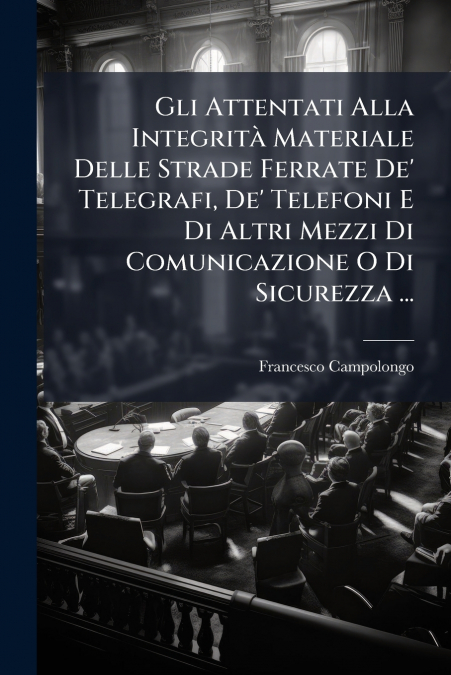
Gli Attentati Alla Integrità Materiale Delle Strade Ferrate De’ Telegrafi, De’ Telefoni E Di Altri Mezzi Di Comunicazione O Di Sicurezza... by Francesco Campolongo, originally published in 1899, delves into the legal ramifications of damaging or sabotaging critical infrastructure in Italy. This historical legal text examines offenses related to the destruction or impairment of railroads, telegraph lines, telephone systems, and other essential communication and safety mechanisms. Campolongo’s work provides insights into the late 19th-century legal framework designed to protect vital public services and the consequences faced by those who threatened their operation.This book offers a fascinating glimpse into the historical intersection of law, technology, and public safety, relevant for legal scholars, historians, and anyone interested in the evolution of infrastructure protection laws.This work has been selected by scholars as being culturally important, and is part of the knowledge base of civilization as we know it. This work was reproduced from the original artifact, and remains as true to the original work as possible. Therefore, you will see the original copyright references, library stamps (as most of these works have been housed in our most important libraries around the world), and other notations in the work.This work is in the public domain in the United States of America, and possibly other nations. Within the United States, you may freely copy and distribute this work, as no entity (individual or corporate) has a copyright on the body of the work.As a reproduction of a historical artifact, this work may contain missing or blurred pages, poor pictures, errant marks, etc. Scholars believe, and we concur, that this work is important enough to be preserved, reproduced, and made generally available to the public. We appreciate your support of the preservation process, and thank you for being an important part of keeping this knowledge alive and relevant.