 Librería Samer Atenea
 Kálamo Books
 Librería Elías (Asturias)
 Librería Kolima (Madrid)
 Librería Proteo (Málaga)
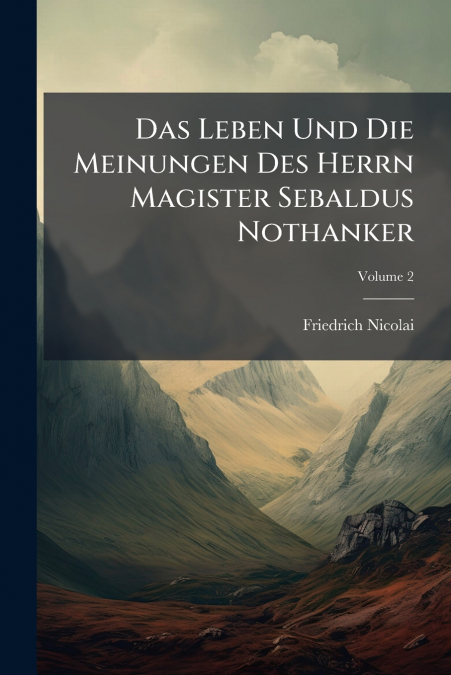
Geschichte Eines Dicken Mannes (The History of a Fat Man) by Friedrich Nicolai is a satirical novel exploring themes of marriage, love, and societal expectations in 18th-century Germany. This first volume introduces readers to the protagonist and the humorous circumstances surrounding his romantic pursuits. The narrative is filled with witty observations and caricatures of the period, offering a glimpse into the social dynamics and cultural norms of the time.Nicolai’s work is notable for its sharp wit and social commentary, making it a valuable example of German literary satire. This edition allows contemporary readers to appreciate the humor and insights of a bygone era, reflecting on the timeless aspects of human relationships and societal follies. The title contains 'Worin Drey Heurathen Und Drey Körbe Nebst Viel Liebe' which translates to 'Containing Three Marriages and Three Baskets with Much Love'.This work has been selected by scholars as being culturally important, and is part of the knowledge base of civilization as we know it. This work was reproduced from the original artifact, and remains as true to the original work as possible. Therefore, you will see the original copyright references, library stamps (as most of these works have been housed in our most important libraries around the world), and other notations in the work.This work is in the public domain in the United States of America, and possibly other nations. Within the United States, you may freely copy and distribute this work, as no entity (individual or corporate) has a copyright on the body of the work.As a reproduction of a historical artifact, this work may contain missing or blurred pages, poor pictures, errant marks, etc. Scholars believe, and we concur, that this work is important enough to be preserved, reproduced, and made generally available to the public. We appreciate your support of the preservation process, and thank you for being an important part of keeping this knowledge alive and relevant.