 Librería Samer Atenea
 Kálamo Books
 Librería Elías (Asturias)
 Librería Kolima (Madrid)
 Librería Proteo (Málaga)
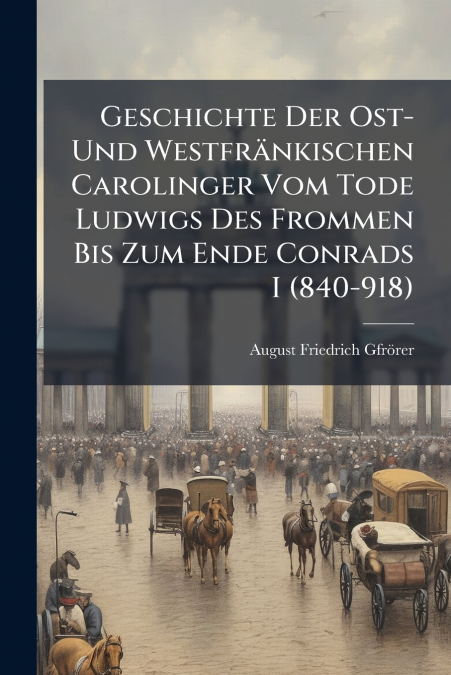
Geschichte Der Ost- Und Westfränkischen Carolinger Vom Tode Ludwigs Des Frommen Bis Zum Ende Conrads I (840-918) delves into the intricate history of the East and West Frankish Carolingians, charting their trajectory from the death of Louis the Pious to the end of Conrad I’s reign. This historical work by August Friedrich Gfrörer provides a detailed examination of a pivotal era in European history, shedding light on the political, social, and cultural dynamics that shaped the medieval landscape. Gfrörer’s meticulous research offers readers a comprehensive understanding of the Carolingian dynasty’s influence and the challenges they faced during this tumultuous period. The book explores the power struggles, alliances, and significant events that defined the reigns of various Carolingian rulers, providing valuable insights into the complexities of medieval governance and the formation of early European kingdoms. A must-read for enthusiasts of medieval history and those interested in the Carolingian era.This work has been selected by scholars as being culturally important, and is part of the knowledge base of civilization as we know it. This work was reproduced from the original artifact, and remains as true to the original work as possible. Therefore, you will see the original copyright references, library stamps (as most of these works have been housed in our most important libraries around the world), and other notations in the work.This work is in the public domain in the United States of America, and possibly other nations. Within the United States, you may freely copy and distribute this work, as no entity (individual or corporate) has a copyright on the body of the work.As a reproduction of a historical artifact, this work may contain missing or blurred pages, poor pictures, errant marks, etc. Scholars believe, and we concur, that this work is important enough to be preserved, reproduced, and made generally available to the public. We appreciate your support of the preservation process, and thank you for being an important part of keeping this knowledge alive and relevant.