Librería Samer Atenea
 Kálamo Books
 Librería Elías (Asturias)
 Librería Kolima (Madrid)
 Librería Proteo (Málaga)
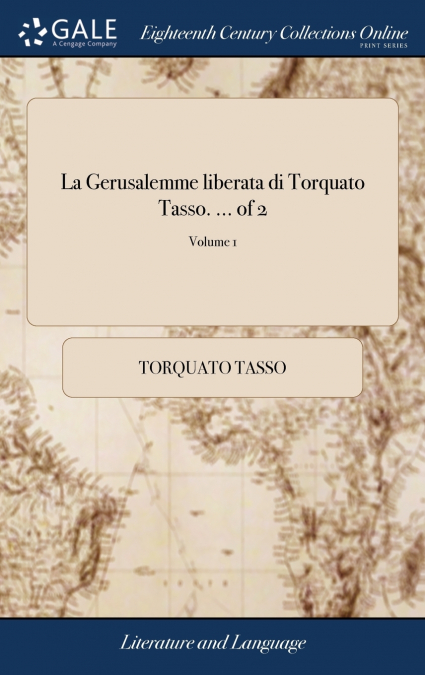
Gerusalemme Liberata (Jerusalem Delivered) is an epic poem by Torquato Tasso, first published in 1581. It tells a largely fictionalized version of the First Crusade’s siege of Jerusalem in 1099. The poem is composed of twenty stanzas in ottava rima, a challenging Italian verse form. Tasso’s work blends historical and imaginative elements, creating a rich tapestry of battles, love stories, and supernatural interventions. The poem explores themes of duty, honor, and the conflict between Christian and pagan forces. Key characters include Godfrey of Bouillon, Tancredi, and the enchantress Armida. 'Gerusalemme Liberata' remains a cornerstone of Italian literature, celebrated for its vivid imagery, dramatic narrative, and profound exploration of human nature amid epic conflict. Its enduring appeal lies in its ability to transport readers to a world of heroic deeds, passionate encounters, and divine interventions.This work has been selected by scholars as being culturally important, and is part of the knowledge base of civilization as we know it. This work was reproduced from the original artifact, and remains as true to the original work as possible. Therefore, you will see the original copyright references, library stamps (as most of these works have been housed in our most important libraries around the world), and other notations in the work.This work is in the public domain in the United States of America, and possibly other nations. Within the United States, you may freely copy and distribute this work, as no entity (individual or corporate) has a copyright on the body of the work.As a reproduction of a historical artifact, this work may contain missing or blurred pages, poor pictures, errant marks, etc. Scholars believe, and we concur, that this work is important enough to be preserved, reproduced, and made generally available to the public. We appreciate your support of the preservation process, and thank you for being an important part of keeping this knowledge alive and relevant.